Diario Oficial de Extremadura · 29 Oct 2026 · 6 vistas
The Regional Government initiates the designation of the Convent of San Agustín in Badajoz as a Monument
Por FactBox Admin
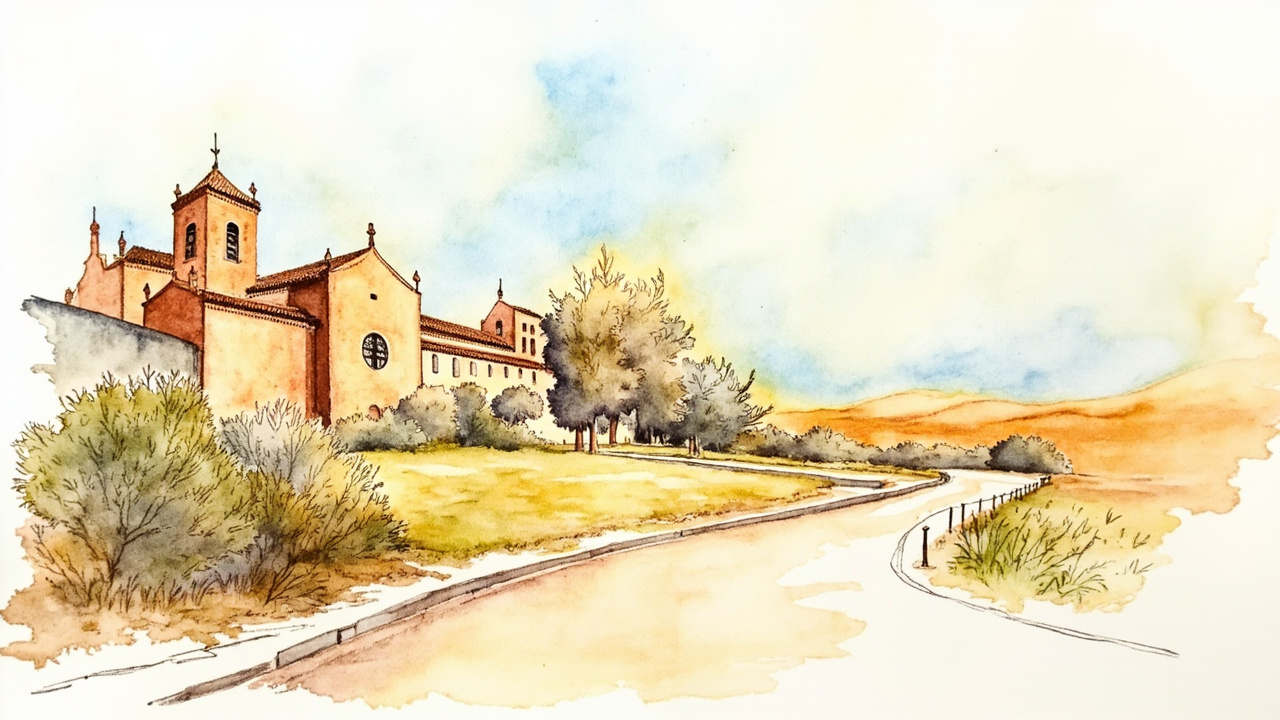
The Regional Ministry of Culture, Tourism and Sports of the Government of Extremadura has initiated proceedings to declare the Convent of San Agustín in Badajoz as a Property of Cultural Interest, under the category of Monument. The decision was signed by the regional minister Laureano León Rodríguez via a resolution dated October 21, 2026, published in the Official Gazette of Extremadura number 209, on October 29, 2026 (official reference 2026062695). The publication opens a one-month public information period, starting from the day following its appearance in the gazette.
The initiation is supported by article 9.1.47 of the Statute of Autonomy of Extremadura and by Law 2/1999, of March 29, on the Historical and Cultural Heritage of Extremadura, which in its article 6.1.a defines a monument as a building of relevant historical, artistic, ethnological, scientific, social, or technical interest. The resolution includes four annexes containing the characterization of the property, the delimitation of the monument and its surroundings, the corresponding map, and the protection criteria. The file includes a favorable proposal from the General Directorate of Cultural and Documentary Heritage, dated October 19, 2026, and a technical report from the same department dated October 14.
A unique funerary temple in the historic center
The report highlights that the church and convent constitute “possibly, the best example in Extremadura” of a temple with funerary chapels and noble crypts dating after the Council of Trent (1545-1563), a typology that became widespread by concentrating burials in private chapels. The temple preserves five chapels in the Gospel nave and four in the Epistle nave—the fifth, that of the Santo Cristo, was suppressed in the 17th century to open the current portal—and the chapels feature crypts. The cloisters are considered significant examples of Baroque monastic architecture.
The convent was a burial site for Badajoz families such as the Alvarado, the Montero de Espinosa, the Rochas Ulloa, and the Casasola, as well as civil, military, and ecclesiastical figures: the documented burials between 1597 and 1803 reflect its social and religious weight. The complex stands on the site of an ancient 9th-century mosque and was occupied by the Augustinians from 1431, after settling in the old parish of San Lorenzo. It suffered severe damage in 1658 during the Portuguese Restoration War, was suppressed in 1820, transformed into barracks from 1823, and assigned to the Ministry of War from 1842; after military abandonment in 1925, it reverted to the Badajoz City Council in 1926 and later housed the San Pedro de Alcántara school and the courts between 1934 and 1960. At the beginning of 2025, the renovation of the large cloister promoted by the City Council to serve as the headquarters for the Adelardo Covarsí School of Arts and Crafts was completed.
Delimitation of the asset and its surroundings
The delimitation of the monument encompasses the church, its annexed dependencies, and the cloisters, including courtyards and transit areas, and corresponds to two cadastral plots:
- Plaza San Agustín, 2(A), Badajoz, reference 6058225PD7065G0001DO.
- Calle Chapín, 5, Badajoz, reference 6058223PD7065G0001KO.
The protection surroundings include the facades and immediate public spaces and the buildings on Chapín, Céspedes, José Lanot, and José Terrón streets, as well as those in Plaza San Agustín, identified by their cadastral references. The resolution includes the plot of the electrical substation attached to the temple, although it classifies the existing construction as an element discordant with the values of the ensemble.
Prior authorization for works, uses, and advertising
Any intervention in the monument or its surroundings must be governed by Article 31 of Law 2/1999 and have the authorization of the competent regional ministry for culture before the granting of the municipal license. Projects will be subject to Articles 32 and 33, and Article 37 requires express authorization for interior or exterior work, signage, installation, or change of use. Authorization shall also be mandatory for placing advertising elements. The current use of the building is considered compatible with its conservation.
The processing continues in accordance with current legislation. The resolution orders notification to the interested parties, the City Council of Badajoz, and the General Registry of Assets of Cultural Interest of the Ministry of Culture for preventive annotation, and its publication in the Official State Gazette. The file may be consulted during the public information period at the offices of the General Directorate of Cultural and Documentary Heritage, at Avenida Valhondo, s/n, module 4, 2nd floor, Mérida.
The initiation does not finalize the protection, but it immediately activates the safeguards: while the file is being resolved, the ensemble remains subject to the regime of prior authorizations, which conditions any work or change of use in a key piece of the historic center of Badajoz and in the properties that configure its visual surroundings.
Source: Official Gazette of Extremadura, no. 209, October 29, 2026, section I (official reference: 2026062695).