La Gaceta — Diario Oficial · 05 Nov 2026 · 11 vistas
The Old Church of Lagunilla is declared a national historical monument
Por FactBox Admin
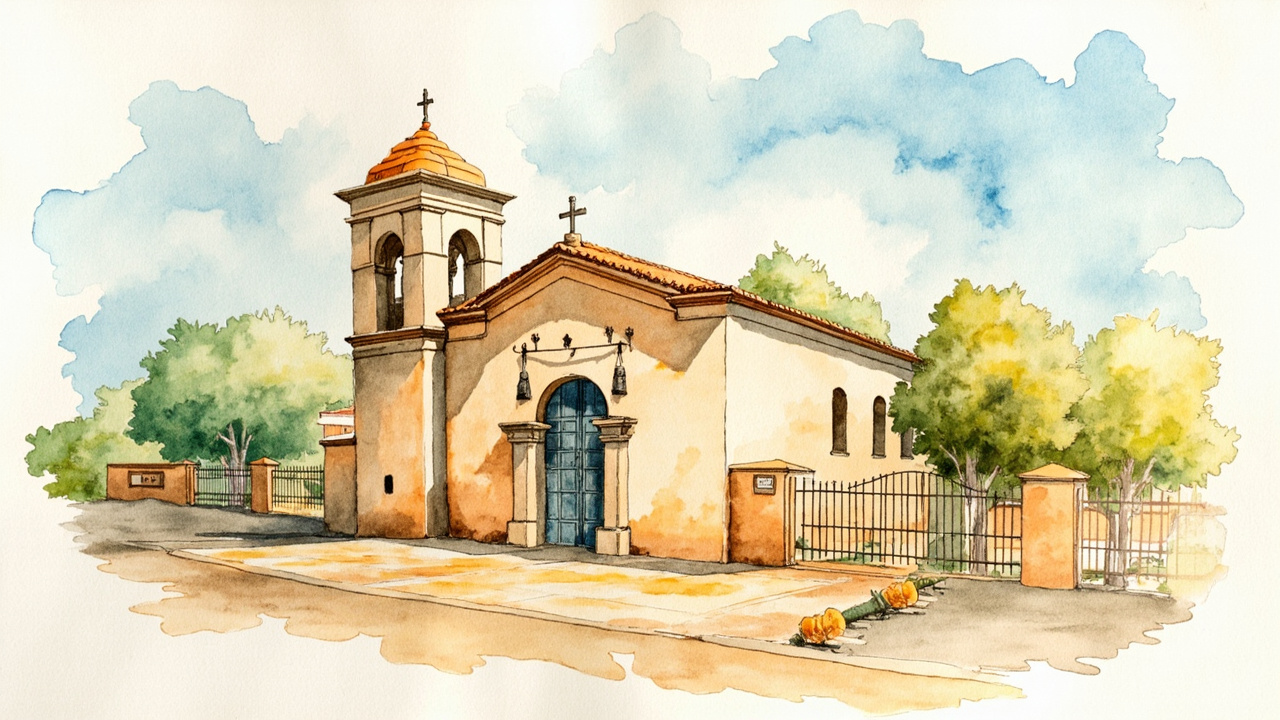
The Old Church of Lagunilla de Heredia was declared and incorporated into the Historical-Architectural Heritage of Costa Rica under the category of Monument, through Executive Decree No. 45825-MCJ, published in La Gaceta No. 210 on Thursday, November 5, 2026. The regulation was signed by President Laura Fernández Delgado and the Minister of Culture and Youth, Jorge Rodríguez Vives, and prohibits the partial or total demolition or remodeling of the property without prior authorization from the Ministry.
The decree is based on Law No. 7555, the Historical-Architectural Heritage Law of Costa Rica, and its regulation, Executive Decree No. 32749-C. The case was first resolved through administrative channels: Administrative Resolution No. MCJ-DM-086-2026, issued at 15:15 on March 24, 2026, declared the property as heritage and became final; previously, the National Commission of Historical-Architectural Heritage issued Final Agreement No. 26 in Ordinary Session No. 015-2025 on November 26, 2025.
The text is dated in San José on May 28, 2026, but was published in the official gazette five months later. The property is located in the province of Heredia, canton Heredia, district Ulloa, registered in the Property Registry under farm number 145781 and cadastral plan H-0054664-2023. Its owner is the Asociación para el Seminario Josefino, legal ID 3-002-071286.
A 1920 temple with mural paintings
According to the recitals, the church was built and officially inaugurated in 1920, meaning it is over one hundred years old, and it preserves its original architectural design with a cruciform floor plan and harmonic proportions. The temple houses mural paintings on the ceiling and the altar, featuring religious and symbolic representations of notable quality, which the decree describes as an artistic contribution worthy of preservation.
Between 1920 and 1970, it was the spiritual and social center of the Lagunilla community and the primary space for devotion to the Immaculate Conception, a Marian invocation present in Heredia since the 18th century. It is also recognized for its documentary or testimonial value: it was intentionally built near the site where the Ayuda de Parroquia de Alvirilla was established in 1706, the first religious settlement in the west of the central plateau. The temple has remained closed since the 1970s.
The obligations assumed by the owner
Article 2 of the decree informs the owner that the declaration imposes the following burdens:
- Properly conserve, preserve, and maintain the property.
- Report on its condition and use to the Center for Research and Conservation of Cultural Heritage whenever requested.
- Allow the examination and study of the property by researchers, following a reasoned request endorsed by said Center.
- Allow the placement of signage indicating the declaration on the physical structure of the property.
- Allow periodic inspection visits by accredited officials and collaborate with them.
- Refrain from placing plaques and advertising signs that hinder or disturb the contemplation of the property.
- Include the necessary budget items in the institutional budget to comply with these obligations.
Works and permits under state control
Article 3 establishes that the declaration prohibits partial or total demolition or remodeling without prior authorization from the Ministry of Culture and Youth, through its technical unit, the Center for Research and Conservation of Cultural Heritage. Before repairing, constructing, restoring, rehabilitating, or executing any work that affects the building or its appearance, the owner must request authorization from said Center.
The decree also orders the suspension of permit processing for subdivision, construction, or demolition, although it provides an alternative: if the works do not harm the historical or architectural value and the Minister of Culture and Youth, following a report from the Commission, communicates this to the authority processing the permits, they may be granted. The regulation takes effect from its publication in La Gaceta.
The declaration provides legal backing to a long-standing neighborhood lawsuit in Ulloa de Heredia and closes the door to the demolition or sale of the property for incompatible uses: any future intervention must now pass through the technical filter of the Ministry of Culture and Youth. Additionally, the temple becomes eligible for conservation funds and the placement of heritage signage, providing the community with a formal argument to promote its recovery as an active space.
Source: La Gaceta, No. 210, November 5, 2026, Executive Branch (Decrees), pp. 4-5 (official reference: D45825 – IN202601137462).