BOP de Badajoz · 29 Sep 2026 · 21 vistas
Jerez de los Caballeros approves the police taser regulations
Por FactBox Admin
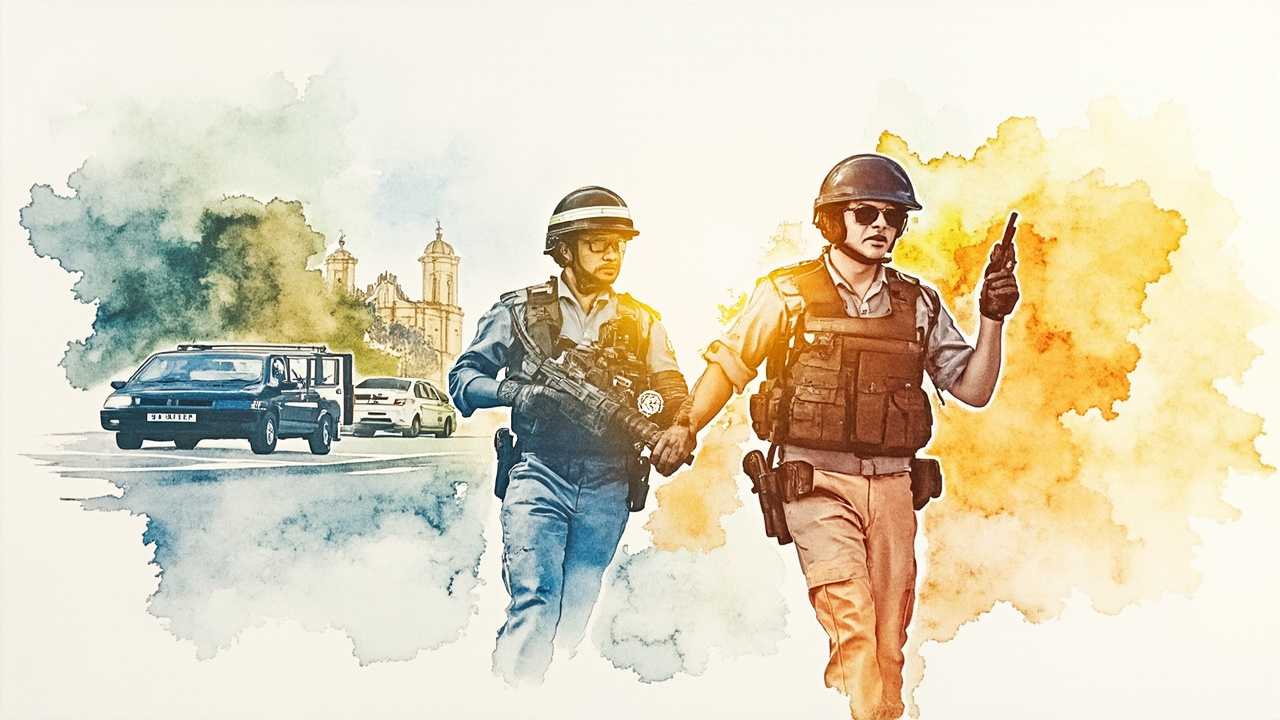
The City Council of Jerez de los Caballeros has finalized the Regulations for the use of electronic control devices (Tasers) and body-worn cameras by the municipality’s Local Police, after the public exhibition period passed without any claims or allegations. The full text is published in the Official Gazette of the Province of Badajoz No. 186, dated September 29, 2026, under reference Announcement 3761/2026. The regulation will enter into force once definitively approved by the Plenary and published in the provincial gazette.
The municipal Plenary initially approved the regulations in an ordinary session on August 3, 2026, and the corresponding announcement was published in the Official Gazette of the Province of Badajoz No. 152, dated August 11, 2026. As no allegations were registered, the agreement was automatically elevated to final status in accordance with Article 49 of Law 7/1985, of April 2, regulating the Bases of the Local Regime, and its full text is made public in compliance with Article 70.2 of the same law.
The regulations are structured into two titles: Title I, dedicated to the electronic control device (ECD), and Title II, relating to body-worn cameras (BWC).
A less-lethal weapon with four levels of use
The text defines the Taser as a device that operates through electrical pulses that cause neuromuscular incapacitation and is considered a less-lethal weapon; therefore, it must be treated as a weapon in all cases. Basic precautions include always considering it loaded and ready for use, not aiming at anyone not intended to be subdued, not aiming at the head, throat, or genitals, and not placing the finger on the trigger except to fire.
The regulations distinguish four types of use:
- Preventive use: police presence with the device visible in the holster, direct communication with the citizen, and gripping the device without extracting it.
- Warning use: extraction and activation in a high-ready position, verbal warnings, directing the device with the finger off the trigger, and an arc warning via the “arc switch.”
- Defensive use: first shot when there is danger to life or physical integrity, with a five-second window of opportunity; if ineffective, a second shot without reloading or direct contact mode (“drive stun”) is permissible, the latter being a highly exceptional resource.
- Surprise use: firing without prior warning when the tactical situation advises it.
The use of the ECD shall be the responsibility of the operator, who must personally assess its convenience and suitability, without orders from third parties, regardless of the rank or police force to which they belong.
Prohibitions, medical assistance, and device control
The regulations prohibit the use of the taser on sensitive persons (pregnant women, children, elderly persons, or those with extreme thinness), at gas stations and areas with gas leaks or accumulations, in environments with suspended dust, on subjects operating machinery or moving means of transport, on suspects sprayed with flammable substances, and in places where a fall could pose a serious risk, such as balconies, terraces, rooftops, docks, ports, or swimming pools.
After each intervention, the subject must be mandatorily assisted by medical personnel, and for any use of the device, whether fired or not, a technical-operational report shall be drafted including the date, officers, serial number, and charges used. The device’s software records the date and time of the shot, the discharge time, and the ambient temperature, and authorized instructors will quarterly monitor the use in service, the state of the batteries, and the justification for the discharges.
Authorization of officers and body cameras
Only officials designated by the Headquarters who have passed the enabling training may use the taser: the “electronic control device-taser” course taught by Axon International, courses approved by the Public Security Academy of Extremadura, or equivalent certificates, with prior supervision of theoretical and practical knowledge by the body’s authorized instructors.
The issued body camera model is the “axon body,” with non-removable memory, AES 256 encryption, forensic watermarking, and a buffer of up to 90 seconds in maximum quality. Taser devices incorporate a synchronization signal that immediately activates the recording of the operator’s camera and cameras located within an approximate radius of 10 meters. The regulations prohibit recording inside homes and lobbies without consent or judicial authorization, as well as recordings between officials in patrol vehicles or police facilities, and emphasize that cameras are not authorized for labor or disciplinary control.
Deadlines and appeals
Against the agreement, which ends the administrative route, a contentious-administrative appeal may be filed before the Contentious-Administrative Chamber of the High Court of Justice of Extremadura, based in Cáceres, within two months from the day following the publication of the announcement, in accordance with Article 46 of Law 29/1998, of July 13. The announcement appears signed by the Mayor-President, Raúl Gordillo Barroso.
The entry into force of the regulation provides the Local Police of Jerez de los Caballeros with its own framework for the use of non-lethal force and recording devices, with explicit rules on when the taser may be fired, which groups and spaces are excluded, and what health and documentary guarantees accompany each intervention. For residents, the text also establishes the limits of body-worn camera recording and the means of appeal against a regulation that directly affects police action on public roads.
Source: Official Gazette of the Province of Badajoz, no. 186, September 29, 2026, Local Administration, pp. 1-12 (official reference: Announcement 3761/2026).