Diario Oficial de Extremadura · 10 Sep 2026 · 7 vistas
Favorable environmental report for the irrigated olive grove in Don Benito
Por FactBox Admin
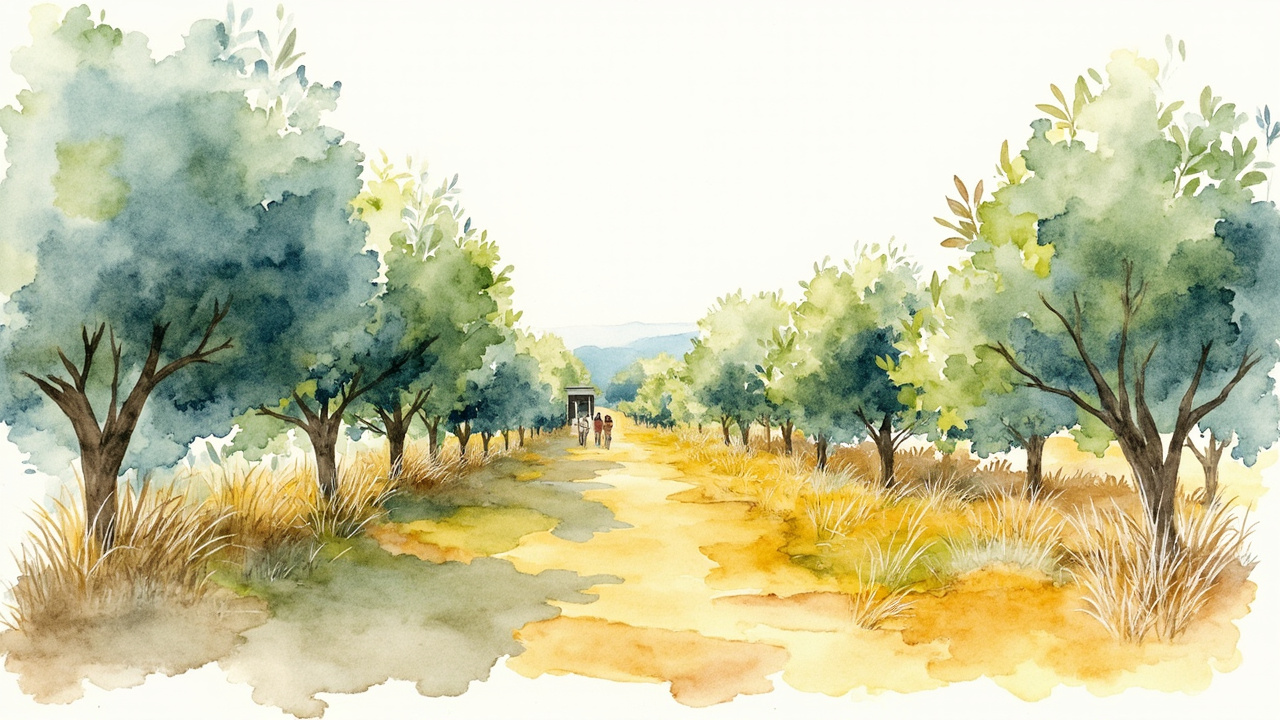
The General Directorate of Sustainable Management and Forestry Policy of the Regional Ministry of Industry, Energy, Science and Territory has formulated the environmental impact report for the project to implement irrigation and the planting of 27.70 hectares of olive groves at the Chozo Blanco Estate, located in plot 14 of polygon 54 of the municipality of Don Benito (Badajoz). The resolution, signed on August 31, 2026, by the general director Juan Eloy Rodríguez Ucedo, is published in the Official Gazette of Extremadura number 175, dated September 10, 2026, with reference 2026062270 and file IA24/0808.
The project, promoted by the company Chozo Blanco, SC (CIF J06191068), falls under group 1, section d) point 2 of Annex V of Law 16/2015, of April 23, on environmental protection of Extremadura, and group I, section c) point 1 of Law 21/2013, of December 9, on environmental assessment, as it involves the consolidation of irrigation over 10 hectares.
A super-intensive irrigation system with drip irrigation
The action consists of the implementation of an olive grove under a super-intensive regime with localized drip irrigation, supplied through a groundwater concession from two boreholes located on the plot itself. The total annual volume requested amounts to 96,366.078 m³/year, broken down as follows:
- 95,866.08 m³/year destined for agricultural irrigation of the super-intensive olive grove.
- 500.00 m³/year for domestic use associated with the operation.
The planting frame is 4.00 x 1.35 meters, which is equivalent to 1,851 trees per hectare, with 2.7 drippers of 1.6 l/h per plant. The irrigation network will be divided into three sectors irrigated in three shifts, and the water abstraction is being processed before the Guadiana Hydrographic Confederation under reference 561/2021.
Consultations and environmental constraints
During the processing, a dozen agencies and entities were consulted, including the Nature Conservation and Protected Areas Service, the General Directorate of Libraries, Archives and Cultural Heritage, the Guadiana Hydrographic Confederation, the Don Benito City Council, and associations such as Ecologistas en Acción, Adenex, SEO/BirdLife, AMUS, or Greenpeace. The Hydrographic Confederation initially reported unfavorably, although after the modification of the environmental document, it issued a new response in June 2025.
The report concludes that the activity does not affect areas of the Natura 2000 Network nor other protected areas of Extremadura, and that no significant adverse effects on the environment are foreseen provided that the preventive and corrective measures set out in the resolution are complied with. These include prior archaeological surveying, respect for the 5-meter easements of the watercourses and the 100-meter police zone, and the protection of existing native trees.
Validity and scope of the report
The environmental impact report will lose its validity if, once published in the Official Gazette of Extremadura, the project has not been authorized within a period of four years from its publication. The conditions may be revised upon the entry into force of new regulations or if monitoring detects that the measures are insufficient. Pursuant to Article 76.6 of Law 16/2015, the report shall not be subject to appeal, without prejudice to those that may proceed against the act of project authorization.
The resolution is issued solely for environmental purposes, without prejudice to the necessary sectoral authorizations, such as the water concession that must be granted by the Guadiana Hydrographic Confederation. For the Extremaduran agricultural sector, the transformation from rain-fed to irrigated land represents a notable increase in production—one hectare of irrigated land is equivalent to 4.50 of rain-fed land—which reinforces the viability of farms in a region with a strong olive-growing tradition such as Don Benito.
Source: Official Gazette of Extremadura, no. 175, September 10, 2026, section III (official reference: 2026062270, file IA24/0808).