BOP de Guadalajara · 15 Sep 2026 · 2 vistas
Guadalajara approves converting commercial premises into affordable housing
Por FactBox Admin
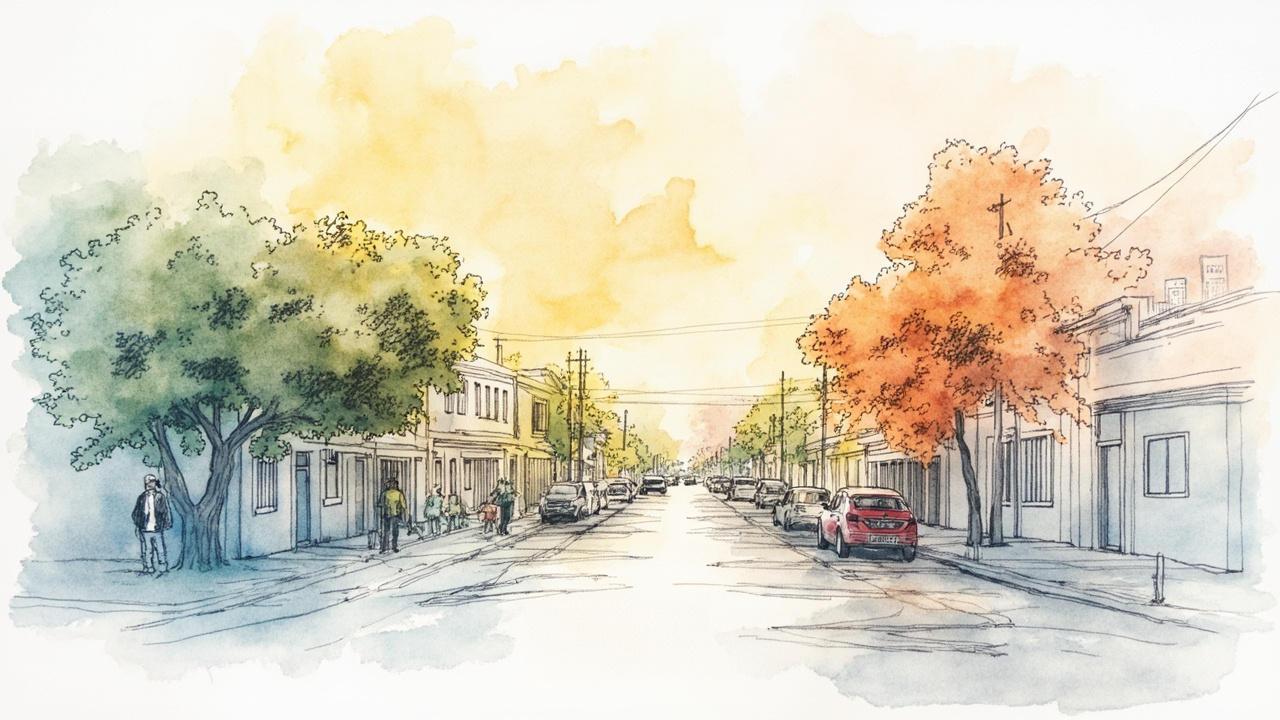
The Plenary of the Guadalajara City Council, in a session held on August 28, 2026, has definitively approved the Ordinance regulating the transformation of commercial premises for residential use, the full text of which is published in the Official Gazette of the Province of Guadalajara number 176, dated September 15, 2026. The regulation will enter into force once the period provided for in article 65.2 of Law 7/1985, of April 2, Regulating the Bases of Local Regime, has elapsed, in accordance with the provisions of its article 70.2.
The ordinance responds to a dual reality: the decline of traditional physical commerce, eroded by digitalization and e-commerce, and the progressive increase in housing costs. In response, the City Council opts to occupy existing built space rather than urbanizing new territory, in line with the goal of a more sustainable city. The regulation repeals the previous regulation, known as the “addition to article 63 of the Urban Planning Rules of the General Urban Development Plan,” initially approved on February 11, 2004, and made definitive by Decree of May 18, 2004.
Requirements for transformation
The conversion of a premise into housing requires an urban planning license for change of use and construction, as it involves an increase in the number of dwellings, according to article 157.1.b) of Legislative Decree 1/2023, of February 28, which approves the Recast Text of the Law on Land Management and Urban Planning Activity of Castilla-La Mancha. The application must be accompanied by a technical project including a report, plans, budget, basic health and safety study, and a waste management study.
Transformation is only possible when the primary use of the building is residential and the zonal regulation does not prohibit it. Premises with facades facing porticoed floors without alternative enclosures, those located under industrial, garage-parking, or tertiary uses, and those that form part of plinths or bases with differentiated volumetry are excluded, in order to preserve the multifunctionality of the neighborhood.
Conditions for new dwellings
The resulting dwellings must comply with the Technical Building Code regarding health, protection against humidity, insulation, and indoor air quality. The typology of studios (open-plan dwellings without compartmentalization except for the bathroom) is permitted, with a minimum useful area of 30 m² and the capacity to fit a circle 2.70 meters in diameter.
- Kitchen smoke extraction must be carried out via a direct duct to the roof; hoods with carbon filters or recirculation systems are not permitted.
- Access may be provided from the public road or from the building’s common areas.
- Linked basements or storage rooms accessible from within the dwelling itself are not permitted.
- New dwellings are exempt from increasing the building’s minimum allocation of parking spaces.
Aesthetics and citizen participation
The storefront facade must be transformed to adopt the rhythm characteristic of residential use, integrating into the building’s composition in terms of materials, colors, and the rhythm of openings. Shop-window type designs or proposals that maintain the original storefront opening are not permitted.
During the public consultation conducted on the municipal website, 36 contributions were received, requesting direct access to the public road, the removal of the requirement for homeowners’ association authorization, the implementation of studios, and the exemption of smoke vents to the roof. The ordinance addresses most of these requests, except for those that would result in dwellings with quality requirements lower than the rest of the municipality, such as the smoke vent to the roof.
An administrative appeal against the ordinance may be filed before the Administrative Litigation Chamber of the High Court of Justice of Castilla-La Mancha, based in Albacete, within two months of its publication. The regulation, signed by Mayor Ana Cristina Guarinos López on September 10, 2026, opens a pathway for owners and developers to bring affordable housing to the market amidst the housing access crisis, without the need to consume new urban land.
Source: Official Gazette of the Province of Guadalajara, No. 176, September 15, 2026, City Councils section (official reference: document 2026_2394).