EUR-Lex · 13 Aug 2026 · 6 vistas
EU widens sheep pox containment zones across Romania and Bulgaria
Por FactBox Admin
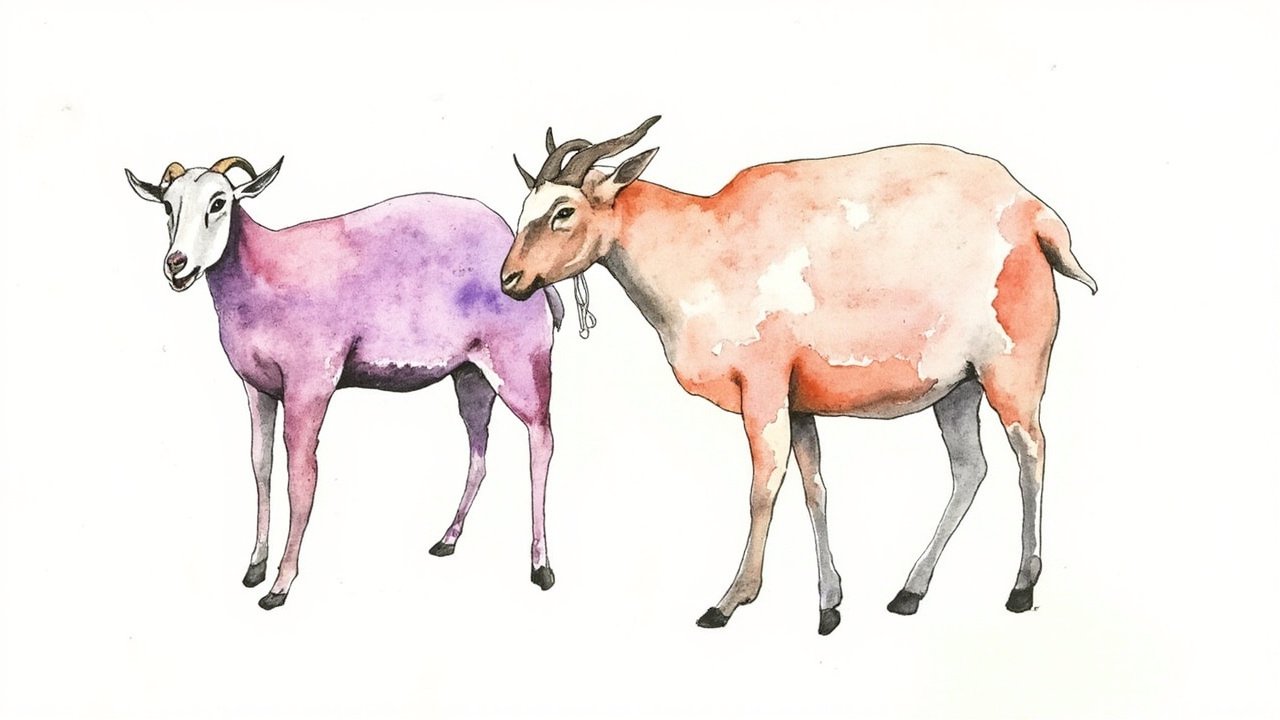
The European Commission has widened the emergency containment zones for sheep pox and goat pox in Romania and Bulgaria after new outbreaks were reported in both countries. The measures are set out in Commission Implementing Decision (EU) 2026/1943 and Commission Implementing Decision (EU) 2026/1945, both adopted on 10 August 2026 and published in the Official Journal of the European Union (L series) on 13 August 2026.
Both texts amend earlier decisions – (EU) 2026/1108 for Romania and (EU) 2025/1160 for Bulgaria – adopted under Article 259(1) of Regulation (EU) 2016/429, the Animal Health Law. Sheep pox and goat pox is a category A viral disease of sheep and goats that can severely hit livestock profitability and disrupt movements of animals and derived products inside the Union, as well as exports to third countries. Given the urgency of the epidemiological situation, the new measures are to apply as soon as possible.
New outbreaks in two member states
Romania notified the Commission on 3 August 2026 of one additional outbreak in an establishment keeping ovine and caprine animals in Iași County, outside the protection and surveillance zones already listed. Bulgaria, for its part, reported six additional outbreaks in establishments keeping ovine animals between 22 July and 5 August 2026.
Five of the Bulgarian outbreaks are located outside the previously established restricted zones, in Haskovo, Blagoevgrad and Stara Zagora, where the disease had not been reported before; the remaining outbreaks affect the region of Plovdiv.
Widened protection and surveillance zones
Romania must now apply protection zones (5 km radius) and surveillance zones (20 km radius) around the confirmed outbreaks, plus a further restricted zone covering the entire counties of Mureș, Cluj, Bistrița-Năsăud, Ialomița, Buzău, Brăila, Iași and Neamț. In Bulgaria, protection and surveillance zones cover parts of Plovdiv, Haskovo, Blagoevgrad and Stara Zagora (with Pazardzhik included in the surveillance area), and the whole region of Plovdiv becomes a further restricted zone.
- Romania: protection and surveillance measures run until 16 September and 4 October 2026; the movement-related areas in Annex II apply from 4 October to 3 November 2026.
- Bulgaria: the newest zones in Haskovo, Blagoevgrad and Stara Zagora expire between 18 August and 13 September 2026; the Plovdiv further restricted zone and the Annex II area run until 31 December 2026.
- Outbreaks are tracked in the Animal Disease Information System (ADIS) under references such as RO-CAPRIPOX-2026-00001 to RO-CAPRIPOX-2026-00006 and the BG-CAPRIPOX-2025/2026 series.
What the measures mean for farmers and trade
The decisions are addressed to Romania and the Republic of Bulgaria, whose veterinary authorities must apply the disease-control rules laid down in Delegated Regulation (EU) 2020/687. The size of the zones and the duration of the measures were fixed in line with Article 64(1) of the Animal Health Law and with the Terrestrial Animal Health Code of the World Organisation for Animal Health (WOAH).
For livestock farmers, the practical consequences are restrictions on moving ovine and caprine animals and their products out of the restricted zones, and on consignments destined for export to third countries. Both texts were signed for the Commission at Brussels by Olivér Várhelyi, Member of the Commission, and are accompanied by an authentic-language clause (Romanian for the Romania decision, Bulgarian for the Bulgaria decision) and EEA relevance.
The widening of the zones shows that the disease is spreading beyond the initially affected areas in south-eastern Europe, and the measures will remain in force until the dates listed in the annexes unless the epidemiological situation changes. Producers, traders and veterinary authorities in the two countries – and in neighbouring member states – should expect tighter controls on animal movements and on exports of sheep and goat products in the coming weeks.
Source: Official Journal of the European Union, L series, 13.8.2026 (official reference: CELEX L_202601943 and CELEX L_202601945).