EUR-Lex · 28 Aug 2026 · 5 vistas
EU updates child car seat safety rules under UN Regulation 129
Por FactBox Admin
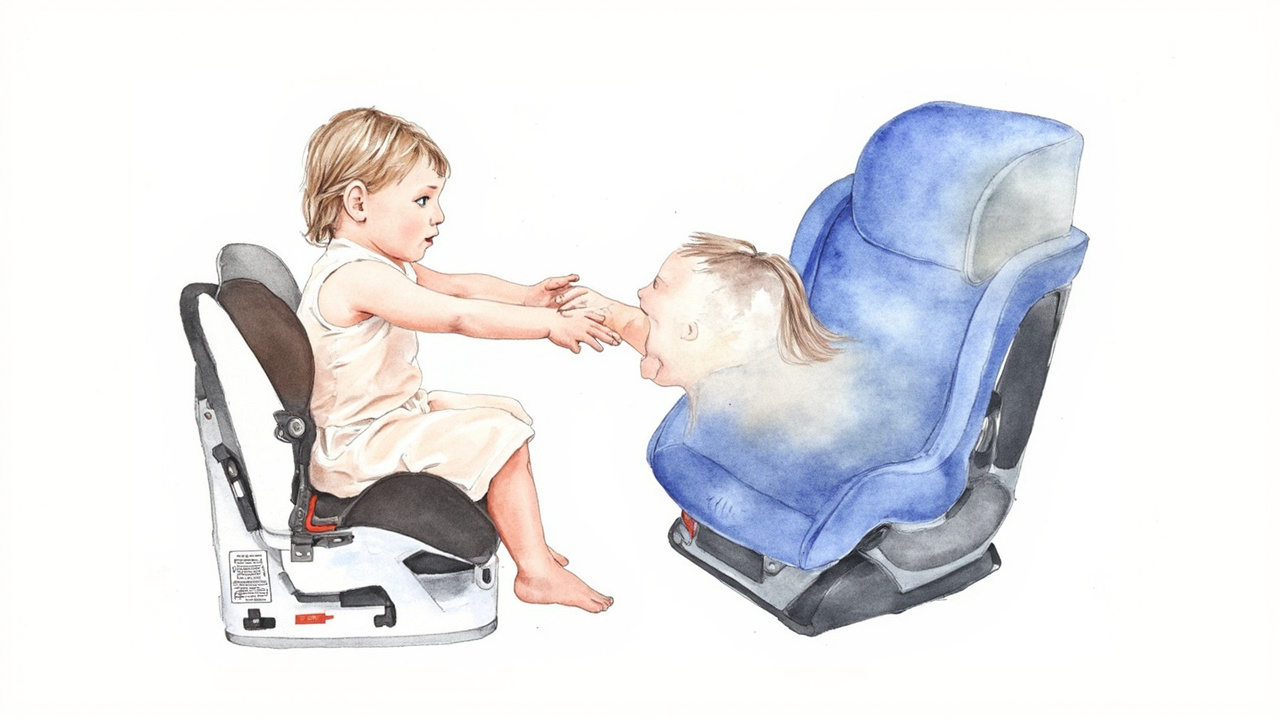
The European Union has published updated safety rules for child car seats, aligning them with the latest amendments to UN Regulation No. 129 on Enhanced Child Restraint Systems. The consolidated text, incorporating the 04 series of amendments in force since 4 June 2026, appears in the Official Journal of the European Union of 28 August 2026 under reference 2026/1534.
UN Regulation No. 129, developed under the 1958 Agreement of the United Nations Economic Commission for Europe (UNECE), sets uniform provisions for the type approval of Enhanced Child Restraint Systems used on board motor vehicles. The newly published version incorporates all valid text up to Supplement 4 to the 04 series of amendments, which entered into force on 4 June 2026. The regulation covers eight categories of restraint systems, from i-Size ISOFIX seats to universal booster cushions.
What the regulation covers
The scope spans integral and non-integral systems, including i-Size seats, universal belted restraints, booster seats and booster cushions. An Enhanced Child Restraint System is defined as a device that accommodates a child in a sitting or supine position and limits the mobility of the child’s body, reducing the risk of injury in a collision or abrupt deceleration. The categories covered are:
- Integral Universal ISOFIX Enhanced Child Restraint Systems (i-Size)
- Integral and non-integral Specific vehicle ISOFIX systems
- i-Size booster seats and universal booster cushions
- Integral and non-integral Universal Belted Enhanced Child Restraint Systems
Crash-test and technical requirements
The regulation sets detailed crash-test procedures. For frontal impact, the test trolley must reach a velocity of 50 km/h; for rear impact, 30 km/h (with a total velocity change of 32 km/h); lateral impact tests are also specified. Technical requirements cover lower tether straps of at least 900 mm, no-slack indicators, support-leg dimensions and generic lower tether brackets, which must withstand a force of 5,000 N. Booster cushions may not be type-approved for children below 125 cm in stature, and a measurement device verifies that the top of the child’s head sits at or above a horizontal plane 770 mm from the seat reference axis.
Transitional provisions
The 04 series introduces staggered transitional rules for Contracting Parties:
- From the date of entry into force, no Contracting Party may refuse to grant or accept type approvals under the 04 series.
- From 1 September 2026, parties are not obliged to accept approvals to preceding series first issued after that date.
- From 1 September 2027, parties are not obliged to accept type approvals issued to preceding series.
- Parties must continue to accept and grant extensions for systems not affected by the 04-series changes.
For families and manufacturers across the EU, the update means child car seats sold in the bloc must meet the latest crash-test and conformity requirements, with a phased transition giving industry time to adapt. The consolidated text is a documentation tool; the legally binding versions are the UNECE working documents listed in the Official Journal.
Source: Official Journal of the European Union, L series, 28 August 2026, p. 1 (official reference: 2026/1534, CELEX L_202601534).