Federal Register · 04 Sep 2026 · 8 vistas
EPA proposes NPDES permit exemption for vessel discharges in ocean waters
Por FactBox Admin
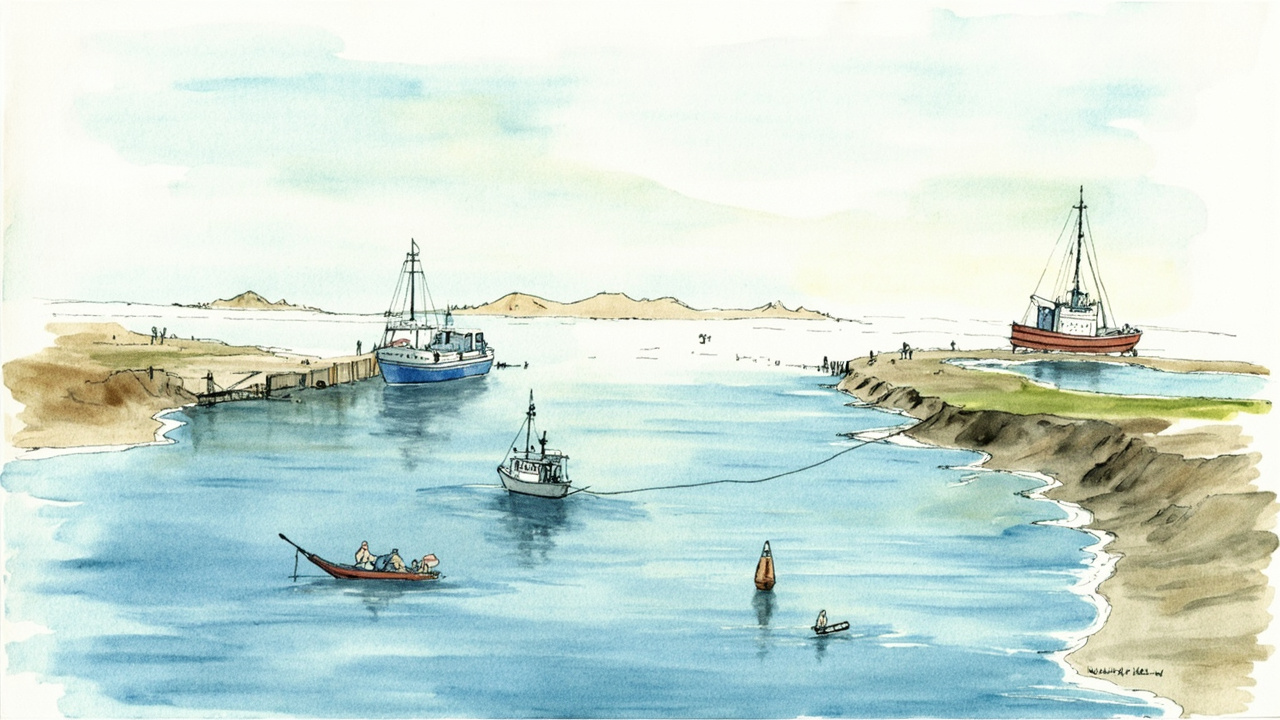
The U.S. Environmental Protection Agency (EPA) has published a proposed rule that would revise the regulatory definition of “discharge of a pollutant” under the Clean Water Act (CWA) so that pollutants added by vessels and other floating craft in the contiguous zone or the ocean are no longer treated as discharges requiring a National Pollutant Discharge Elimination System (NPDES) permit. The proposal appears in the Federal Register of Friday, September 4, 2026 (Vol. 91, No. 171, Proposed Rules, p. 56819), as FR Doc. 2026-18134, Docket EPA-HQ-OW-2026-6965, RIN 2040-AG56, and would amend 40 CFR Parts 122, 123, 124 and 125. Comments must be received on or before October 19, 2026.
What the proposal would change
The rule would align the agency’s regulations with the statutory text of CWA section 502(12)(B), which excludes from the definition of “discharge” any addition of pollutants from “a vessel or other floating craft” in the contiguous zone or the ocean. The EPA proposes to remove the qualifying phrase “which is being used as a means of transportation” from the definition at 40 CFR 122.2(b) and to make conforming changes to the exclusion at 40 CFR 122.3(a).
Under the proposal, a vessel or floating craft that is not secured to the seabed would not require NPDES permit authorization to add pollutants in those waters. By contrast, a point source secured to the seabed — such as a permanently attached facility, a buoyant facility substantially moored to the seabed, or a mobile offshore drilling unit engaged in drilling — would not be considered a “vessel or other floating craft” and would remain subject to NPDES permitting as a fixed offshore facility.
Rationale and legal background
The EPA states that its current regulatory definition is broader than, and inconsistent with, the statutory text. The agency cites the Supreme Court’s 2024 decision in Loper Bright Enterprises v. Raimondo (603 U.S. 369), which requires agencies to implement the “best reading” of a statute, as the basis for re-examining its interpretation. It also references Lozman v. City of Riviera Beach (568 U.S. 115, 2013) on the ordinary meaning of “vessel.”
The proposal would not affect discharges into waters of the United States, including the territorial seas, nor would it change the scope of other statutory frameworks that may govern vessel releases, including the Marine Protection, Research, and Sanctuaries Act (MPRSA), the Oil Pollution Control Act of 1990 (OPA), and the Vessel Incidental Discharge Act (VIDA).
Costs and affected sector
The EPA prepared an economic analysis for the rulemaking, available in the docket. The agency estimates the proposal would yield approximately $1.8 million in annual cost savings:
- $1.7 million in annual compliance cost savings for offshore seafood processors operating in the contiguous zone or ocean
- $50,000 in annual administrative cost savings for the EPA associated with permitting this activity
- Roughly $22,000 in savings per establishment across the 79 permittees covered under the Region 10 offshore seafood processing general permits, of which about 71 are small entities
The EPA is seeking comment on the proposed definitions of “vessel and other floating craft,” “secured,” and “buoyant facility,” and on whether to adopt the definition of “vessel” used by the U.S. Coast Guard under 1 U.S.C. 3. The agency contact for the rulemaking is Kenda Conley of the Water Permits Division, Office of Water.
Why it matters
If finalized, the rule would relieve the maritime and offshore seafood sectors of NPDES permitting, monitoring and reporting obligations for operations in the contiguous zone and ocean, while keeping fixed offshore facilities under the program. The EPA notes that eliminating permit-required monitoring and reporting could reduce the information available for public review, and that potential foregone benefits include the current management of localized seafood processing discharges to ocean waters beyond three miles.
Source: Federal Register, Vol. 91, No. 171, September 4, 2026, Proposed Rules, p. 56819 (official reference: FR Doc. 2026-18134, Docket EPA-HQ-OW-2026-6965, RIN 2040-AG56).