BOE · 23 Sep 2026 · 9 vistas
Culture initiates the proceedings for the Fontalba Palace as a protected monument
Por FactBox Admin
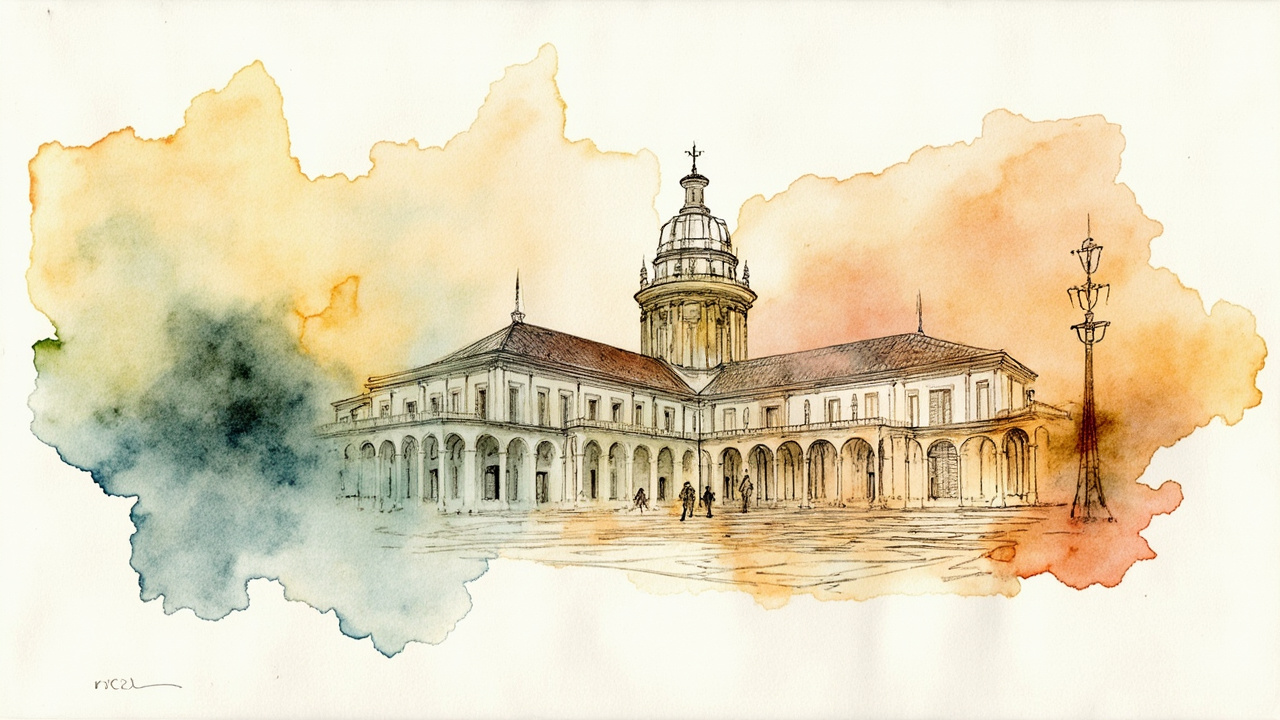
The General Directorate of Cultural Heritage and Fine Arts of the Ministry of Culture has initiated proceedings to declare the Fontalba Palace, located at Paseo de la Castellana no. 17 in Madrid, as an asset of cultural interest under the category of Monument. The resolution, signed on September 8, 2026, by the Director General María Ángeles Albert de León, is published in the Official State Gazette (Boletín Oficial del Estado) no. 235, of September 23, 2026, section III, pages 125423 to 125429 (official reference BOE-A-2026-19753). The processed file corresponds to reference BIC_003_2026.
The initiation is based on Law 16/1985, of June 25, on Spanish Historical Heritage, and Royal Decree 111/1986, of January 10, which develops it, as well as Law 39/2015, of October 1, on Common Administrative Procedure. State jurisdiction is justified because the property is state-owned, is assigned to the Public Prosecutor’s Office (Ministerio Fiscal), and houses the headquarters of the Attorney General’s Office (Fiscalía General del Estado), in accordance with Royal Decree 323/2024, of March 26, which develops the basic organic structure of the Ministry of Culture.
A palace of the ennobled bourgeoisie on the Castellana axis
The building was constructed as the residence of Francisco de Cubas y Erice, II Marquis of Cubas and Fontalba, and his wife, María de la Encarnación de Urquijo y Ussía, exponents of the ennobled bourgeoisie during the Bourbon Restoration. It occupies a plot of approximately 4,200 square meters from the former estate known as “Huerta de Loinaz,” called “Huerta de las Anorias” in the 16th century and owned by Philip II.
Both the initial 1911 project and the 1931 expansion were the work of architects José María Mendoza y Ussía and José de Aragón y Pradera. The palace follows the “Palladian palace” model of Italian influence, and in 1914 it received an award from the Madrid City Council for constructions outstanding for their aesthetic value and for incorporating technical advances: it was the first home in Madrid equipped with a telephone switchboard.
From family residence to headquarters of the Attorney General’s Office
- Between 1931 and 1932, a new wing was added along Fortuny Street, intended for rental housing and commercial premises on the ground floor.
- In February 1944, the Ministry of the Army acquired the estate to install the Supreme Council of Military Justice.
- Since 1991, the building has housed the headquarters of the Attorney General’s Office.
- The rehabilitation for this use was inaugurated on January 11, 2006, by King Juan Carlos and Queen Sofía.
The annex of the resolution describes a rectangular-plan property with a central courtyard and garden, a three-section facade and three levels topped by a cornice and balustrade. Its interior retains mirrored doors, marquetry in some floors, and the zinc coffered ceiling of the office of the Attorney General of the State, and is decorated with works from the Prado National Museum, the Reina Sofía National Art Centre Museum, the National Museum of Decorative Arts, and National Heritage.
Allegations, hearings, and scope of protection
The resolution opens a twenty-day public information period, starting from the day following its publication in the Official State Gazette, to examine the file at the Sub-directorate General for the Management and Coordination of Cultural Assets (Plaza del Rey 1, Madrid) or by electronic means. Additionally, a hearing process is granted to:
- The Attorney General’s Office of the State.
- The Ministry of the Presidency, Justice, and Relations with the Courts.
- The Community of Madrid.
- The Madrid City Council.
The initiation shall be communicated to the General Registry of Assets of Cultural Interest for preventive annotation. The protection encompasses the building and the garden, with a plot area of 4,286 m² and 6,809 m² built, corresponding to the cadastral reference 1557410VK4715H0001PL. The basement floor is expressly excluded from the scope of protection, as it does not possess heritage values, although interventions therein may not compromise the conservation of the asset.
The property is in a good state of structural conservation, and actions must be governed by the criteria of Article 39 of Law 16/1985, oriented toward conservation, consolidation, and rehabilitation, avoiding reconstructions and mimetic confusions.
The declaration would place the Fontalba Palace at the maximum level of protection for Spanish historical heritage, with a restricted regime of interventions and direct state guardianship. This step is relevant because it affects a building in permanent institutional use, the headquarters of the highest body of the Public Prosecutor’s Office, and because it extends protection to a unique example of early 20th-century residential architecture in Madrid along the Castellana axis.
Source: Official State Gazette, no. 235, of September 23, 2026, section III, pp. 125423-125429 (official reference: BOE-A-2026-19753).