BOP de A Coruña · 04 Nov 2026 · 12 vistas
Corcubión protects the paths with an ordinance that regulates the removal of wood
Por FactBox Admin
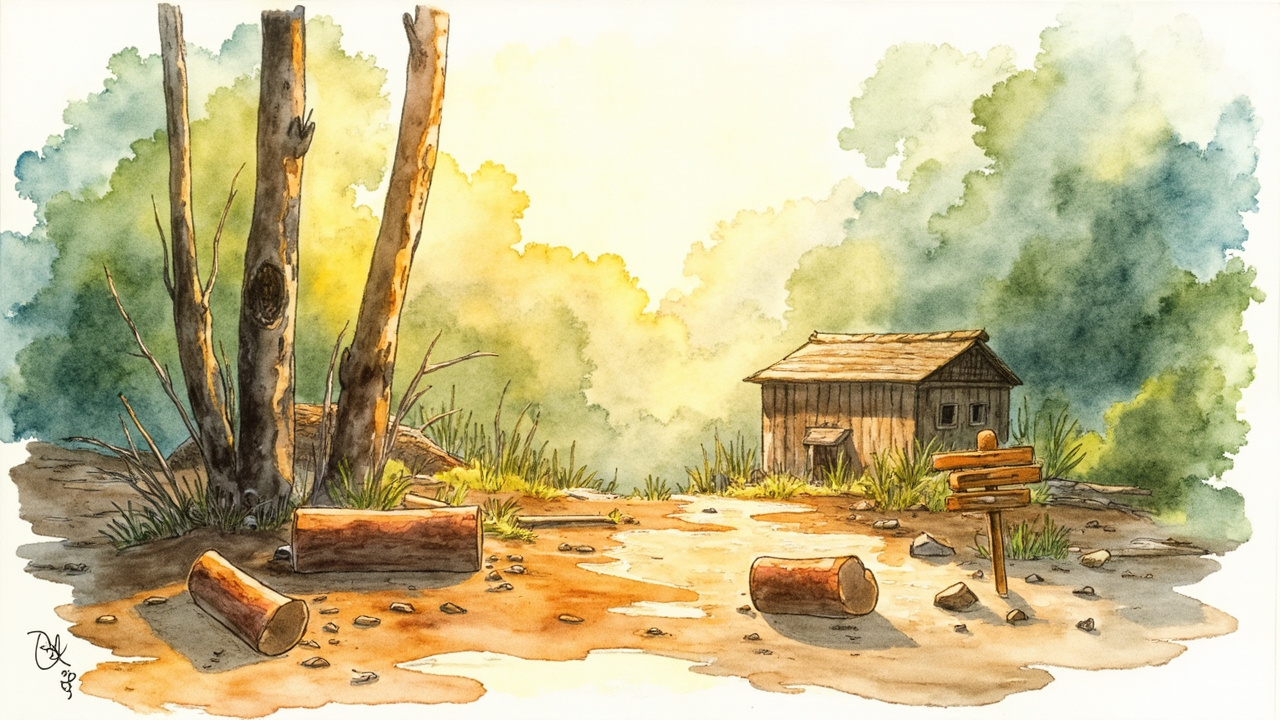
The Corcubión City Council publishes this Wednesday, November 4, in the Official Gazette of the Province of A Coruña, the final approval of the modification of the municipal ordinance for the protection and conservation of paths and public roads in relation to timber extraction operations. The text, disseminated under announcement number 2026/7124, regulates everything from the mandatory prior notification to the bonds that logging companies must deposit and the sanctioning regime. The regulation will enter into force once its full text is published in the provincial gazette and the period of fifteen business days provided for in Article 65.2 of Law 7/1985 has elapsed.
The modification was initially approved in the ordinary plenary session of July 30, 2026, and was submitted for public information for 30 business days from the publication of the initial announcement in the Official Gazette of the Province of A Coruña number 149, of August 7, 2026. As no claims or suggestions were presented within the aforementioned period, the agreement was definitively approved in accordance with Article 17.4 of RDL 2/2004. The announcement is signed in Corcubión on October 30, 2026, by the mayor, Francisco Javier Domínguez Traba.
The scope of application covers all operations that result in timber extraction within the municipal district, both those prior to the cutting (movement of vehicles, machinery, preparation of access land) and those subsequent (preparation, storage, loading, and transport), on public and private mountains and plots.
Prior notification: fifteen days in advance and ten documents
The ordinance replaces authorization with a prior notification procedure, which is submitted to the General Registry of the City Council according to the model in Annex I, at least 15 business days in advance. The notification must include:
- Identification of the company in charge of the logging and the affected plot.
- Species of wood subject to the cut and data of the owners.
- Identification of the machinery and estimated duration of the works.
- Responsible declaration or logging authorization from the forestry body of the Xunta de Galicia.
- Sectoral authorizations, if applicable.
- Identification of the storage site and the transport routes.
- Proof of the bond required in Article 5.
If the documentation is incomplete, the interested party has 10 business days to amend it. The City Council reserves the right to propose changes to the access route due to weather conditions or road safety, and the mayor may order the suspension and resumption of any logging if climatic conditions compromise the road surface of municipal roads.
Bonds from 1,500 to 12,000 euros according to tonnage
The person or company responsible for the logging must establish a bond in cash or a bank guarantee in favor of the City Council, with two modalities and amounts based on the maximum authorized weight of the vehicles:
- Per operation: 1,500 euros with GVW under 16 tonnes and 3,000 euros with GVW equal to or greater.
- Annual, valid for the entire calendar year: 6,000 euros under 16 tonnes and 12,000 euros from that figure onwards.
The annual bond will remain in deposit until the end of the fiscal year and the refund or renewal must be requested before January 31 of the following year; the Council may deny new communications if there are pending damages. When a transport company other than the one in charge of the cutting intervenes, it must subrogate the bond or present its own guarantee. The refund occurs within a period of 30 days from the request, following a favorable technical report.
Obligations in the forest and fines of up to 3,000 euros
The text prohibits deposits of wood, branches, or pruning from invading road traffic, culverts, water pipelines, or bridges, and requires the removal of all cutting residues. Where the Council enables temporary deposit spaces, companies must use them and request express authorization. Earthworks subject to a license may also not be executed.
Minor infractions are punished with 600 to 750 euros; serious ones, with 750.01 to 1,500 euros; and very serious ones, with 1,500 to 3,000 euros. It is a very serious offense to leave roads at risk for road safety, to work on paths whose use was denied, or to fail to repair after a municipal requirement; among the serious offenses is acting without a bond or without prior communication. The sanction does not exempt from repairing the damages, and the Council may execute the works subsidiarily charged to the guarantee after ten business days without amendment.
Who instructs and how to appeal
The initiation of the sanctioning procedure corresponds to the mayor or delegated councilor, the instruction to the designated authority, and the resolution to the Mayor’s Office. The standardized prior communication form will be kept updated on the municipal website and does not have a regulatory character. An administrative-litigious appeal may be filed against the approval agreement before the Superior Court of Justice of Galicia within a period of two months.
The regulation directly affects forest owners, logging companies, transporters, and residents of rural parishes, who gain a mechanism to demand the repair of paths damaged by the passage of heavy machinery, although they will assume new administrative obligations and guarantee costs before starting any cutting.
Source: Official Gazette of the Province of A Coruña, nº 211, November 4, 2026, Local Administration, p. 1 (official reference: 2026/7124).