Boletín Oficial de la Ciudad Autónoma de Ceuta · 01 Sep 2026 · 6 vistas
Ceuta activates the Es-Alert alert due to an ammonia leak at the port
Por FactBox Admin
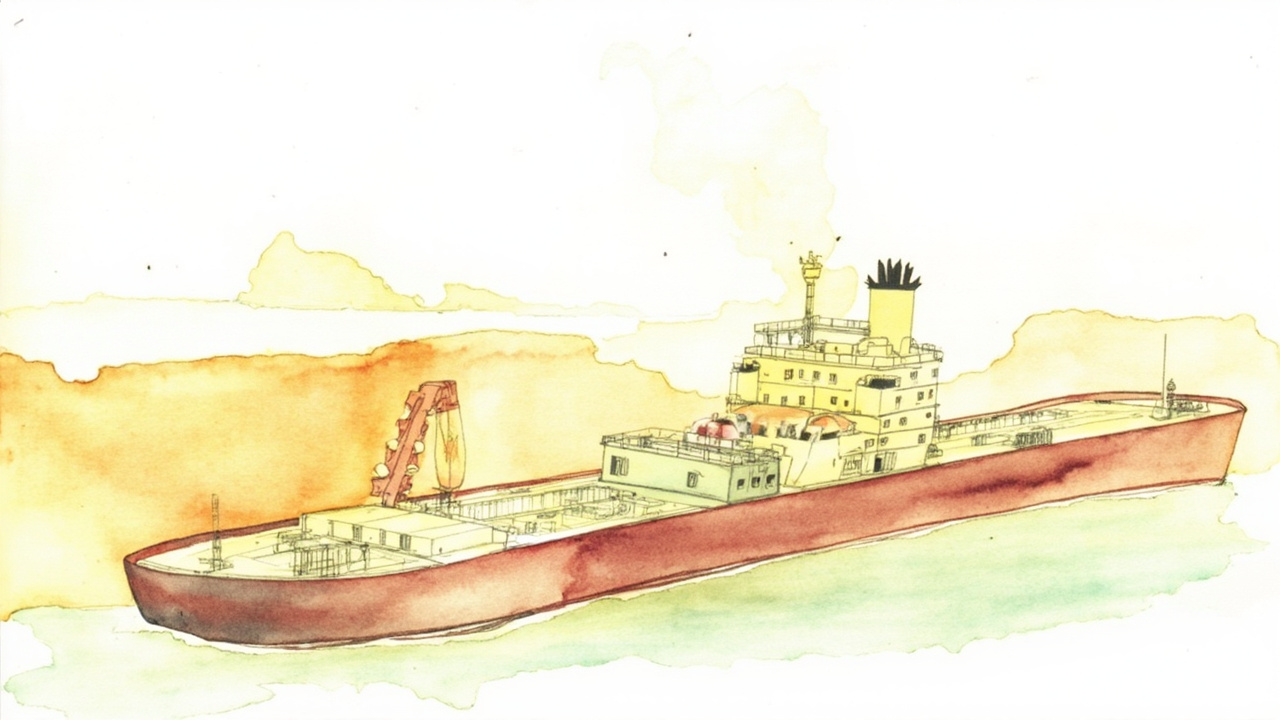
The Autonomous City of Ceuta has approved a protocol that enables the 112 Emergency Room to immediately issue the Es-Alert mass notification with a confinement message in the event of an anhydrous ammonia leak at the port. The measure is detailed in Decree 613, signed on July 20, 2026, by the Councilor for Presidency and Governance, Mr. Alberto Ramón Gaitán Rodríguez, and published in the Official Gazette of the City of Ceuta (BOCCE) No. 6,648 on September 1, 2026.
The decree approves the Annex to the Civil Protection Technical Instruction 2026-004 (ITPC:2026-004), developed by the City’s Civil Protection Service, which protocolizes preventive and self-protection actions against the danger posed by the use of anhydrous ammonia as a propulsion fuel, especially by the merchant navy.
A toxic and corrosive fuel in the bay
Anhydrous ammonia (NH3) is a colorless, easily liquefiable, and extremely dangerous, toxic, and corrosive gas that causes severe chemical burns, blindness, pulmonary edema, and even death through inhalation or direct contact. Its combustion primarily generates nitrogen and water vapor, but under non-ideal conditions, it can produce toxic by-products such as nitrogen oxides.
The instruction warns that a “handymax” type vessel can store up to 1,400 tons of ammonia near the population, whether anchored in the outer port area or docked at the west or east quays. The associated risks include:
- Collision: a leak could expose multiple vessels and the population to toxic or flammable vapors.
- Emergency management: difficulties in relocating vessels, response times, and individual protection.
- Sudden leak: from the escape to reaching the population, only minutes would elapse, depending on the wind.
The action protocol and public notification
When the Ceuta 112 Room receives a verified warning from the Maritime Captain of Ceuta regarding a threat of ammonia exposure, it will issue an immediate Es-Alert, either total or sectoral, depending on the projection of the toxic-corrosive atmosphere. The message, detailed in Annex 1, orders:
- “Alert due to risk of toxic and corrosive cloud.”
- “Do not go outside or remain outdoors.”
- “Shelter in place. Prevent outside air from entering.”
- “Place wet towels in the gaps of doors or windows.”
- “Stay informed.”
The protocol provides for the activation of the Territorial Emergency Plan of Ceuta (Platerce) in Phase 2, Operational Situation 2, and the establishment of a CECOPI via a “cloud” videoconference room provided by Telecommunications and Information Society (TSI). Only the firefighting teams of the Ceuta SEIS are equipped with protection gear for the reactive intervention phase.
A Novel and High-Impact Alert Mechanism
The instruction emphasizes that the Es-Alert system possesses the ideal characteristics to communicate the situation to the citizenry, including workers, visitors, and passersby within the port area. Permission for its issuance is granted in advance and exclusively for this risk situation involving an uncontrolled leak of anhydrous ammonia, without the need for debate regarding its suitability at the critical moment.
The measure makes Ceuta a benchmark in the preventive management of an emerging risk linked to the energy transition of maritime transport, in a dense traffic corridor such as the Strait of Gibraltar. For residents and visitors, it provides the guarantee of receiving clear and automatic confinement instructions within the first few minutes of a chemical emergency, when the speed of the response can mean the difference between life and death.
Source: Official Gazette of the City of Ceuta (BOCCE), No. 6,648, September 1, 2026, General Provisions, p. 3298 (official reference: Decree 613, ITPC:2026-004).