EUR-Lex · 18 Sep 2026 · 12 vistas
Brussels exempts Poland from fitting ETCS on twelve diesel locomotives
Por FactBox Admin
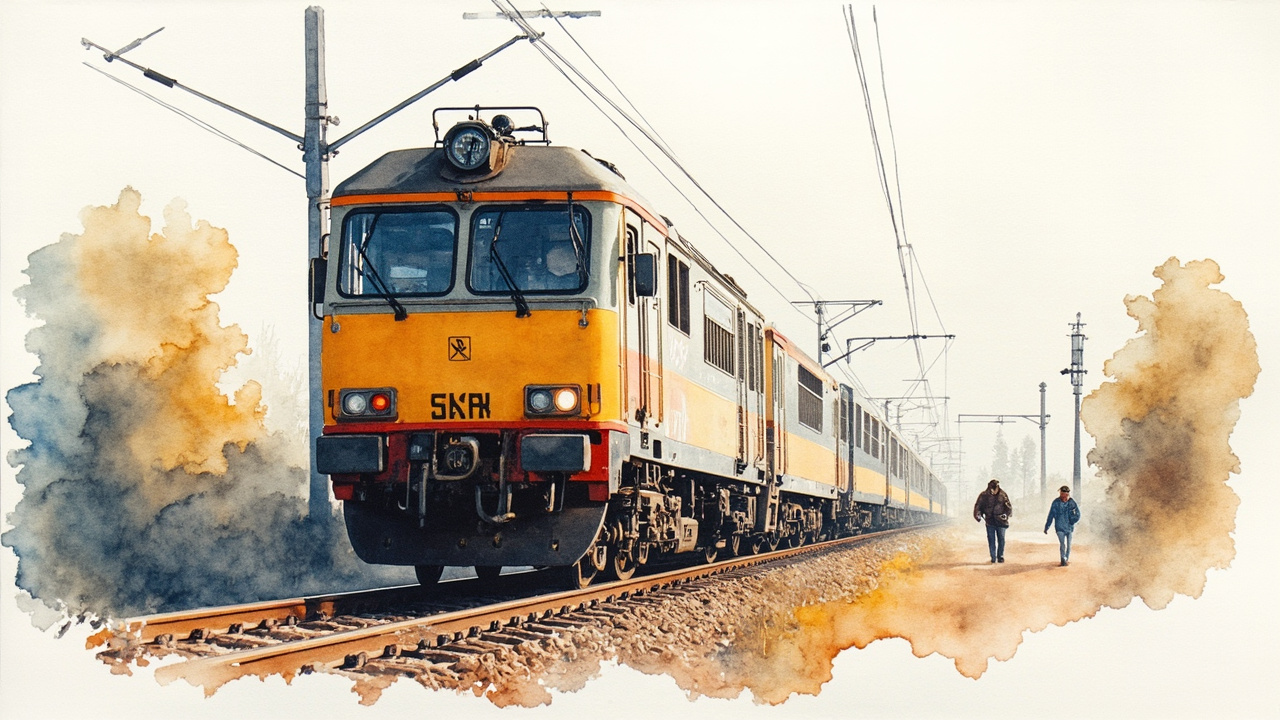
The European Commission has accepted Poland’s request not to apply the on-board ETCS requirement to 12 new diesel locomotives used on line No 65, according to Commission Implementing Decision (EU) 2026/2059 of 17 September 2026. The decision, adopted under Directive (EU) 2016/797 on rail interoperability, was published in the Official Journal of the European Union, L series, of 18 September 2026 and notified under document C(2026) 6338. Only the Polish text is authentic.
A request filed in May and a line outside the ETCS network
Poland submitted its request on 26 May 2026, invoking Article 7(1), point (d), of Directive (EU) 2016/797, to escape point 7.4.2.1 of Annex I to Commission Implementing Regulation (EU) 2023/1695, which requires newly built vehicles to be equipped and ready for operation with the European Train Control System.
The project consists of the purchase of 12 diesel locomotives by PKP Linia Hutnicza Szerokotorowa Sp. z o.o. The vehicles will circulate in Ukraine and in Poland on line No 65, a route with a track gauge of 1 520 mm, different from that of the main rail network within the Union, and which is not equipped with ETCS trackside.
The cost argument: PLN 18 million and up to PLN 7 million per kilometre
According to the documents submitted by Poland, complying with the ETCS requirement would entail an additional cost of PLN 18 000 000, since ETCS would have to be installed on top of the two Polish Class B train protection systems already fitted on line No 65:
- SHP, the Polish automatic train stop system.
- A radio system with Radiostop function.
Installing ETCS trackside on line No 65 would cost between PLN 1 500 000 and PLN 7 000 000 per kilometre, and such work is not foreseen in the Polish national implementation plan for the control-command and signalling technical specification for interoperability.
As an alternative, Poland proposed applying point 7.4.2.1.2(3)(a) of the Annex to Commission Regulation (EU) 2016/919, as last in force on 27 September 2023, under which the ETCS requirement does not apply to new vehicles that do not circulate on specified types of lines. Line No 65 is not a high-speed line, is not on the corridors listed in Annex I to Commission Implementing Regulation (EU) 2017/6, and does not ensure connections to the main European ports, marshalling yards, freight terminals and freight transport areas defined in that regulation.
An exemption running to 2056, with notification duties
The Commission concluded that the conditions of Article 7(1), point (d), and Article 7(4) of Directive (EU) 2016/797 were fulfilled and accepted the request, on condition that the alternative provision proposed by Poland is applied. The measures are in line with the opinion of the committee referred to in Article 51(1) of that Directive.
The locomotives are planned to be delivered by 2032 at the latest, and the P5 technical revision requiring replacement of the control-command and signalling equipment is scheduled 24 years after acquisition. The decision therefore applies until 31 December 2056 or until ETCS has been installed trackside on line No 65, whichever occurs first.
Under Article 2, Poland must notify the Commission without undue delay once ETCS is installed trackside on line No 65, and whenever it has information that the non-application may reasonably compromise the safety of the railway system. The decision is addressed to the Republic of Poland and was signed in Brussels on 17 September 2026 by Apostolos Tzitzikostas, Member of the Commission.
The exemption illustrates how the Commission is willing to grant derogations from the single European signalling standard where a line sits physically outside the interoperable network and where full compliance would be disproportionate. For rail operators, signalling suppliers and interoperability policy, it confirms that the 1 520 mm eastern border corridor will remain outside ETCS for another three decades, and that any future deployment of the system on line No 65 will automatically end the exemption.
Source: Official Journal of the European Union, L series, 2026/2059, 18 September 2026, p. 1 (official reference: 2026/2059, ELI: http://data.europa.eu/eli/dec_impl/2026/2059/oj).