Butlletí Oficial de la Província de Barcelona · 23 Sep 2026 · 8 vistas
Barcelona and the Interior Ministry sign the new framework agreement on security and policing
Por FactBox Admin
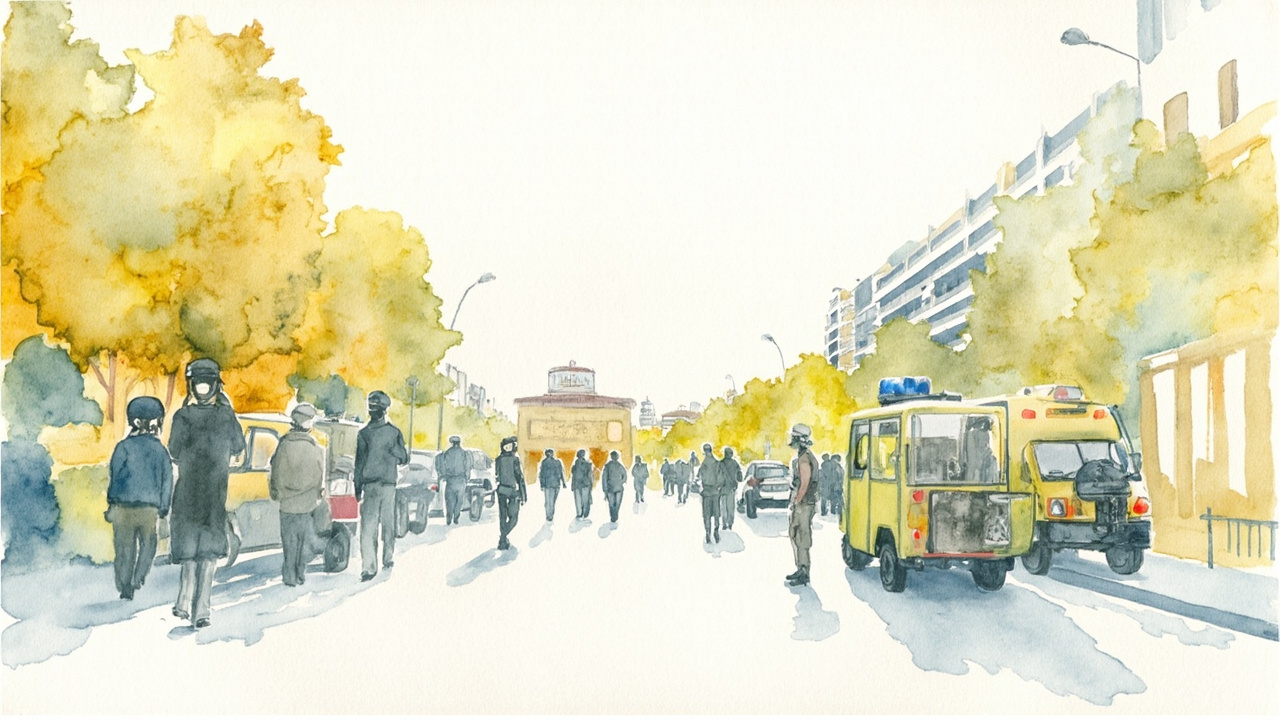
The Department of Interior and Public Safety of the Generalitat de Catalunya and the Barcelona City Council have sealed the new framework agreement for coordination and collaboration in matters of public safety and policing, which reorganizes the collaboration between the Police of the Generalitat-Mossos d’Esquadra and the Guàrdia Urbana de Barcelona. The text, approved by the Plenary of the Municipal Council on May 29, 2026, and signed on September 17, is published in the Official Gazette of the Province of Barcelona on September 23, 2026, with the official reference CVE 202610142915. The new framework replaces the agreement in force since September 26, 2005.
The document, spanning twenty pages, bears the signature of the Minister of Interior and Public Safety, Núria Parlón i Gil, and the Mayor of Barcelona, Jaume Collboni i Cuadrado, assisted by the general secretary of the corporation, Jordi Cases i Pallarès. The municipal agreement approved by the Plenary bears the reference 26XC0095.
The agreement is framed within Law 4/2003, of April 7, on the organization of the public safety system of Catalonia, and aims to update the forms and procedures of cooperation between the two administrations, as well as review and expand the functional areas and the catalog of services of the 2005 agreement. The repealing provision nullifies that text and the derived operational protocols insofar as they oppose the new agreement.
A renewed coordination architecture
The agreement establishes the bodies that shall channel the collaboration between the two administrations:
- The Local Security Board, with the functions and composition set out in Law 4/2003 and the Municipal Charter of Barcelona.
- The Urban Security Council, a citizen participation body, composed of the mayor, the first deputy mayor, the management of the Area of Security, Prevention and Coexistence, and the head of the Guàrdia Urbana, on one hand, and the Minister of Interior, the general secretary of the Department, the director general of the Police, and the head of the Barcelona Metropolitan Police Region, on the other.
- The district Prevention and Security councils, with the active presence of the Mossos commands.
- The Operational Coordination Table, which will have a permanent coordination office or unit.
- The Joint Command Room, a permanent service for the management of police incidents and emergencies.
New services for the Guàrdia Urbana
The Guàrdia Urbana will progressively assume the receipt of reports for criminal offenses at its citizen service offices, with the aim of extending the service to all territorial units of the force. Reports requiring investigation by the Mossos or specialized teams are excluded:
- Crimes against life or those that seriously affect the physical or moral integrity of persons.
- Crimes against sexual freedom requiring specialized collection.
- Any other crime classified with severe penalties.
- Disappearance or location of persons.
The processing and investigation by the Guàrdia Urbana will cover sixteen types of events, including minor offenses, injuries without hospitalization, thefts, theft of vehicles without police interest, damage to municipal property, crimes against traffic safety, and documentary falsehoods linked to road safety. Regarding gender-based and domestic violence, the Victim Assistance Service of the Guàrdia Urbana will perform the police risk assessment, the monitoring of victims, and protection measures, and its personnel will be integrated into the instruction teams of the Mossos’ URIV.
Information exchange and access to data
The two bodies will share databases and ICT applications of police interest. The General Directorate of Police will provide the Guàrdia Urbana with access to the NIP-SIP and other systems in areas such as administrative policing, the receipt of reports, the investigation of criminal acts, and the protection of victims of gender-based violence. The Mossos will have access to the municipal citizen security video surveillance system, limited to the management of public disorder, emergencies, and the investigation of crimes.
The Operational Coordination Table will share data on criminal and administrative offenses at intervals not exceeding one month. The bodies will immediately inform each other of public order disturbances, vehicle thefts, explosive alerts, serious accidents, or public road closures. The Mossos are authorized to report violations of municipal ordinances and, in traffic matters, will do so using municipal forms.
Validity and relocation of the Joint Room
The agreement is valid for four years from publication and is extended for equal periods if neither party expresses opposition one year in advance; termination is effective one year after notification. The Joint Command Room, currently at Carrer Lleida, 28, will move to the Tres Xemeneies facility, at Avinguda Paral·lel, 39-49.
The new framework reaches readers as the roadmap that organizes who does what regarding security in Barcelona over the coming years: it expands the operational competencies of the Guàrdia Urbana, opens cross-access to police data, and establishes the joint command mechanisms that must be deployed through specific protocols.
Source: Official Bulletin of the Province of Barcelona, September 23, 2026, Local Administration, pp. 1-20 (official reference: CVE 202610142915).