La Gaceta — Diario Oficial · 21 Sep 2026 · 3 vistas
Transgenic banana against Fusarium open for public consultation in La Gaceta
Por FactBox Admin
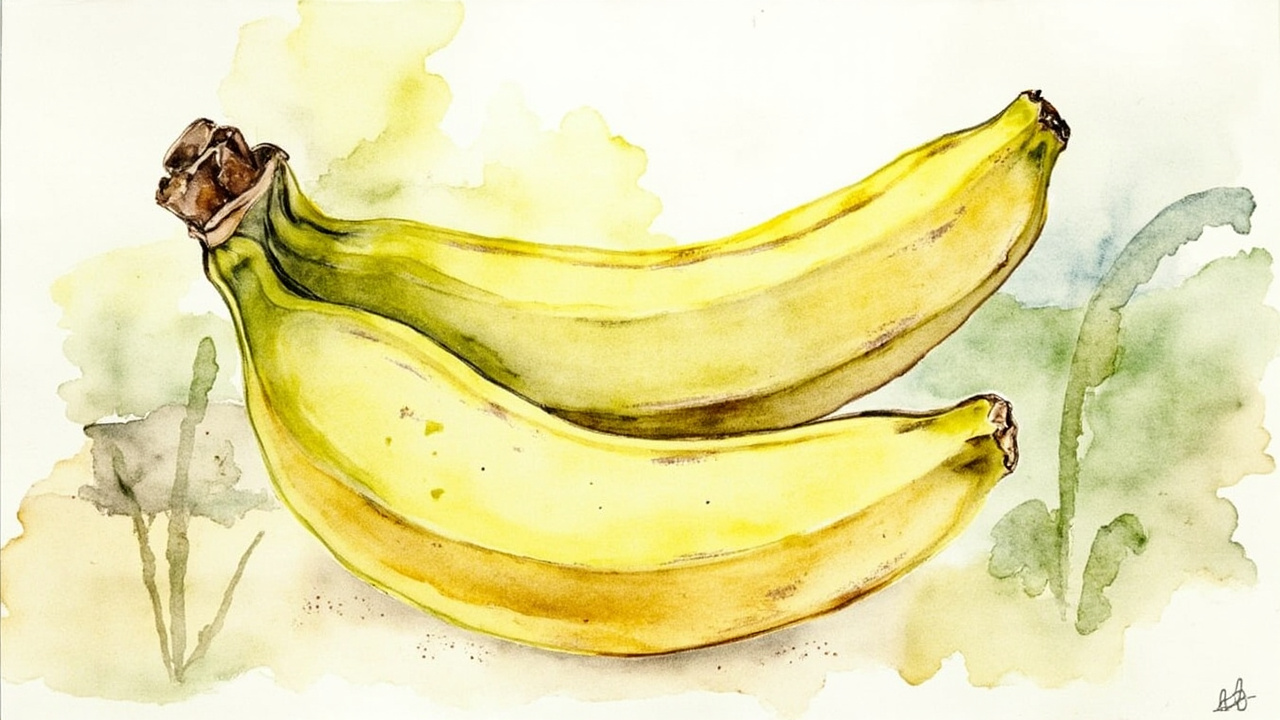
The State Phytosanitary Service (SFE) has submitted for public consultation the request from Corporación de Desarrollo Agrícola Del Monte S.A. to obtain an Environmental Release Certificate for genetically modified banana resistant to Fusarium oxysporum f. sp. cubense tropical race 4. The edict was published in La Gaceta No. 177 on Monday, September 21, 2026, pages 4 and 5, under official reference IN202601123848, and opens a period of ten business days for any interested party to express their support or opposition.
The notice is issued based on Law 7664, Phytosanitary Protection Law; Executive Decree No. 26921 MAG, Regulations to the Phytosanitary Protection Law; and Law No. 8537, which approves the Cartagena Protocol on Biosafety to the Convention on Biological Diversity. The request will be processed through the internal procedure of the Genetically Modified Organisms Program DB-OGM-PO-06, available on the SFE website.
According to the edict, the material corresponds to a GMO with no history of use in the country and, according to previous evaluations carried out by the applicant, the project is expected to have an insignificant risk to the conservation and sustainable use of biological diversity and agriculture, as well as to human health.
The modified banana and its objective
- Unique identifier: QUT QCAV4-6.
- Genes: MamRGA2 and nptII.
- Proteins: NBS-LRR MamRGA2 and neomycin phosphotransferase type II (NPTII).
- Characteristics: resistance to Fusarium oxysporum f. sp. cubense tropical race 4 and resistance to kanamycin as a selection marker.
- Objective: to produce vegetative material for commercialization, planting, plantation development, and commercial fruit production.
Where the project would be developed
- Buenos Aires, canton of Buenos Aires, Puntarenas: propagation.
- La Rita, canton of Pococí, Limón: commercial field production.
- Modality: confined use projects and environmental release.
How to participate and what will be evaluated
Expressions must be submitted in person or via email to ogm@sfe.go.cr, before the Genetically Modified Organisms Program (POGM) of the SFE, located in Sabana Sur, San José, adjacent to the La Salle Museum, at the Ministry of Agriculture and Livestock, Monday to Friday from 7:00 a.m. to 3:00 p.m., within ten business days following the publication of the edict. The written submission must indicate a means of notification to communicate any resolution from the POGM.
Public documents containing the technical information for risk analysis can be obtained physically at the SFE or digitally, in accordance with Article 23.2 of the Cartagena Protocol. The submissions will be analyzed and accepted or rejected on a technical basis and, where appropriate, referred to the National Technical Biosafety Commission (CTNBio) for the risk assessment opinion, according to Annex III of the Cartagena Protocol.
The edict details the variables that will be assessed: effect on the environment and human health, impacts on agriculture and other productive activities, the potential for the crop to become a weed, survival of plants when sharing space with native flora, the possibility of eliminating volunteer plants or crop residues, specific gene flow to wild or cultivated relatives, and the impact on non-target organisms.
The notice was signed by Francisco Jesús Angulo Sibaja, head of the Special Programs Unit, and by the technical representative Armando Aurelio Aguilar Villaredia, ID 701120927, representing the company, legal entity ID 3-101-010882.
The decision directly interests banana producers, environmentalists, and communities in Buenos Aires and Pococí, because the banana is one of the country’s main export products and Tropical Race 4 of Fusarium is considered one of the greatest threats to the crop. The resolution of the POGM and, if applicable, the CTNBio will define whether the material can be released into the environment and grown commercially in Costa Rican territory.
Source: La Gaceta, No. 177 of September 21, 2026, Miscellaneous Documents (Agriculture and Livestock), p. 4 (official reference: IN202601123848).