Butlletí Oficial de les Illes Balears · 15 Aug 2026 · 10 vistas
Balears rejects the Son Orlandis photovoltaic and BESS park in Marratxí due to environmental impact
Por FactBox Admin
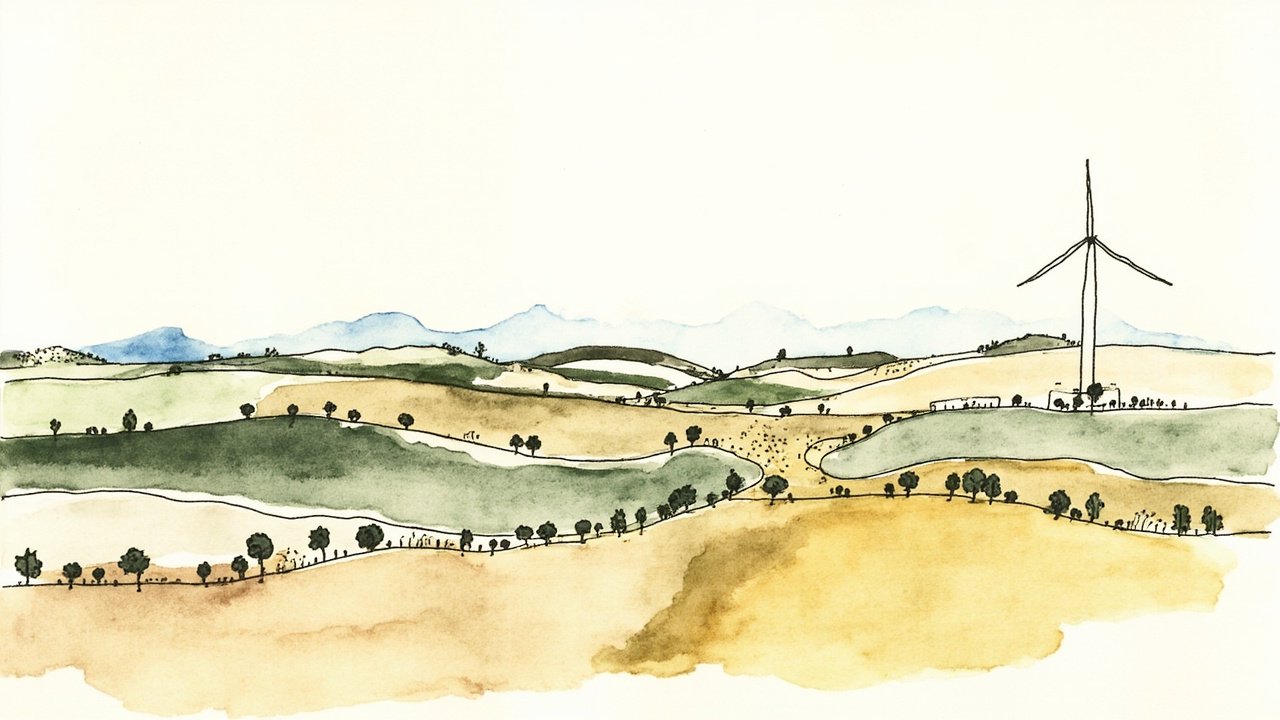
The Ministry of Housing, Territory and Mobility has published in the Official Gazette of the Balearic Islands (BOIB 102/2026, 15 August 2026) Resolution 8209, by which the Director General for Urban Harmonisation and Environmental Assessment, Paz Andrade Barberá, issues an unfavourable environmental impact statement (EIS) for the Son Orlandis Photovoltaic Park and BESS hybridisation project. The resolution, dated 16 April 2026, rejects the proposal by MERAK STORAGE 1 SL (file 5A/2025) due to the foreseeable significant adverse impacts on the environment.
The project sought to install a photovoltaic solar plant with battery energy storage system (BESS) on plots 301 and 302 of polygon 4 in the municipality of Marratxí. The procedure began in April 2024 as a strategic industrial project subject to ordinary environmental assessment, and the environmental impact study (EIS) was signed on 13 February 2024 by Jaime Sureda Bonnin, Gonzalo García Uriarte and Ángel Lacleta Barrera.
What the project intended
The planned installation included a solar plant of 696 panels of 615 Wp with a capacity of 0.428 MW, a 21.22 MW storage system made up of 26 lithium battery containers, a 30/66 kV step-up substation and a 1,200-metre underground evacuation line to the Son Orlandis substation of Red Eléctrica de España (REE).
- Total area of the plots: 28,911 m²
- Installation footprint: 6,337.17 m²
- Material execution budget (PEM): €19,384,000.01
- Planned execution period: 6 months
- Emissions avoided (photovoltaic): 209.7 tCO₂/year
- Emissions avoided (storage): 11,318.58 tCO₂/year
Reasons for the unfavourable declaration
The resolution details a set of technical considerations underpinning the unfavourable decision. Firstly, the project has not justified the exceptional nature of its location on rural land, as required by Law 14/2019, of 29 March, on strategic industrial projects in the Balearic Islands. Secondly, there is no specific regulation governing the conditions for installing battery-based energy storage systems in the Balearic Islands.
- The batteries are planned less than 250 metres from the scrubland of the plot, failing to meet the minimum distance criteria recommended by the environmental body and the MITECO safety recommendation of 100 metres from habitats of community interest (HIC).
- The power of the battery system (21.22 MW) is approximately 50 times greater than that of the photovoltaic plant (0.428 MW), creating an imbalance that is not justified.
- According to data from the Ministry for the Ecological Transition, the renewable energy share in the Balearic Islands is 25.9%, meaning the stored energy would come mostly from non-renewable sources.
- The construction of the substation would cause irreparable and permanent damage to the scrubland area, classified as a habitat of community interest.
The territorial and citizen debate
The processing has generated intense debate. The Marratxí Town Council issued an unfavourable report in March 2025 and reiterated it in February 2026, noting that the planned corrective measures were insufficient and that the evacuation line coincided with those of other parks, affecting the rural road of S’Esvaït. The Consell de Mallorca, through the Territorial Planning Service, also issued an unfavourable report in December 2024, arguing that the project was essentially a storage system rather than a renewable energy installation.
- The citizen platform Renovables Sí, però així NO! submitted 8 objections against the project, questioning the lack of territorial planning, the impact on rustic land and the risk to protected species in the area.
- Several public administration services, including the Species Protection Service, the Industrial Safety Service and the Directorate General for Emergencies, issued favourable reports.
Repercussions for the Balearic energy model
The decision highlights the growing tensions between the promotion of renewable energy and the protection of rustic land in the Balearic Islands. The resolution underscores the “urgent need to establish territorial planning” in light of the high volume of storage facility projects underway on the island of Mallorca, and recalls that processing as a strategic industrial project on rustic land must be exceptional in nature, which has not been demonstrated in this case. The EIS is not subject to direct appeal, but the promoter may appeal administratively or judicially against the project authorisation decision.
Source: BOIB 102/2026, 15 August 2026, Section III, p. 44828 (official reference: Resolution 8209 / file 5A/2025).