Diario Oficial de Castilla-La Mancha · 24 Sep 2026 · 9 vistas
Authorization granted to expand a farm in Ledaña from 50,000 to 75,000 chickens
Por FactBox Admin
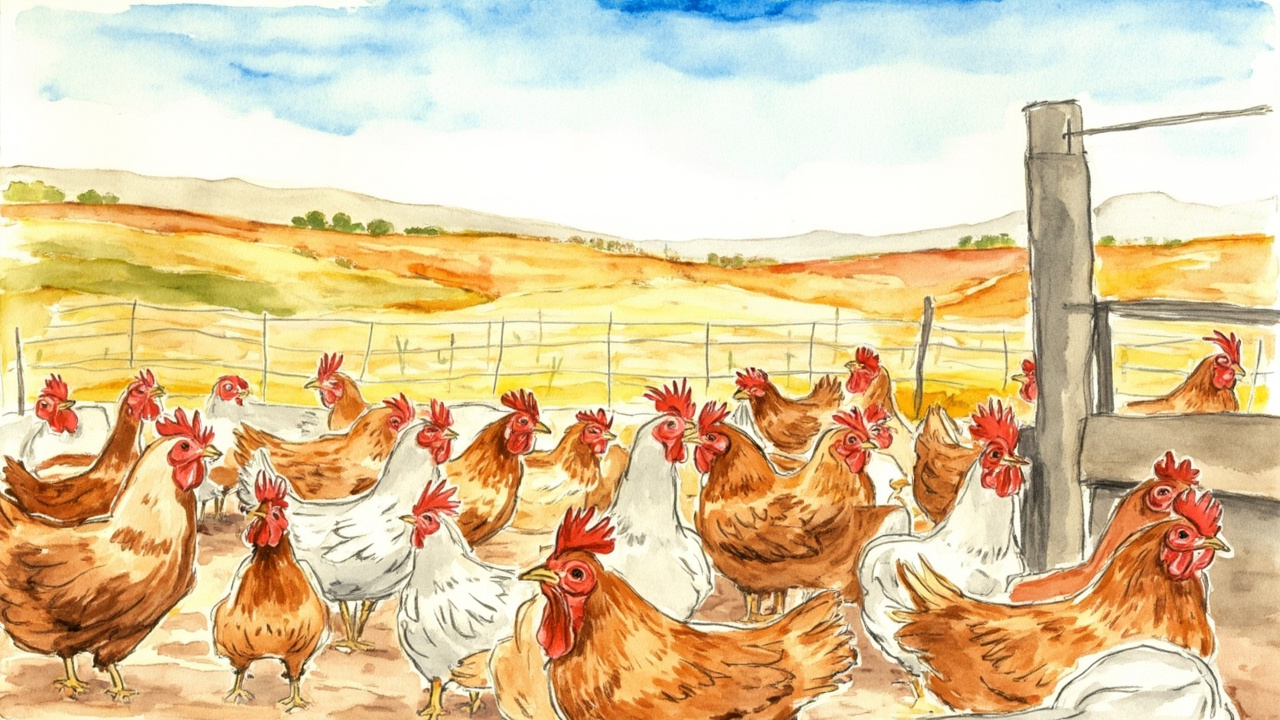
The Provincial Delegation for Sustainable Development of Cuenca has formulated the environmental impact statement that considers the expansion of an intensive broiler chicken farm in the municipality of Ledaña (Cuenca) to be viable, which will increase from 50,000 to 75,000 head. The resolution, dated September 15, 2026, is published in the Official Gazette of Castilla-La Mancha no. 184, of September 24, 2026, with the official reference 2026/6792 and file number S478/2025/CU/00003.
The ruling is framed within Law 2/2020, of February 7, on Environmental Assessment of Castilla-La Mancha, which defines the environmental impact statement as the mandatory and determining report that concludes the ordinary assessment. The project falls under Annex I, group 1, section a, subsection 2 of said regulation, which subjects animal breeding facilities exceeding 55,000 places for chickens to assessment. The Ledaña City Council acts as the substantive body, while the farm is registered in the Livestock Farm Registry under number ES161180000034, currently in the name of Agro Elios S.L.
A new shed next to the existing facilities
The promoters are María Ascensión Gómez Pardo and Elio Clemente Gómez, under a joint ownership regime. The farm already has two attached poultry sheds for broiler chicken fattening with an average capacity of 50,000 chickens per cycle, located in polygon 15, plot 227, in Ledaña. The initial project had an environmental impact assessment resolution dated April 22, 2008, file CU-5488/07.
The expansion will be carried out with the construction of a new shed on plots 215, 217, and 227 of polygon 15, in the area of “Los Olivares”, next to the existing ones. The projected shed will measure 120 meters by 15 meters, with an eave height of 2.70 meters and a gable roof, and access will be via the existing road at kilometer point 25+485 on the right side of the CM-3222 highway.
- Capacity: from 50,000 to 75,000 broiler chickens per cycle.
- Cycles: between 5.8 and 6 per year, with a sanitary void of 12 days between batches.
- Animal stay: 45 to 49 days, up to a weight of 2.10 to 2.20 kilograms.
- Predicted water consumption: 4,968.25 cubic meters per year.
- Feed: approximately 300 tons per cycle, stored in three 12-ton silos.
- Poultry litter: approximately 1,125 tons per year, removed by an authorized manager.
- Distance to the urban center of Ledaña: 1,800 meters.
Environmental conditions and water protection
The technical analysis identifies the management of animal waste as the primary concern, due to the risk of soil and groundwater contamination by eutrophication, along with odors and noise from the facility and its equipment. The project is located in the area declared vulnerable to nitrate pollution of agricultural origin known as “Mancha Oriental”, therefore Royal Decree 47/2022, of January 18, and Decree 80/2025, of October 14, are applicable.
The Júcar Hydrographic Confederation initially issued an unfavorable report on November 27, 2025, as the water use rights for the expansion were not proven. Following the promoters’ allegations, the body issued a favorable report on May 28, 2026, conditioned on not exceeding the rights authorized in file 1205/2025 (2025IP0599).
The resolution requires, among other measures, the immediate removal of poultry litter without provisional storage, the control of bedding moisture to limit odors, transport routes alternative to urban centers, soundproofing systems in the facility, and the notification of the installation to the catalog of potentially atmosphere-polluting activities, in Group C, code 10 05 08 02.
Consultations, public information, and monitoring
The file accumulated consultations with administrations and entities, including the Ledaña City Council, the Villagarcía del Llano City Council, the Natural Environment and Biodiversity Service, the Iniesta Regional Agricultural Office, the Culture Service, the General Directorate of Roads, and the Public Health Service of the Provincial Health Delegation. Ecologistas en Acción de la Manchuela Cuenca y Albacete, WWF/Adena Spain, SEO/BirdLife, the Esparvel Cuenca Naturist Group, and the Pueblos Vivos Cuenca Association were also consulted.
The environmental impact study was submitted for public information via an announcement from the Ledaña City Council on July 6, 2026, published in the Official Gazette of Castilla-La Mancha no. 131, of July 13, 2026. The municipal Plenary certified its conformity with the processing on August 28, 2026, file 175/2024.
Monitoring is the responsibility of the Ledaña City Council, with annual reports from the promoter between January 1 and March 31 of the year following each campaign, and specific controls on odors in the urban center, number of head, waste management, and pavement condition. The declaration will lose its validity if the execution of the project does not begin within four years of its publication.
The resolution bears the signature of the provincial delegate, José Ignacio Benito Culebras.
The decision clears the main environmental procedure for a project that will triple livestock pressure on a rural environment in the Conquense Manchuela, in an area already declared vulnerable to nitrates. For the residents of Ledaña and nearby municipalities, the conditions set verifiable limits on odors, water, and waste; for the poultry sector, it confirms that expansions exceeding 55,000 places still require an ordinary evaluation; and for the environmental groups that participated in the consultations, it opens the way for annual monitoring and compliance surveillance.
Source: Official Gazette of Castilla-La Mancha, no. 184, of September 24, 2026, section III (Other Provisions and Acts), page 32869 (official reference: 2026/6792).