Commonwealth of Australia Gazette · 05 Nov 2026 · 8 vistas
Australia's oldest house: Parramatta colonial farms win national heritage listing
Por FactBox Admin
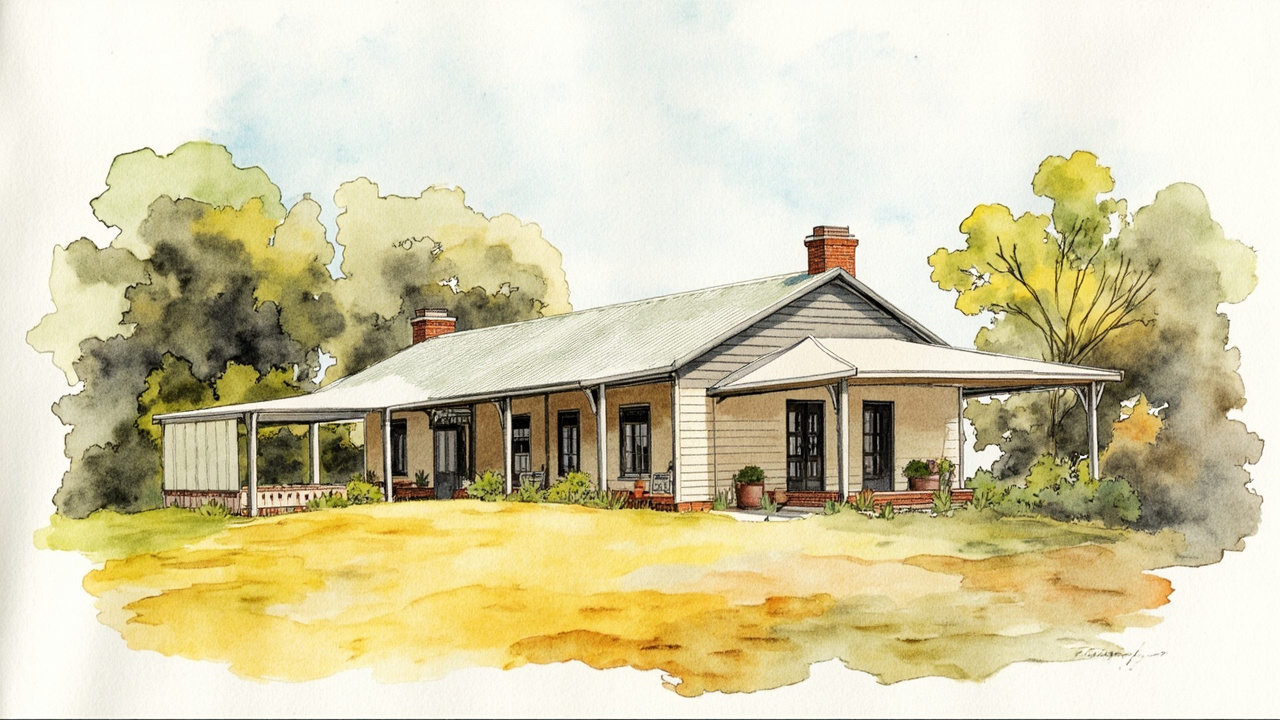
Murray Watt, Minister for the Environment and Water, has included Parramatta’s Colonial Farms in the National Heritage List, extending national statutory protection to three colonial cottages and their surrounding reserves in Sydney’s west. The inclusion was made under section 324JJ of the Environment Protection and Biodiversity Conservation Act 1999 in an instrument dated 4 November 2026 and registered on 5 November 2026 as C2026G00719 in the Commonwealth of Australia Gazette. The listed place comprises Elizabeth Farm, Hambledon Cottage and Experiment Farm, the site of the first land grant in New South Wales.
The minister recorded that he had considered the Australian Heritage Council’s assessment of whether the place meets the National Heritage criteria, together with the comments given to the council under sections 324JG and 324JH of the Act, before declaring himself satisfied that the place has the National Heritage values set out in the schedule. The schedule assesses the place against six criteria: the course of Australia’s history, rarity, potential to yield information, principal characteristics of a class of cultural environment, creative or technical achievement, and special association with persons of importance in Australia’s history.
A bungalow that invented the verandah
Elizabeth Farm cottage, at 70 Alice Street, Rosehill, was built in 1793 and is described in the instrument as the oldest surviving colonial dwelling in Australia, and the site where the first married couple to arrive as free settlers, John and Elizabeth Macarthur, settled. The schedule records that a verandah was added to the front and sides of the brick Georgian bungalow in 1805–06, producing the double-pitched hipped-roof form that became the model for the Australian colonial home. It is, the instrument finds, the only building in Australia that tracks that shift through its layered architectural record, from the 1793 hardwood-shingled roof to the 1830s galvanised roof.
First land grant, first wool clip
Experiment Farm, at 9 Ruse Street, Harris Park, was the site of the first land grant in the colony, formally granted to the emancipated convict James Ruse in 1792. Ruse received 30 acres as a reward for making himself self-sufficient within a year, farming wheat and maize and using deep hoeing, aeration, crop rotation and composting; the schedule notes that his experiment persuaded Governor Arthur Phillip to open the Parramatta region to wider settlement, with 4,000 acres granted over the following five years, and that the grant system formalised free European settlement “while simultaneously, the displacement and dispossession of First Nations people”.
The schedule credits the estate with the birth of Australia’s fine wool industry. John and Elizabeth Macarthur sent the first export of saleable wool from the estate to Britain as early as 1807 and later won gold medals for quality and quantity; Elizabeth maintained Australia’s first stud book, was the first wool exporter to wash sheep before shearing and the first settler to produce hay for sale. Olive trees John Macarthur brought from England in either 1805 or 1817 are the oldest in Australia, and their acclimatisation was noted in Commissioner J. T. Bigge’s 1822 inspection of agriculture and trade.
Rarity, archaeology and the boundaries
Hambledon Cottage, completed in 1824 as a second or guest home on the estate, shares design and detailing with Elizabeth Farm cottage, and its original design has been attributed to Henry Kitchen. Experiment Farm cottage, built in the 1830s, is cited as one of the few highly intact examples of the single-storey verandahed colonial bungalow, and the schedule also finds outstanding value in known and potential archaeological remains across the three sites.
The listed boundary takes in, in addition to the cottages:
- James Ruse Reserve and Swann Reserve at Harris Park
- Clay Cliff Creek, between Harris Street and Arthur Street, Parramatta
- 2a Gregory Place, Harris Park
- Road reservations of Gregory Place, Parkes Street, Ruse Street and Alfred Street
The listing gives the cottages, gardens, olive plantings and open landscape remnants of the original 30-acre grant formal recognition as values of outstanding significance to the nation. For residents of Rosehill and Harris Park, the instrument places the surviving setting of Australia’s earliest colonial farming landscape inside the national heritage system administered under the Environment Protection and Biodiversity Conservation Act 1999.
Source: Commonwealth of Australia Gazette, Government Notices, 5 November 2026 (official reference: C2026G00719).