Boletín Oficial de Aragón · 26 Oct 2026 · 3 vistas
Aragón allocates 550,000 euros for livestock farmers affected by summer fires
Por FactBox Admin
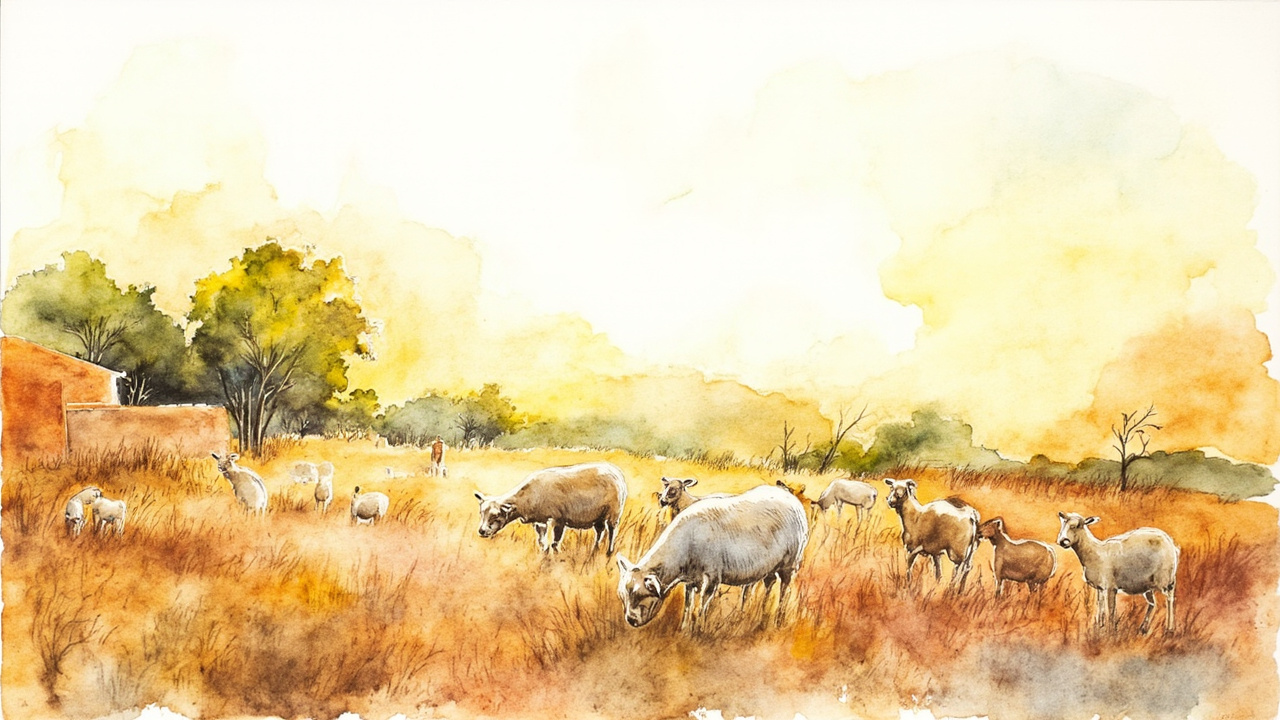
The Department of Agriculture, Livestock and Food of the Government of Aragon has announced grants aimed at alleviating the damages suffered due to the loss of grazing resources in livestock farms affected by the fires of June, July, and August 2026. The call, endowed with 550,000 euros, is published in Order AGA/1535/2026, of October 21, in the Official Gazette of Aragon number 207, of October 26, 2026 (reference BOA20261026030), and opens an application period of ten business days.
The regulation is supported by the regulatory bases established by Order AGA/1375/2026, of September 14, published in the Official Gazette of Aragon number 188, of September 28, 2026, which regulates the repair of damages in agricultural and livestock farms in situations of civil protection emergency or of a catastrophic nature. On July 28 and September 15, 2026, the Council of Ministers approved the declaration of areas severely affected by civil protection emergencies for the territories of 323 catastrophic episodes that occurred between March 31 and August 31, 2026, including the Aragonese forest fires of the summer.
The preamble of the order describes the effect on the farms: the loss of pastures forces the transfer of animals outside their usual area, the premature consumption of reserves intended for winter, and the purchase of additional feed on the market, which, according to the text, “seriously compromises the economic viability of the farm.” The funding is provided by the Budgetary Execution Contingency Fund and Section 30 of the regional budgets, charged to application 14050 G/5311/770130/91002, PEP element 2026/000192; the credits are expandable without the need for a new call.
Fifteen fire zones and a limited scope by annex
The territorial scope is limited to the affected municipalities listed in Annex I of the order, available on the Electronic Office under procedure number 11915. The preamble identifies the disaster zones covered by the call:
- Barbastro
- Alcampell-Tamarite de Litera
- Uncastillo
- Leciñena
- La Fueva
- Loporzano
- Castillonroy
- Peñarroya de Tastavíns
- Orés
- Ejulve
- La Cerollera
- Baells
- Las Peñas de Riglos
- Almonacid de la Sierra
- Villafranca de Ebro
Requirements: extensive, REGA and CAP 2026
Beneficiaries may be natural or legal persons and entities without legal personality who are owners of sheep, goat, cattle, and equine production and reproduction farms under an extensive or semi-extensive system that comply with:
- Be registered in the General Registry of Livestock Holdings (REGA) prior to the publication of the order.
- Have grazing areas of the typologies listed in Annex II affected by fires within the municipalities listed in Annex I.
- Have declared the parcels in the joint application for the 2026 CAP, in accordance with Order AGM/126/2026, of January 21.
- Possess the mandatory administrative authorizations prior to publication.
Intensive or non-extensive holdings, those classified as fattening or fattening centers, and those categorized as self-consumption are excluded. Those who fall under the prohibitions of Article 13 of Law 38/2003, of November 17, General Law on Subsidies, may not apply, although an exception is made for those with debts to the regional Treasury for an amount lower than the requested subsidy.
Calculation of aid, pro-rating, and deadlines
The amount is determined by the degree of affection, defined as the quotient between the weighted affected grazable area and the total grazable area of the holding. The affected area of stubble or with declared product 358 is reduced by a correction coefficient of 0.5 due to its lower forage capacity. The resulting degree is multiplied by the average period of livestock permanence, in days, differentiating between humid and Mediterranean pastures, and by the average daily unit cost of feeding per livestock unit (LSU).
If the total amount of applications exceeds the available credit, a pro-rating will be applied using a common reduction coefficient. The aid is compatible with other subsidies but is subject to the de minimis regime of Regulation (EU) No 1408/2013, with a cumulative limit of 50,000 euros per beneficiary over three fiscal years, and in no case may it exceed the value of the damage.
Applications are submitted electronically via the regional electronic office using code 11915, and the deadline ends ten business days following publication. The Director General of Rural Development will resolve the applications within three months, with a negative administrative silence, following a report from a valuation commission chaired by the Head of the Insurance and Risks Section. Beneficiaries commit to maintaining a census of at least 70% of the amount computed for the aid for one year. The summary of the call is published in section V of the same bulletin (reference BOA20261026034), with identification number BDNS 936870.
The call arrives as extensive holdings in the affected regions face winter without their usual pastures and with skyrocketing feeding costs. The margin is narrow: ten business days to apply and a credit of 550,000 euros which, if demand exceeds it, will be distributed proportionally among all admitted applicants.
Source: Official Gazette of Aragon, number 207, of October 26, 2026, section III, pages corresponding to Order AGA/1535/2026 (official reference: BOA20261026030).