BOP de Tarragona · 21 Sep 2026 · 9 vistas
Almoster limits the daily street vending fee to 25 euros
Por FactBox Admin
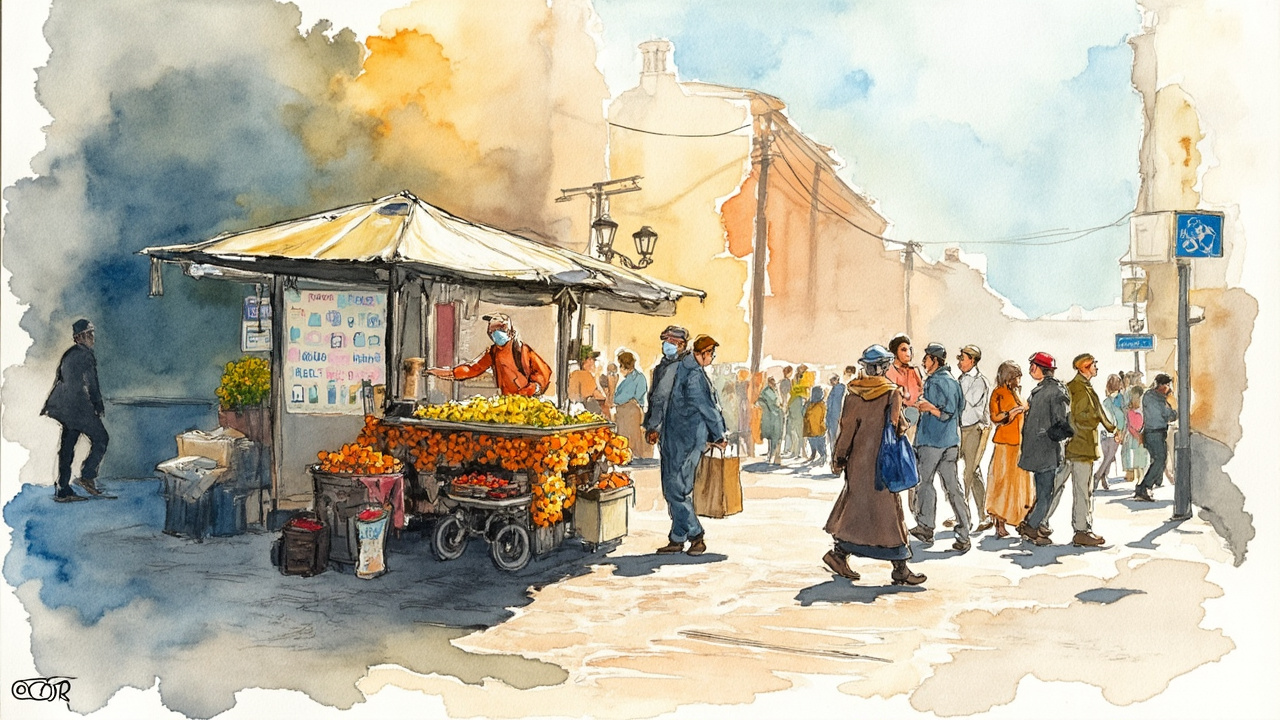
The Plenary of the Corporation of the Almoster City Council has definitively approved the modification of fiscal ordinance number 13, which regulates the tax for non-sedentary sales in the municipality. The text establishes that the amount of the tax for the occupation of public roads with street vending stalls may not exceed 25 euros per stall per day. The agreement is published in the Official Gazette of the Province of Tarragona on September 21, 2026, with the official reference CVE 2026-08470 and a length of three pages.
The modification stems from the plenary session of July 8, 2026, in which the provisional approval of the ordinance was agreed upon. The agreement was submitted for public consultation for 30 business days through edicts published in the BOP of Tarragona on July 27, 2026, and on the municipal electronic office. During this period, no objections were filed, meaning the agreement has become definitive and the full text of the ordinance is transcribed in Annex 1 of the announcement.
The ordinance is framed within the powers that articles 133.2 and 142 of the Constitution and article 106 of Law 7/1985, of April 2, regulating the bases of the local regime, grant to local entities, and is deployed in accordance with articles 20 to 27 and 57 of the revised text of the Law regulating local treasuries, approved by Royal Legislative Decree 2/2004, of March 5.
A rate of 1.40 euros per square meter and day
Annex 1 of the ordinance establishes the applicable tax quota. The general rate for the occupation of public land with market stalls, shacks, sales booths, shows, attractions, or leisure activities on local public-use land, as well as street industries, street vendors, and cinematographic filming, is 1.40 euros per square meter per day.
In the specific case of street vending stalls, the tax is calculated based on the occupied surface area, expressed in square meters, according to the ordinance rate. In order to promote street commercial activity in the municipality and ensure the proportionality of the tax, the text establishes that the resulting amount may not exceed 25 euros per stall per day.
Article 6 of the ordinance determines that no bonuses or reductions will be applied for the determination of the tax debt.
What is taxed and who must pay
The taxable event is the private use or special exploitation of the public domain for the installation of non-sedentary sales stalls. The regulation expressly lists the included cases:
- Weekly itinerant market stalls
- Sales booths
- Sales stalls
- Food stalls
- Food trucks and similar installations
Taxpayers are the natural and legal persons and the entities referred to in Article 35.4 of Law 58/2003, of December 17, General Tax Law, in whose favor the corresponding licenses or concessions are granted. Article 4 also regulates joint and several and subsidiary liability, as well as succession in debts derived from economic operations and activities.
Accrual, management, and sanctions
The accrual of the tax begins with the private use or special exploitation for the installation of the stalls and, in any case, once the application initiating the action or the file has been submitted, which will not be processed without prior payment. If the duration extends over several fiscal years, the tax period comprises the calendar year and accrual takes place on January 1st of each year, except in cases of commencement or cessation of the occupation.
The tax shall be required by a settlement carried out by the City Council with notification to the taxpayer and indication of the payment deadlines and the appropriate appeals. When the taxable event lasts more than one year, the collection of successive installments shall be subject to a tax roll and the settlements shall be notified collectively through edicts. If the requested installation is not authorized or the private use cannot be carried out for reasons not attributable to the taxpayer, the refund of the amount paid shall proceed.
Regarding infractions and sanctions, the General Tax Law applies. It constitutes an infraction, in particular, the installation of stalls without having obtained the corresponding enabling administrative title.
Entry into force and means of appeal
The final provision of the ordinance establishes that it shall begin to govern the day after its publication in the BOP of Tarragona and shall remain in force until its modification or repeal is agreed upon; in the case of partial modification, the unmodified articles remain in force. The same text refers to a provisional approval by the Plenary in the session of July 2, 2025, a date that does not coincide with that of July 8, 2026, which heads the announcement.
Against the agreement, which ends the administrative route, a contentious-administrative appeal may be filed before the Contentious-Administrative Chamber of the High Court of Justice of Catalonia within a period of two months starting from the day after the notification. The announcement is signed by the mayor, Josep Canals Anglès.
The modification provides stable legal coverage for the tax paid by the stallholders of the municipality and, above all, introduces an economic ceiling that limits the tax burden of street vending stalls to 25 euros per day, a relevant element for license holders and for street commercial activity in Almoster.
Fuente: Official Gazette of the Province of Tarragona, September 21, 2026, section I, pp. 1-3 (official reference: CVE 2026-08470).