Boletín Oficial de La Rioja · 06 Nov 2026 · 11 vistas
The curriculum for the Bachelor's Degree in Language Technology has been published
Por FactBox Admin
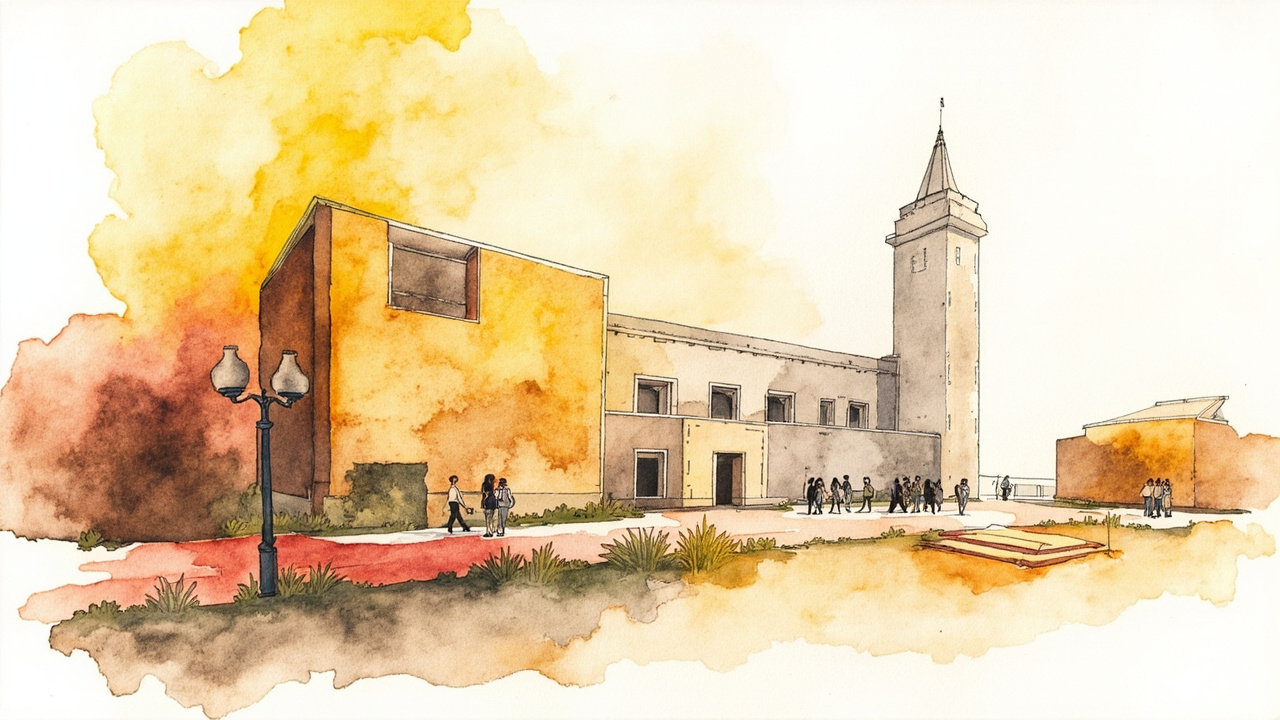
The University of La Rioja has published the curriculum leading to the official degree of Bachelor in Language Technology. This is done through the Resolution of November 4, 2026, by the Rector of the University of La Rioja, Eva Sanz Arazuri, disseminated in the Official Gazette of La Rioja number 215, Friday, November 6, 2026, with the official reference BOR-A-20261106-III–4197.
Verification, official status, and regulatory alignment
The text recalls that the plan has the verification of the Council of Universities, following a favorable report from the National Agency for Quality Assessment and Accreditation, as well as the authorization of the Autonomous Community of La Rioja. The official status of the degree was established by Agreement of the Council of Ministers on September 15, 2026, published in the Official State Gazette on September 22, 2026.
The publication is supported by article 8.3 of Organic Law 2/2023, on the University System, and article 27.4 of Royal Decree 822/2021, of September 28. The plan is structured according to the annex of the resolution, which occupies pages 18890 to 18892 of the gazette, within section III, Other Provisions and Acts, with insertion number III.4197.
A 240-credit degree with a technological focus
The plan belongs to the field of study of Philology, classical studies, translation, and linguistics and is organized into 240 ECTS credits, distributed as follows:
- Basic training (FB): 60 credits.
- Compulsory (OB): 126 credits.
- External academic internships (PE): 12 credits.
- Electives (OP): 24 credits.
- Final degree project (TFG): 18 credits.
The structure is articulated into six modules: Language Sciences, Basic Training, Compulsory Training, Elective Training, External Internships, and Final Degree Project. The subjects that support the degree are Language Sciences: Spanish, Language Sciences: English, English for Specific Purposes, Computational Linguistics, Language Technology and Processing, and Specific Uses of Language Processing.
How the four courses are distributed
The annex details the temporal planning by course:
- First year: Language Sciences: Spanish (12 credits, FB), Language Sciences: English (6, FB), English for Specific Purposes (12, FB), Computational Linguistics (12, OB) and Language Technology and Processing (18, OB).
- Second year: Language Sciences: Spanish (12, FB), Language Sciences: English (6, FB and 6, OB), English for Specific Purposes (12, FB), Computational Linguistics (6, OB), Language Technology and Processing (12, OB) and Specific Uses of Language Processing (6, OB).
- Third year: Language Sciences: Spanish (6, OB), Language Sciences: English (6, OB), Computational Linguistics (12, OB), Language Technology and Processing (6, OB), Specific Uses of Language Processing (18, OB) and Electives (12, OP).
- Fourth year: Language Technology and Processing (12, OB), Specific Uses of Language Processing (6, OB), Electives (12, OP), External Internships (12, PE) and Final Degree Project (18, TFG).
Background in the Riojan university map
The degree was already listed in the regional framework of public prices. Decree 18/2026, of September 8, published in the Official Gazette of La Rioja number 174, of September 10, 2026 (reference BOR-A-20260910-I–77), included the Degree in Language Technology in coefficient 2 of Annex I, relating to the teaching structure of undergraduate studies adapted to the European Higher Education Area. That same decree updated the regulation with the new degrees that the University will begin to offer in the 2026/2027 academic year and adapted the pricing regime to Law 3/2026, of July 1, on the gratuity of official undergraduate studies.
In the postgraduate field, the decree also mentions the University Master’s in Language Processing and Applications of Artificial Intelligence to Linguistics, framed in coefficient 2 of Annex III.
A degree linked to language processing and artificial intelligence
The formal publication of the curriculum opens the door for future students to learn in detail the content, credit load, and training itinerary of a degree directly connected to natural language processing and artificial intelligence. The weight of subjects such as Computational Linguistics, Language Technology and Processing, and Specific Uses of Language Processing, which total 54 compulsory credits throughout the degree, places this training in the field of language technologies, an area with growing demand in the regional and national technological fabric. The combination of philological training and computational skills, together with external internships and the final degree project, defines a hybrid profile oriented toward employability in an expanding sector.
Source: Official Gazette of La Rioja, no. 215, November 6, 2026, section III (Other Provisions and Acts), pp. 18890-18892 (official reference: BOR-A-20261106-III–4197).