Diari Oficial de la Generalitat Valenciana · 07 Sep 2026 · 13 vistas
Peñíscola initiates the process to declare its patron saint festivities an intangible Asset of Cultural Interest (BIC)
Por FactBox Admin
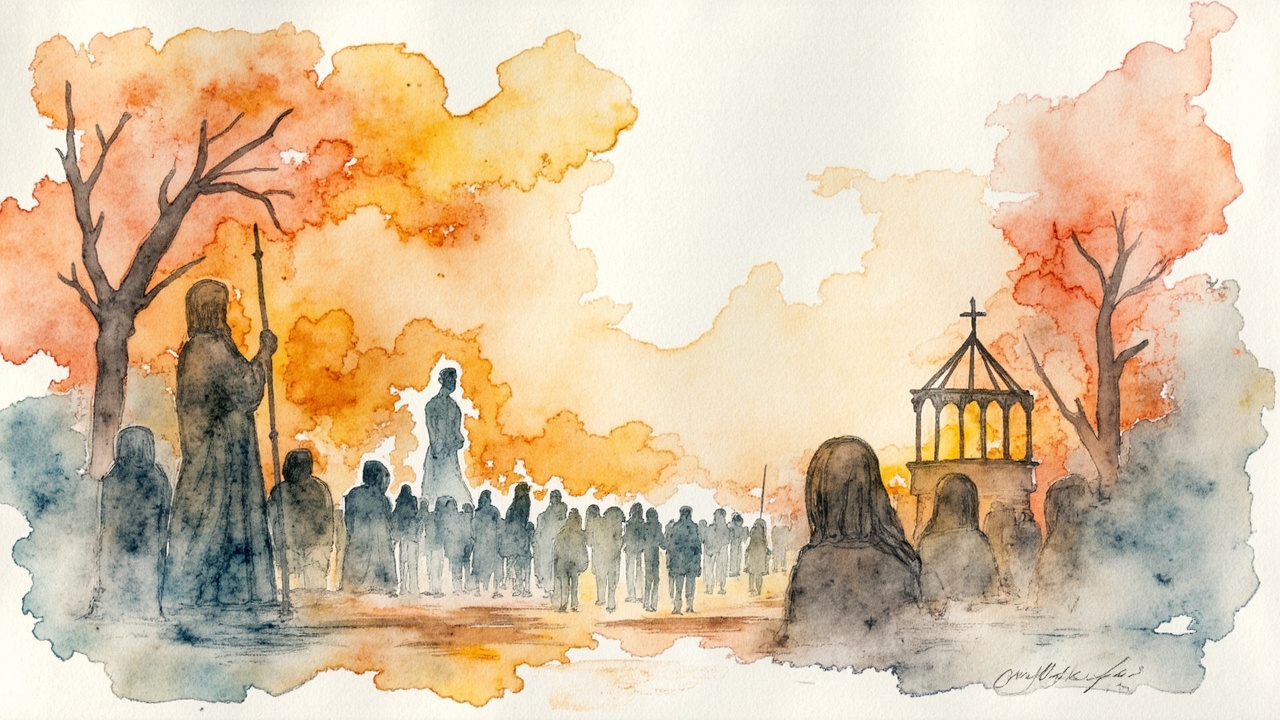
The Department of Education, Culture and Universities has initiated the proceedings to declare the Festes de la Mare de Déu de l’Ermitana of Peñíscola as an intangible Asset of Cultural Interest (BIC), according to a resolution signed on August 27, 2026, by the regional minister María del Carmen Ortí Ferre. The decision, which protects the centuries-old dances and traditions of the Castellón municipality, is published in the Official Gazette of the Generalitat Valenciana (DOGV) number 10445, dated September 7, 2026, with reference DOGV-C-2026-27684.
The initiation is supported by Law 4/1998, of June 11, on Valencian Cultural Heritage, which in its article 45 provides for the declaration as intangible assets of cultural interest of activities, creations, and practices that constitute the most representative manifestations of the culture and traditional ways of life of the Valencians. The file includes favorable technical reports from the Cultural Heritage Service and the Technical Commission for the Study and Inventory of Intangible Heritage.
A festive heritage of medieval origin
The dances of Peñíscola are a traditional festive manifestation of medieval origin, popular and ritual in nature, celebrated in honor of the patron saint during the patronal festivals on September 8 and 9. The oldest documented reference to the cult of the Virgin of the Ermitana dates back to 1395, and the oldest known documentation regarding the dances dates from 1647, although studies of Valencian folklore place their origin between the 14th and 16th centuries.
The festivity, declared of national tourist interest in 1997, takes place in the walled historic center, with the Plaza de Armas and the Sanctuary of the Virgin of the Ermitana as the central stage. The danced procession travels through streets such as Santos Mártires, Olvido, Mayor, and San Roque, accompanied by the dolçaina i tabalet and the municipal music band.
The groups and characters of the dances
The manifestation brings together several collectives who dance in traditionally handcrafted attire:
- Els dansants and les llauradores, the oldest and most characteristic group, who perform dances with castanyetes (castanets) and bastonets (sticks) and culminate with the human tower or castellet.
- Moros i cristians, who recreate the battle-dance with swords and a marked rhythm.
- Els cavallets, who simulate horse battles, and les pelegrines.
- Les gitanetes, the youngest participants, who perform in the Plaza de Armas.
Added to these are the marinos (sailors), who carry the image of the patron saint during the procession. The music is provided by the dolçaina i tabalet and the Virgen de la Ermitana Musical Association, with pieces such as Roca de mar and Honra de Peñíscola.
Protection and safeguarding measures
The resolution establishes concrete safeguard measures, including the identification, description, research, and documentation of the asset using scientific criteria, the incorporation of testimonies into material supports that guarantee their preservation, and the protection of its normal development and transmission to future generations. The management of the asset will be the responsibility of the Peñíscola City Council, the parish of Santa María, and the cultural associations that perform the dances.
The file will be notified to the interested parties and communicated to the General Registry of Assets of Cultural Interest for preventive annotation, and the resolution will be published in both the DOGV and the Official State Gazette.
The declaration as an intangible BIC (Asset of Cultural Interest) represents institutional recognition of dances that have been transmitted from generation to generation for centuries and that constitute an essential identity element of Peñíscola, reinforcing its legal protection and its projection as a benchmark of Valencian and Mediterranean festive heritage.
Source: Diari Oficial de la Generalitat Valenciana, no. 10445, September 7, 2026, section III (C) Other matters, page 1 (official reference: DOGV-C-2026-27684).