Iris Oifigiúil · 23 Oct 2026 · 1 vistas
Minister of State sets fixed charge amounts for electric scooter offences
Por FactBox Admin
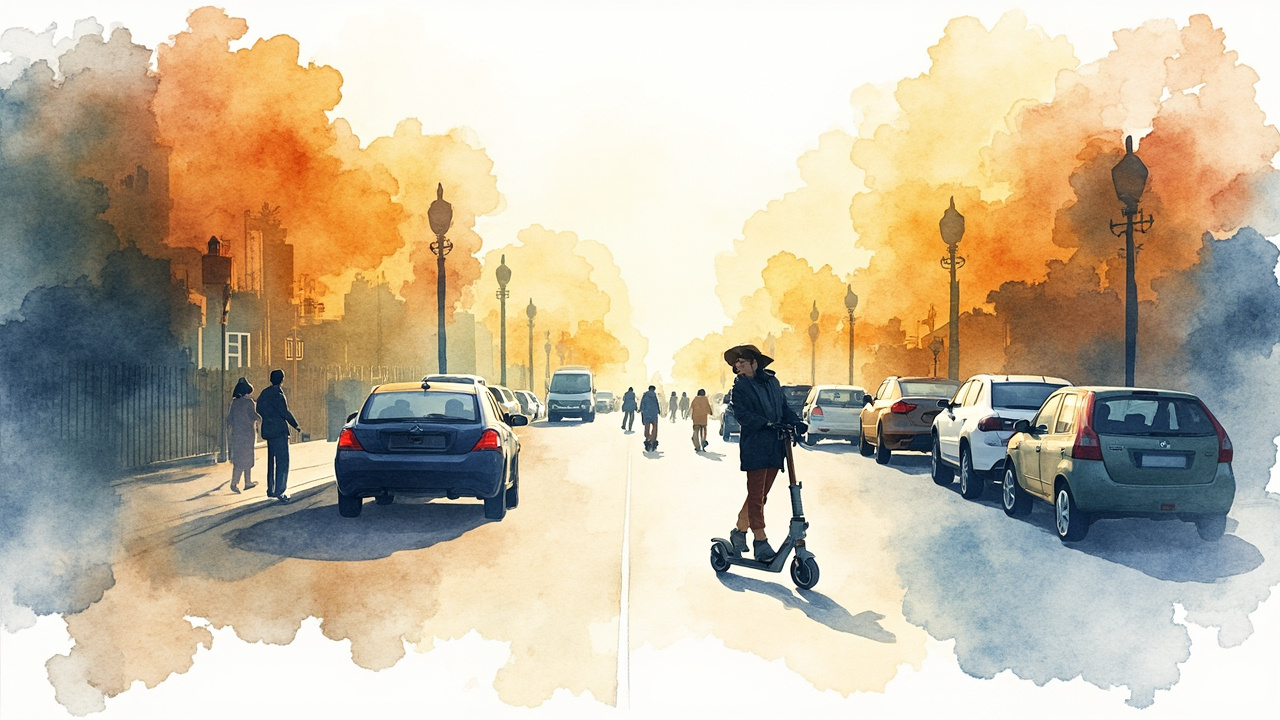
The Minister of State at the Department of Transport has made regulations prescribing the amount of the fixed charge for electric scooter offences, attaching a defined monetary penalty to breaches of the rules governing e-scooters. The instrument, S.I. No. 532 of 2026, is entitled the Road Traffic Act 2010 (Part 3) (Fixed Charge Offences) (Amendment) Regulations 2026 and was published in Iris Oifigiúil No. 85 of 23 October 2026.
The regulations operate on the fixed charge regime established by Part 3 of the Road Traffic Act 2010, the statutory framework under which certain road traffic offences may be dealt with by way of a fixed charge rather than by prosecution. The gazette notice states the effect of the instrument in a single line: “These Regulations prescribe the amount of the fixed charge for electric scooter offences.” The title records that the instrument amends the existing fixed charge offences regulations rather than replacing them, so the e-scooter amounts are folded into the standing Part 3 schedule.
The measure is the latest in a sequence of statutory instruments on powered personal transporters and electric scooters published in Iris Oifigiúil during the autumn, indicating a staged build-out of the regulatory regime around the machines rather than a single commencement instrument.
What the instrument does
- It prescribes the amount of the fixed charge applicable to electric scooter offences, converting the underlying prohibitions into an on-the-spot monetary penalty.
- It amends, rather than revokes, the existing Road Traffic Act 2010 (Part 3) (Fixed Charge Offences) regulations, so the new amounts sit within the general fixed charge schedule.
- It was made by the Minister of State at the Department of Transport, the office that has signed the other e-scooter instruments of autumn 2026.
- The notice appears in Section I of Iris Oifigiúil No. 85, priced at €1.50, with copies available from Government Publications, Mountshannon Road, Kilmainham, Dublin 8.
The gazette notice summarises the legal effect of the instrument; the amounts themselves are set out in the Regulations, which are sold through Government Publications.
An autumn of e-scooter measures
The fixed charge instrument follows three related regulations published in the preceding weeks:
- S.I. No. 454 of 2026, the Road Traffic Act 1994 (Detention of Powered Personal Transporters) (Amendment) Regulations 2026, published on 4 September 2026, made under section 41(1)(g) of the Road Traffic Act 1994 — a provision inserted by section 32 of the Road Traffic and Roads Act 2023 — after consultation with the Minister for Justice.
- S.I. No. 455 of 2026, the Road Traffic (Electric Scooters) (Amendment) Regulations 2026, published on 4 September 2026, made under sections 5 and 11 of the Road Traffic Act 1961.
- S.I. No. 489 of 2026, the Road Traffic (Electric Scooters) (Amendment) (No. 2) Regulations 2026, published on 25 September 2026, made under the same 1961 Act powers.
Taken together, the four instruments cover detention of the vehicles, the substantive scooter regulations, and now the penalty tariff.
Who decides
The regulations were made by the Minister of State at the Department of Transport, acting within functions delegated to that office. The September scooter regulations cite the Transport (Delegation of Ministerial Functions) Order 2025 (S.I. No. 144 of 2025) as the source of that delegation, alongside the adaptation of ministerial titles effected by the Transport, Tourism and Sport (Alteration of Name of Department and Title of Minister) Order 2020 (S.I. No. 351 of 2020).
The fixed charge instrument itself is published in Section I of the edition of 23 October 2026, alongside orders and regulations from the Department of Transport, the National Standards Authority of Ireland, the Irish Aviation Authority and the Central Bank of Ireland.
Why it matters
A fixed charge only bites when an amount is attached to it, and this instrument supplies that amount for e-scooters. Riders, rental operators and enforcement authorities now have a published figure against which conduct can be measured, and the offence no longer depends on a prosecution being taken to conclusion. For a vehicle class that moved from legal uncertainty to full road traffic regulation within a few years, the tariff is the point at which the rules become enforceable in practice.
Source: Iris Oifigiúil, No. 85, 23 October 2026, Section I (official reference: S.I. No. 532 of 2026).