BOE · 14 Aug 2026 · 10 vistas
Meirás, symbol of Francoism, declared a Site of Democratic Memory
Por FactBox Admin
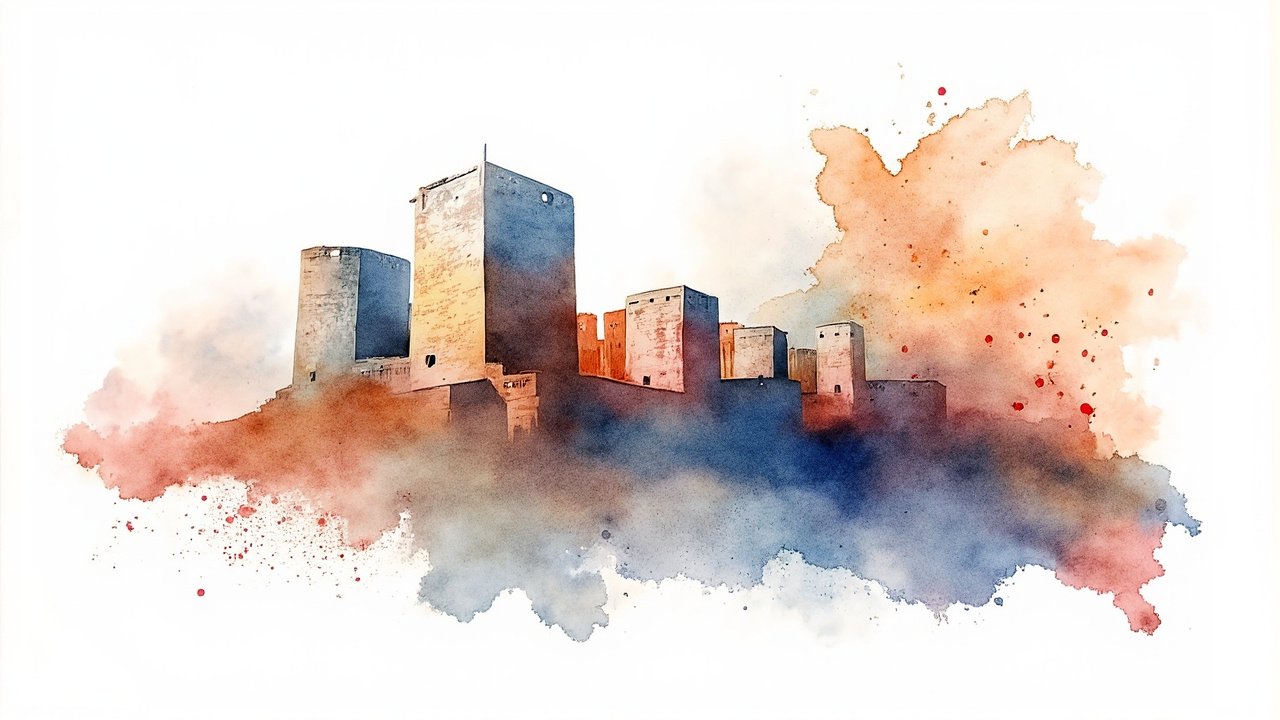
The Torres de Meirás, in the municipality of Sada (A Coruña), have been formally declared a Site of Democratic Memory by the State Secretariat for Democratic Memory, through a resolution of 6 August 2026 published in the Official State Gazette (BOE) this Friday, 14 August. The declaration, processed under Law 20/2022, of 19 October, on Democratic Memory, recognises the property as a representative space of the processes of destruction and reconstruction of Spanish democracy from 1936 to the present day.
The resolution, identified as BOE-A-2026-17754 and published in section III (Other provisions) of issue 199 of the BOE, concludes the initiation agreed on 19 August 2025 by the State Secretariat itself and published in the BOE of 2 September 2025. In accordance with Article 50.4 of Law 20/2022, the declaration corresponds to the State Secretariat, at the proposal of the competent directorate general, and has been processed in accordance with Law 39/2015, of 1 October, on the Common Administrative Procedure. The property, owned by the General State Administration, will be registered in the Inventory of Sites of Democratic Memory and the declaration will take effect from the date of publication.
The double legacy of a neo-medieval pazo
The Torres de Meirás were promoted by Emilia Pardo Bazán and her mother, Amalia de la Rúa, between the end of the 19th century and the beginning of the 20th century as a singular residence of neo-medieval inspiration articulated around three towers, among them the Torre de la Quimera, reserved by the writer for her library and workspace. Until her death in 1921, the pazo was a cultural and literary benchmark, an extension of the intellectual identity of the author, a pioneer in the defence of women’s education and equality.
After that period, the property became linked to the Primo de Rivera dictatorship, with visits from the royal family and figures such as General José Cavalcanti, husband of Blanca Quiroga Pardo Bazán, and during the Second Republic it was the scene of social tensions and anti-republican conspiracies linked to the coup processes of 1932 and 1936.
From the Pro-Pazo Board to the 2020 ruling
The memorial dimension of the place begins in the midst of the War: on March 3, 1938, the Junta Pro-Pazo del Caudillo was constituted, made up of the civil governor of A Coruña and other authorities, with the aim of acquiring the property and handing it over to Francisco Franco, financing the operation through forced contributions and expropriations of neighboring properties. The purchase was formalized on August 3, 1938, and the pazo was handed over to the dictator on December 5 of that year; in 1941, a deed was granted that simulated a private acquisition and allowed the property to be registered in his name, an operation that the courts considered fraudulent. Key milestones in the process:
- 1938-1975: the pazo functioned as the head of state’s official summer residence, with council of ministers meetings, audiences and diplomatic receptions; in August 1975, Decree-Law 10/1975 on the Prevention of Terrorism was approved there.
- 2008: the declaration of the property as a Bien de Interés Cultural (Asset of Cultural Interest) opened public access and debate over its ownership.
- September 2, 2020: the Court of First Instance No. 1 of A Coruña declared that the property belonged to the State and that the transfer to Francisco Franco was fraudulent, a ruling confirmed by higher courts following the lawsuit filed by the State Legal Service.
Effects and protection measures
The resolution, signed by the Secretary of State for Democratic Memory, Fernando Martínez López, establishes, in accordance with Article 52.1 of Law 20/2022, protection and dissemination measures:
- Guarantee the permanence, identification, explanation and signposting of the property, avoiding the removal of vestiges erected in memory of events representative of democratic memory.
- Promote audiovisual and digital resources, plaques, panels and signage as a recognition point for the victims, with a record and geolocation on the Secretariat of State portal.
- Integrate the site into international circuits for the construction of democratic memory.
- Maintain current uses, provided they are compatible with the preservation of memory and the moral reparation of the victims.
The resolution, which ends the administrative route, may be appealed through the optional motion for reconsideration within one month or through administrative contentious proceedings before the Audiencia Nacional (National High Court).
The recovery of Meirás for public heritage, legally concluded in 2020, and its declaration as a Site of Democratic Memory turn the pazo into a milestone in policies of truth, justice and reparation: a single space condenses the literary legacy, dictatorial repression, the survivals of Francoism and the democratic recovery of the common heritage.
Source: Boletín Oficial del Estado, No. 199, Friday, August 14, 2026, Sec. III (Other provisions), pp. 114798-114800 (official reference: BOE-A-2026-17754).