Boletín Oficial de la Comunidad de Madrid · 29 Sep 2026 · 15 vistas
Madrid declares the medieval necropolis of Sieteiglesias a Property of Cultural Interest
Por FactBox Admin
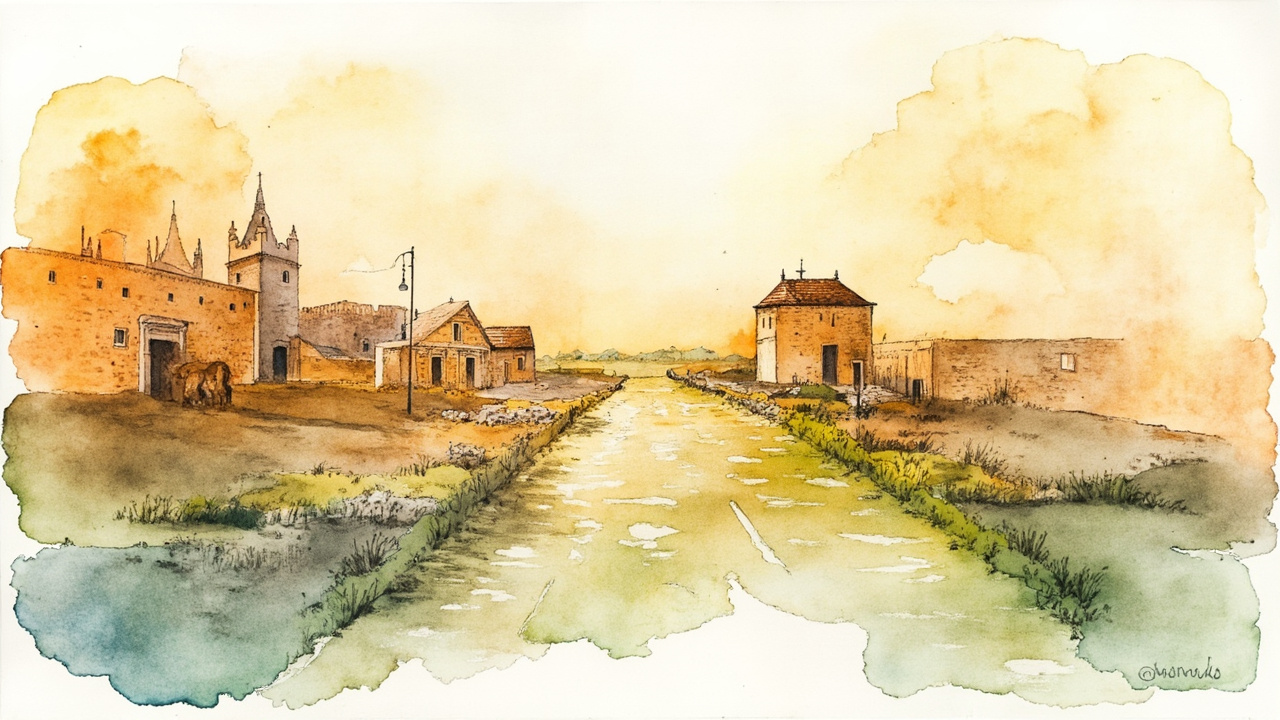
The Governing Council of the Community of Madrid has declared the Medieval Necropolis of Sieteiglesias, located in the municipality of Lozoyuela-Navas-Sieteiglesias, as an Asset of Cultural Interest under the category of Archaeological Zone. The decision is formalized in Decree 80/2026, of September 23, approved upon the proposal of the Ministry of Culture, Tourism and Sport and published in the OFFICIAL GAZETTE OF THE COMMUNITY OF MADRID (BOCM) No. 232, of September 29, 2026 (official reference BOCM-20260929-19). The decree shall take effect on the day following its publication.
The declaration is processed under Law 8/2023, of March 30, on the Cultural Heritage of the Community of Madrid, whose article 20.3 allows reports not issued to be understood as unfavorable. The file began with the Resolution of October 27, 2025, from the General Directorate of Cultural Heritage and the Spanish Language Office, which initiated the declaration, and was submitted for public information for one month from its publication in the BOCM on November 19, 2025. The Plenary of the Regional Council of Cultural Heritage, in a session on November 20, 2025, showed the unanimous agreement of its members.
A rock-cut complex from the 9th to 11th centuries
The necropolis, dated between the 9th and 11th centuries, is one of the most relevant examples of a Christian medieval rock-cut necropolis in the region. According to studies by archaeologist David Pérez Gil, it contains 85 graves arranged around and beneath the Church of San Pedro Apóstol, although the space capable of containing burials has not been fully excavated.
- Simple pit graves excavated in rock, of the “bathtub” or olerdolana type, with anthropomorphized lateral notches in some cases.
- Cist graves, formed by vertically driven slabs and a superimposed lid.
- A mixed case, with an oval pit in rock lined with slabs on the sides and bottom.
The graves are distributed across three zones (A, B, and C). In sector 2 of Zone A are located the so-called “graves of the kings,” five monumental burials presided over by a rocky crown with a small niche. Anthropological studies from 2006 counted 28 adult and infant individuals in a grave context, to which 18 individuals recovered in fill levels are added.
From the rocky outcrop to visitable sites
The existence of the site was known since ancient times, but it was not studied until 2001, the year of the first archaeological excavation. Between 2002 and 2016, there were successive historical research interventions, excavation of filled areas, study of the remains of the 17th-century hamlet, and cleaning, restoration, and consolidation of the stone material of the graves, with a view to its inclusion in the Visitable Sites Plan of the Community of Madrid.
The movable assets found are deposited in the Archaeological and Paleontological Museum of the Community of Madrid: medieval and modern ceramic remains, nails and iron elements from possible coffins and, most notably, two bottles and a small jar located in situ in graves 47, 49, and 56, which allowed the site to be dated. The Church of San Pedro Apóstol, built in the 17th century and partially reconstructed in 1945, stands partly over the necropolis and maintains its religious use, which is compatible with the conservation of the asset.
Plots, roads, and urban protection
The delimitation of the asset includes ten cadastral plots, including those of blocks 06969, 07946, and 07942 and two from polygon 22, in addition to the roads Calle Iglesia, Calle del Infierno, Calle Altillo, and Travesía de la Nava. The protection environment encompasses more than forty additional plots and is justified by the conservation of possible unexcavated structures and protection against negative visual impacts.
Both the necropolis and the church are included in the Catalog of Protected Assets of the Subsidiary Norms of Municipal Planning of Lozoyuela-Navas-Sieteiglesias, published in 1996, with comprehensive urban protection. The conditions of the declaration shall prevail over municipal urban regulations, which must be adjusted through the appropriate modifications in accordance with Article 25 of Law 8/2023.
Favorable reports and one dismissed allegation
The Royal Academy of History submitted a report on January 23, 2026, in which it describes the necropolis as one of the largest and best-preserved of its type and era in the Madrid mountain region, and expresses its support for the declaration. Neither the Complutense University of Madrid nor the Autonomous University of Madrid issued a report, and are therefore understood to be favorable. A written statement of allegations was received, studied, incorporated into the file, and answered in a dismissive sense.
The asset is preventively noted in the General Registry of Assets of Cultural Interest of the Ministry of Culture and in the Registry of Assets of Cultural Interest of the Community of Madrid, with codes BI0032093 and RBIC-2025-000010, as well as in the regional Cultural Heritage Catalog. The decree bears the signature of counselor Mariano de Paco Serrano and president Isabel Díaz Ayuso.
The declaration shields a site that is a reference for early medieval archaeology in Madrid and henceforth conditions any urban intervention in the urban center of Sieteiglesias. For the owners of the affected plots and for the City Council of Lozoyuela-Navas-Sieteiglesias, the protection implies that works and land uses must be subject to the conditions set in the declaration, aimed at preserving the values that motivate it.
Source: OFFICIAL GAZETTE OF THE COMMUNITY OF MADRID, no. 232, of September 29, 2026, section I.C) Other Provisions, pages 111-121 (official reference: BOCM-20260929-19).
Fuente: Boletín Oficial de la Comunidad de Madrid · Boletín Oficial de la Comunidad de Madrid de 2026-09-29