Boletín Oficial de Castilla y León · 18 Sep 2026 · 6 vistas
Environmental green light for the photovoltaic hybridization of the Becerril II-B wind farm
Por FactBox Admin
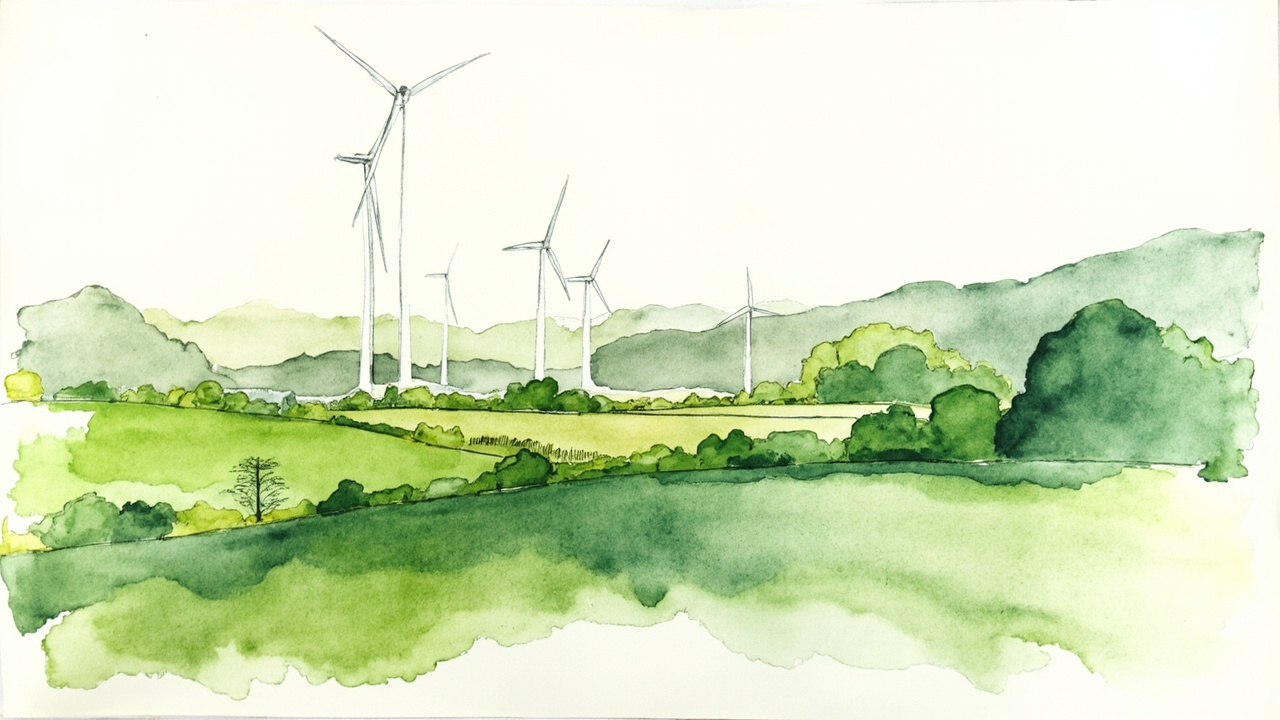
The Regional Ministry of Agriculture, Livestock, Rural Environment, and Environmental Policy of the Regional Government of Castilla y León has issued the environmental impact statement for the photovoltaic hybridization project of the Becerril II-B wind farm, in the municipality of Villaumbrales (Palencia). The resolution, signed by Minister Joaquín Antonio Pino on September 11, 2026, is published in the Official Gazette of Castilla y León no. 182, dated September 18, 2026, under reference BOCYL-D-18092026-182-34. The promoter is Parque Eólico Tierra de Campos, S.L. and the processed file is EIAO/2025/PA/013.
The authority to issue the statement corresponds to the head of the Regional Ministry competent in environmental matters, in accordance with Article 11.2 of Law 21/2013, of December 9, on environmental assessment, and Article 52.1.a) of the consolidated text of the Environmental Prevention Law of Castilla y León, approved by Legislative Decree 1/2015, of November 12. Environmental competencies were attributed to this department by Decree 2/2026, of June 13, on the restructuring of Regional Ministries, and the proposed statement was the responsibility of the Environmental, Urbanism, and Territorial Planning Council of Castilla y León.
The project was listed among the cases in Annex II of Law 21/2013 —energy industry and power lines—, which would have led to a simplified assessment; however, the promoter expressly requested, under Article 7.1.d), that an ordinary environmental impact assessment be processed.
A 23 MWp plant alongside the existing wind farm
The projected installation will be hybridized with the Becerril II-B wind farm, which has 31.05 MW already in operation, with which it will share the evacuation infrastructure: the P.E. Becerril II-B 30/220 kV substation and the 220 kV overhead line SET Ampudia – SET Canto Blanco, up to the Grijota 400 kV node.
The technical characteristics included in the annex of the order are as follows:
- Peak power of 23.09 MWp and nominal power of 18 MWn.
- 34,992 bifacial photovoltaic modules of 660 Wp each.
- 360 double-row single-axis solar trackers.
- 72 inverters of 250 kW and five transformation centers (three of 6,000 kVA and two of 3,500 kVA).
- Total area of 41.96 ha, with 41.22 ha of fencing in three enclosures, 0.31 ha of medium-voltage trench, and 0.43 ha of access roads.
- Underground evacuation line of 4,665 m at 30 kV.
Processing, allegations, and consultations
The public information period was opened via an announcement by the Territorial Service of Industry, Commerce and Economy of Palencia published in the Official Gazette of Castilla y León no. 163, dated August 26, 2025. During this process, allegations were submitted by the Ecología y Libertad Association, which requested an unfavorable declaration due to a lack of information and quality in the environmental impact study, and Planta FV 121, S.L., promoter of the Centaurus Solar plant, which did not oppose it but demanded conditions due to interference between installations.
The substantive body consulted the affected administrations, with the following result:
- Duero Hydrographic Confederation: does not issue a report.
- Citizen Protection Section: reports.
- Territorial Environmental Service of Palencia: reports, through the General Directorate of Natural Heritage and Forestry Policy.
- Territorial Service of Culture, Tourism and Sport of Palencia: reports.
- Villaumbrales City Council: does not issue a report.
The file was received by the Environmental Evaluation Service on July 30, 2026, and was completed on August 3, 2026, after the correction of deficiencies was requested.
Environmental conditions and heritage
The report from the General Directorate of Natural Heritage and Forestry Policy rules out direct impacts on the Natura 2000 Network, despite the proximity of the SAC and SPA “Lagunas del Canal de Castilla” (ES0000205), located approximately 1,280 m from the enclosures and 500 m from the trenches. Protected fauna in the area include the red kite, endangered; the mongolian harrier, vulnerable; and the great bustard, the pallid harrier, the western marsh harrier, and the lesser kestrel.
The declaration conditions the viability of the project on measures such as the following:
- Modify the layout of the trench that crosses the “Alto de la Cruz” archaeological site or carry out prior soundings.
- Use a minimum of 10% by weight of recycled aggregates in the construction units.
- Permeable hunting fencing, maximum 2 m high, with wildlife crossings every 150 m.
- Perimeter planting as a vegetative screen and wildlife refuge areas equivalent to 1% of the panel surface area.
- Modules with anti-reflective treatment and white bands to reduce bird mortality.
- Prior survey of nests and roosts, and mechanical control of vegetation outside the period from March to June.
- Guarantee the free transit of the livestock route “Colada de Venta de Valdemudo a Mazariegos”.
The promoter must also approve a plan of compensatory measures for steppe avifauna and submit annual environmental monitoring reports. The declaration will lose its validity if the execution of the project does not begin within a period of four years.
The resolution clears the main environmental procedure for a project that expands renewable capacity in Tierra de Campos through hybridization, a formula that reuses existing evacuation infrastructure and avoids new high-voltage lines. The conditions reinforce the protection of archaeological heritage and steppe birds, the two most sensitive fronts of the territory.
Source: Official Gazette of Castilla y León, no. 182, of September 18, 2026, I. Community of Castilla y León, D. Other provisions, pages 170-189 (official reference: BOCYL-D-18092026-182-34).