Boletín Oficial de Castilla y León · 24 Aug 2026 · 11 vistas
The Regional Government declares Espinosa de los Monteros a Site of Cultural Interest
Por FactBox Admin
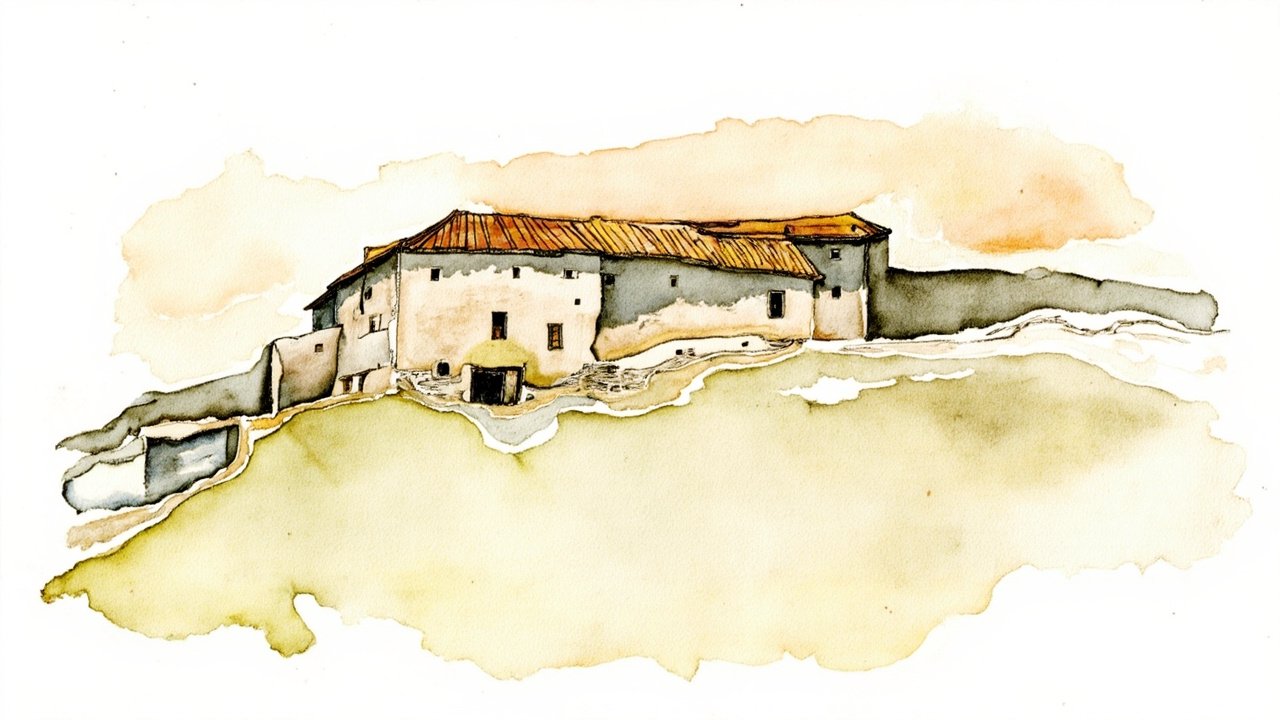
The Regional Government of Castilla y León has declared the town of Espinosa de los Monteros (Burgos) a Property of Cultural Interest under the category of Historic Site, through Agreement 136/2026, dated August 20, adopted upon the proposal of the Councilor for Culture, Tourism, and Sport. The resolution is published in the Official Gazette of Castilla y León, number 163, dated August 24, 2026, pages 107 to 111, with official reference BOCYL-D-24082026-163-19.
The declaration recognizes the heritage value of a town located in the north of the province of Burgos, on the border with Cantabria, in the heart of the Las Merindades region, whose land plots and architecture reflect the vicissitudes of the kingdom of Castile during the Middle Ages and the Modern Era.
A file spanning more than half a century
The procedure dates back to the Resolution of July 3, 1972, by which the then General Directorate of Fine Arts of the Ministry of Education and Science initiated the declaration of the Historic-Artistic Site in favor of the town. The file was resumed in 2025 for resolution, and processing continued as a Property of Cultural Interest under the category of Historic Site.
On February 2, 2026, reports were requested from three institutions:
- the Fernán González Institution;
- the University of Burgos;
- the UNED associated center in Soria.
The UNED associated center in Soria issued a favorable report on February 10, 2026; the other two, having passed three months without a pronouncement, were considered favorable in accordance with Law 7/2024, of June 20, on the Cultural Heritage of Castilla y León, and Decree 37/2007, of April 19. Following the public information procedures for one month (B.O.C. y L. no. 94, of May 20, 2026) and the hearing for the City Council of Espinosa de los Monteros, no objections were presented.
A town with a history of kings and battles
The foundation of the town possibly dates back to the 10th century, and it was Alfonso VI who gave it the name Espinosa in 1080. Its full name derives from Sancho Monteros, a knight who discovered the attempted assassination of the Count of Castile Sancho García by his mother, doña Sancha, which earned the town the privilege of mounting night guard for the royal family. The “very noble Corps of the Monteros of Espinosa” was the first Royal Guard, and today the Compañía Monteros de Espinosa of the Army exists.
Among the historical milestones, the following stand out:
- the charter granted by Alfonso XI in 1346;
- the factional struggles between the Salazar and the Velasco families in the 14th century;
- the 1501 privilege to hold a market every Tuesday;
- the title of town granted by Philip IV in 1627;
- the battle of the War of Independence in November 1808, between the troops of General Claude Victor Perrin and the side of General Blake.
Civil, Defensive, and Religious Architecture
The complex houses a diverse building typology, with palaces on large plots, such as those of the Cuevas Velasco, the Fernández Miranda, or that of the Marqués de Chiloeches, alongside noble buildings with a fortified appearance such as the Torre de los Azulejos, the Torre Berrueza, the Torre de las Herradoras, or the Casa de los Cubos. These coexist with terraced housing and bourgeois buildings featuring wood and glass galleries on Progreso Street.
Integrated within the Historic Complex are other Assets of Cultural Interest with Monument status, such as the Casa Palacio de los Fernández-Villa, the Torre Pumarejo, or the Torre de Cantimplor, as well as buildings of notable value such as the Church of San Nicolás, the oldest, and the Church of Santa Cecilia, from the 16th century.
Effects and Appeals
The delimitation of the heritage area, which begins at the confluence of Riva and Progreso streets and borders the Trueba river with its ancient plots and orchards enclosed by dry stone walls, will condition future urban interventions in the municipality. Against the agreement, which concludes the administrative process, an appeal for reversal may be filed before the Junta within one month, or a contentious-administrative appeal may be filed before the Contentious-Administrative Chamber of the High Court of Justice of Castilla y León within two months. The agreement is signed by the President of the Junta, Alfonso Fernández Mañueco, and the Councilor for Culture, Tourism, and Sport, José Alberto Díaz Pico.
The declaration represents a heritage milestone for Las Merindades, by safeguarding a complex that treasures centuries of civil, defensive, and religious history and which is now protected against interventions that would alter its plot and architectural structure.
Source: Official Gazette of Castilla y León, no. 163, August 24, 2026, I. Community of Castilla y León, D. Other Provisions, pp. 107-111 (official reference: BOCYL-D-24082026-163-19).