Boletín Oficial de Castilla y León · 28 Oct 2026 · 6 vistas
The Junta opens the declaration of Monleón as a Historic Ensemble for public allegations
Por FactBox Admin
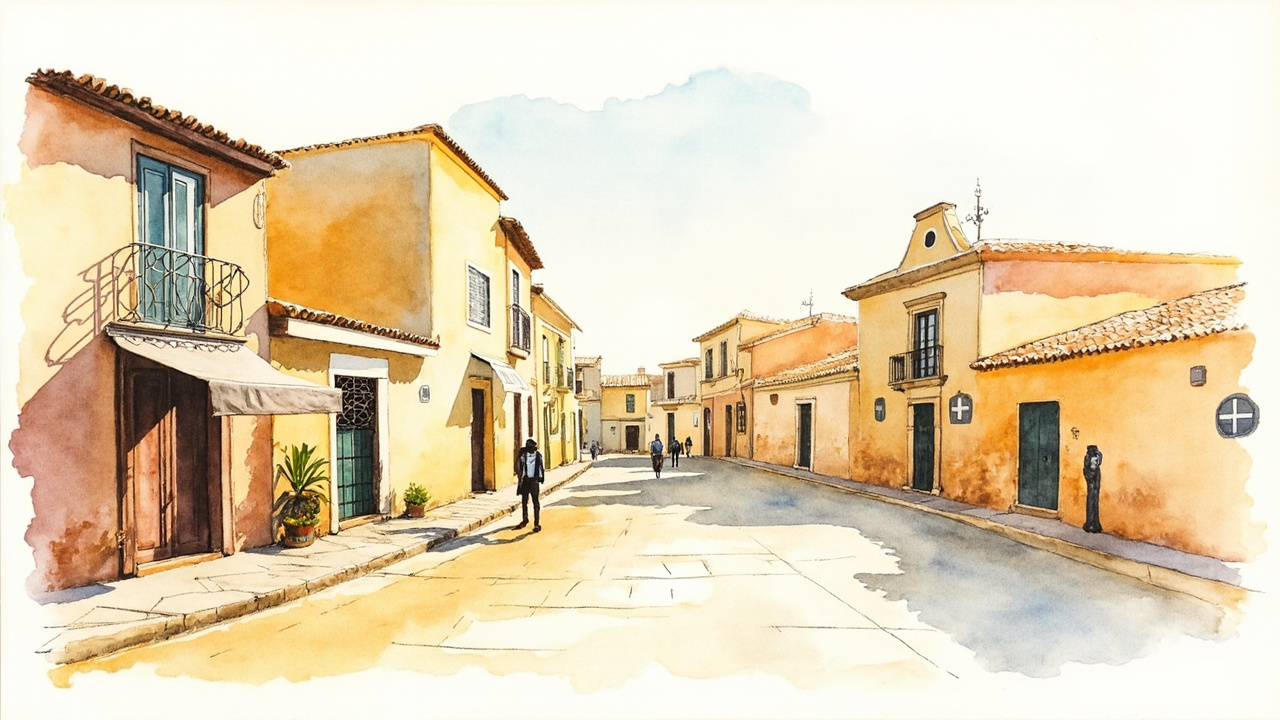
The Regional Ministry of Culture, Tourism and Sport of the Junta de Castilla y León has agreed to open a one-month public information period regarding the file for the declaration of Monleón (Salamanca) as a Site of Cultural Interest with the category of Historic Ensemble. The announcement is published in the Official Gazette of Castilla y León no. 209, dated October 28, 2026, with the reference BOCYL-D-28102026-209-17, and allows any person to submit any allegations they deem appropriate regarding the intended declaration. The period is counted from the day following the publication, that is, from October 29 until November 28, 2026.
The procedure is processed under article 29.1 of Law 7/2024, of June 20, on the Cultural Heritage of Castilla y León, and affects both the urban center of the village and the lands included in the approved delimitation. The announcement was signed in Valladolid on October 21, 2026, by the Head of the Planning and Protection Service, Ana Isabel Mora Durán, and occupies pages 96 to 100 of the gazette, within section I.E.2 of Other Official Announcements.
A walled village at the confluence of two rivers
The annex of the announcement describes Monleón as an oval-shaped walled settlement situated on a hill at the confluence of the Alagón and Riofrío rivers, in a transition territory between the Salamanca dehesa and the Sierra de Francia region. Its defensive value led to early occupation, as indicated by the verraco (stone boar) relocated at the village gate, and an archaeological intervention carried out in 2022 on the southern stretch of the wall documented remains of a fortification from the Second Iron Age, 3rd-2nd centuries BC, predating the medieval enclosure.
The repopulation of the village dates from 1199 onwards, with Alfonso IX, who made it the head of an alfoz and provided it with a wall, castle, and church as a community of village and land. Under Fernando III, it lost its status as a council head and came to belong to that of Salamanca. The ensemble also preserves the memory of a Jewish community settled in the nucleus, without material remains except for the compact and sinuous trace of the layout.
- Wall of 735 meters in length, over an area of nearly 3 hectares, with an approximate width of 2.50 meters and variable height.
- Predominant stone materials: cornubianite and granite, with ashlar, small ashlar, or coordinated masonry on the outer faces.
- Four gates fortified in the 13th century; with the Puerta del Río disappeared, three with pointed arches are preserved.
The castle, the keep, and Santa Isabel
Of the three preserved gates, the file singles out the Puerta de la Villa, of the gate-tower typology; the Puerta de Coria, of a tower-like character and oriented toward the Extremaduran route; and the Puerta del Sol, located on the southern stretch and oriented toward the sunrise, of the bent-entrance type. The castle rises at the southwestern end of the enclosure and constitutes the most significant element of the local architecture; its irregular precinct rests on two stretches of the wall and is accessed via a large semicircular arch protected by two towers with arrow slits.
The keep, built in granite, has a square floor plan and exceeds 30 meters in height above the village. It is crowned by eight bartizans and was completed in its current appearance in the first half of the 15th century, distributed across four floors, two of which are vaulted. The property was owned by the State and was secularized in 1969 through a public auction, following the collapse of a corner of the tower prior to the award; it was also alienated by Enrique IV and Felipe II, passing into a manorial regime on those two occasions. The third articulating element is the parish church of Santa Isabel, with its current configuration dating from the 18th century.
How to consult the file and submit allegations
The file can be consulted on the Open Government platform of the Junta de Castilla y León and in physical form at the Territorial Service of Culture, Tourism and Sport of Salamanca, at calle Príncipe de Vergara, numbers 53-71, by appointment via telephone at 923.29.60.01.
The delimitation described in the annex starts from the confluence of Puerta del Sol street and Llano street and runs north incorporating plots 07, 02, 05, 03 and 01 of block 91682, the bridge over the Riofrío stream, rural plots 399, 398, 397, 396 and 395 and partially 389 of polygon 515, as well as the paths of plots 9026 and 9028 of polygon 510 up to the Alagón river and plots 9020 and 9030 of the same polygon.
The declaration as a Historic Site places Monleón under the protection regime provided for in Law 7/2024 and conditions future interventions in an urban center that preserves a largely unmodified layout, with one or two-story houses, Arabic tile roofs, and walls of granite, slate, and cornubianite. For the owners of the nucleus and for the region, the open process is the last opportunity to intervene before the Junta resolves the declaration.
Source: Official Gazette of Castilla y León, no. 209, October 28, 2026, section I.E.2 Other Official Announcements, pp. 96-100 (official reference: BOCYL-D-28102026-209-17).