Diario Oficial de Castilla-La Mancha · 27 Oct 2026 · 4 vistas
Favorable environmental report for the Cerro Sídrico de Iniesta solar plant
Por FactBox Admin
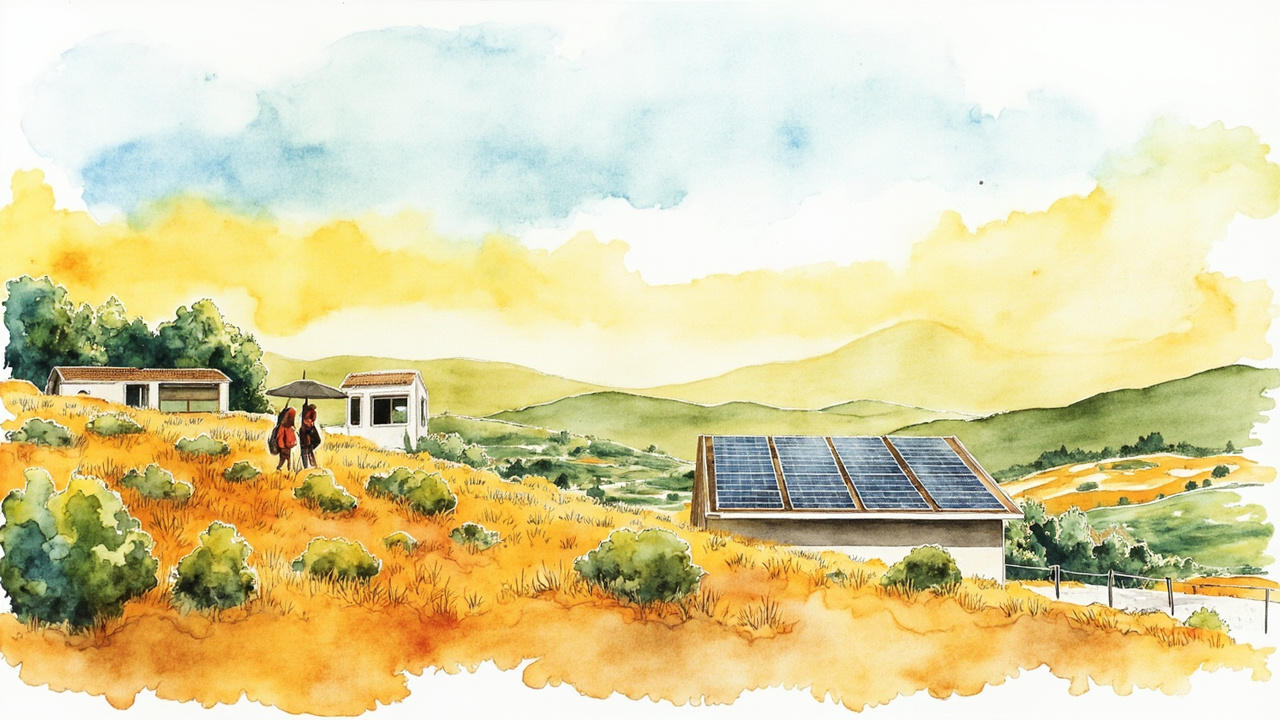
The Provincial Delegation for Sustainable Development of Cuenca has formulated the environmental impact report for the HFV Cerro Sídrico hybrid photovoltaic solar plant project, with 1.5 megawatts, in the municipality of Iniesta (Cuenca), concluding that it does not need to undergo an ordinary evaluation. The resolution, dated October 15, 2026, is published in the Official Gazette of Castilla-La Mancha number 206, dated October 27, 2026, with the official reference 2026/7654.
The ruling is based on Law 2/2020, of February 7, on Environmental Evaluation of Castilla-La Mancha, and Law 21/2013, of December 9, on environmental evaluation, and complies with the criteria of Annex III of both regulations. The environmental body considers that the installation will not have significant effects on the environment provided that the measures of the environmental document and the conditions added in the resolution itself are met.
The file, processed under number S478/2025/CU/00016 and project code 162702-00896, lists Champiñones Cumar S.L. as the promoter and the Industry and Energy Service of the Provincial Delegation of the Ministry of Sustainable Development as the substantive body. The installation will occupy 2.81 hectares of fenced area in plots 363 and 368 of polygon 21 of Iniesta.
Hybridization with a wind turbine already in operation
The plant will connect to the wind turbine of the Cerro Sídrico wind farm, which has 1.5 MW and has been operational since it obtained its environmental impact report on May 1, 2018 (file PRO-CU-18_0752), so that the power of both installations will be evacuated jointly. The energy will be conducted to the San Ildefonso/Ledaña high-voltage line, owned by i-DE Redes Inteligentes S.A.U., through a new protection, control, and measurement center adjacent to the existing one and a 29-meter underground line.
Main characteristics of the project:
- 2,660 monocrystalline silicon photovoltaic modules, model HIKu7 Mono PERC CS7N-660MS, of 660 peak watts, with single-axis horizontal tracking driven into the ground.
- Perimeter fencing of 1,259 linear meters divided into two enclosures, of 754 and 505 meters.
- Livestock mesh of 180/20/30 centimeters and a maximum height of 2 meters, without ground anchoring and with 20 centimeters of clearance for wildlife passage.
- Access from the CM-3137 road, at kilometer point 0+505, via the Vadocañas path.
The imperial eagle, center of the conditions
The Natural Environment and Biodiversity Service warned that the plant is located within the foraging and feeding area of the Iberian imperial eagle, listed as endangered in the CREA-CLM, and that there is a risk of avifauna mortality due to the operation of the hybridized wind turbine. Within a 5-kilometer radius of known nests, existing and projected solar installations total nearly 30 hectares.
Therefore, the resolution mandates the installation of a detection, deterrence, and shutdown device on the wind turbine, to be operational before the authorization for commissioning, and the execution of one of these two compensatory measures:
- Correction of two dangerous supports in accordance with Royal Decree 1432/2008, of August 29, on the protection of avifauna in high-voltage power lines.
- Management and improvement of the trophic resource habitat for large raptors over an area similar to the one occupied, during the first five years of operation.
A specific fauna monitoring plan is added, including avifauna censuses within a 5-kilometer radius during the first year and biweekly mortality reviews at the fences during the first three years, to be carried out by a company independent of the promoter.
Consultations with about twenty organizations
The application was submitted on February 24, 2025, and the promoter completed the documentation with an addendum on May 16, 2025. Consultations were sent on May 28, 2025, to about twenty organizations and entities, including the Júcar Hydrographic Confederation, the Iniesta City Council, the Archaeology Section, the Roads, Urban Planning, Mines, and Public Health services, the Provincial Council of Cuenca, WWF/Adena, Ecologistas en Acción, and SEO Birdlife.
The Roads Service reported favorably on October 6, 2026, following glare and hydrological impact studies on the CM-3137, and the report on the Vereda de Vadocañas livestock route was issued on March 18, 2026. The environmental impact report is mandatory and decisive; it expires after four years if the project has not been authorized and executed, and it can be extended for two more years. The resolution is signed by the provincial delegate, José Ignacio Benito Culebras.
The environmental approval clears the administrative path for an installation that expands renewable hybridization in the Cuenca Manchuela region, although it subjects it to strict monitoring of avifauna and territorial compensations. For the local sector, the decision confirms that small-capacity solar projects can be processed via the simplified route, but only under conditions that address the presence of listed species and the carrying capacity of an area where several plants and wind farms are already concentrated.
Source: Official Gazette of Castilla-La Mancha, no. 206, October 27, 2026, section III (Other Provisions and Acts), page 37710 (official reference: 2026/7654).