Boletín Oficial de Canarias · 08 Oct 2026 · 19 vistas
Favorable environmental report for the El Goro emergency plant
Por FactBox Admin
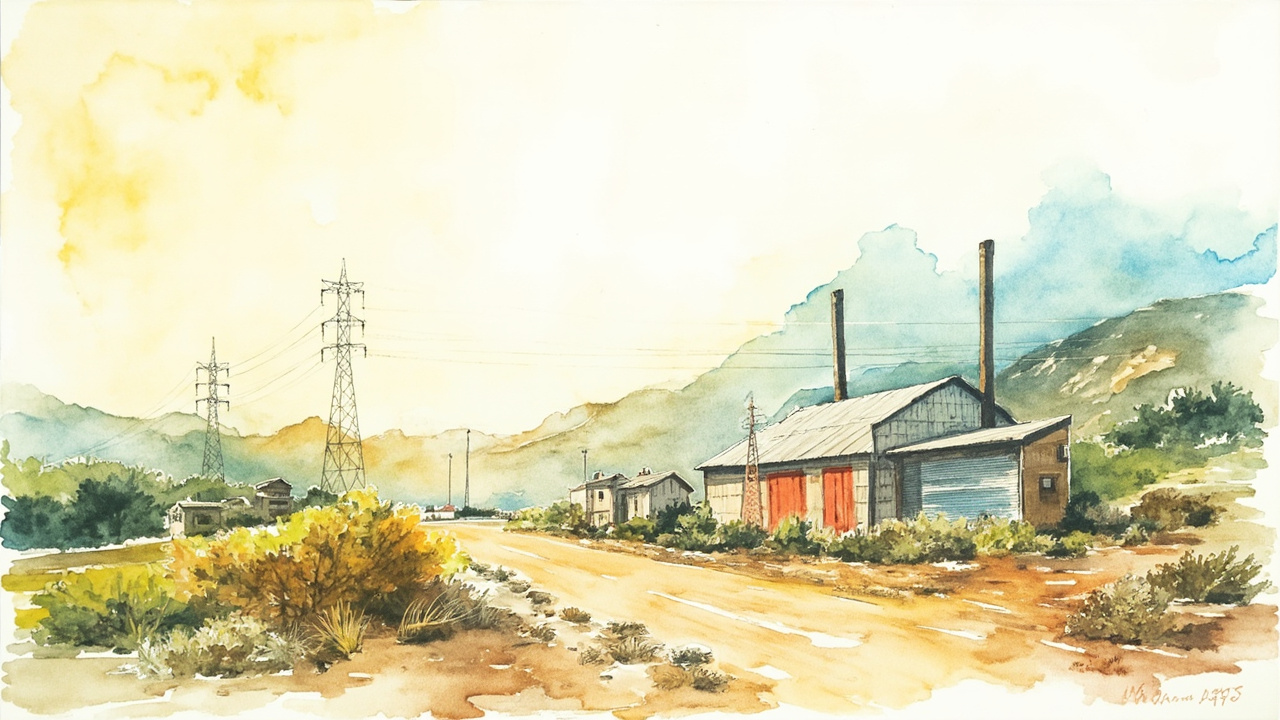
The General Directorate of Environmental Quality, under the Ministry of Ecological Transition and Energy of the Government of the Canary Islands, has formulated the Environmental Impact Report for the 20 MW emergency generation plant promoted by GPM Generación, S.L.U. in the El Goro industrial estate, in the municipality of Telde, island of Gran Canaria. The resolution, signed on September 17, 2026, by the general director Ángel Pablo Montañés Ríos, determines that the project should not be subject to an ordinary environmental impact assessment. The text is published in the Official Gazette of the Canary Islands no. 202, of October 8, 2026, under file reference 15/2026-0313083652.
The ruling is part of the simplified environmental impact assessment procedure regulated by Law 21/2013, of December 9, on environmental assessment, and responds to article 47.2.b) of said regulation. The process began on March 12, 2026, when the General Directorate of Energy submitted the project documentation, and the consultation process for administrations and interested parties opened on June 8, 2026, for a period of 20 business days. The project falls under Annex II, Group 4, headings a) and m) of the aforementioned law, and the installation is also subject to the authorization regime for activities potentially polluting the atmosphere in accordance with Decree 185/2025, of December 10, and Royal Decree 1042/2017, of December 22.
Fifteen diesel engines and a one-kilometer evacuation line
The plant, named PGE El Goro, is located on a plot delimited by the confluence of Espiga Street and Sebastián Grisaleña Sánchez Street, in the northern area of the industrial estate. Its main technical characteristics are:
- Fifteen (15) containerized diesel motor-generator sets of 1,410 kWe each, with a combined nominal power of 20 MVA at 66 kV.
- Selective Catalytic Reduction (SCR) system mounted on the roof of each container, with nitrogen oxide reductions of up to 95%.
- Five double-walled diesel tanks of 28,750 liters each, providing an approximate autonomy of 28 hours and an estimated consumption of 344.6 liters per hour.
- Two AdBlue tanks of 28,750 liters and four containerized transformation centers of 8 MVA with a 0.4/20 kV ratio.
- A new collector substation, named Silva Substation, connected to the plant by an underground line of approximately 120 meters.
- An evacuation line of approximately 1,000 meters to the SE CINSA, in the Salinetas industrial estate, which crosses the Silva Ravine over a length of about 270 meters.
The plant is temporary in nature: three years of operation, renewable annually, with eventual operation upon request of the electrical system.
Public health, heritage and biodiversity
The report collects the pronouncements of about twenty agencies. The General Directorate of Public Health places the potentially exposed population within a radius of 2,000 meters: the motorhome campsite at 500 meters to the northeast, Salinetas Beach at 1,200 meters, Las Huesas at 1,300 meters, and El Goro at 1,600 meters. The dispersion study does not detect exceedances of immission values even at the most exposed point, the CEIP El Goro, although it requires mandatory measurements of nitrogen dioxide and carbon monoxide during the operational phase. In operation, the engines can reach 101 dB(A).
The Historic Heritage Service of the Cabildo de Gran Canaria warned that the evacuation line crossed the Cuevas de Salinetas archaeological site (code 26067). The developer modified the solution and replaced the buried piping with a surface pipeline, which allowed for a conditional favorable report on August 28, 2026. The Biodiversity and Protected Natural Spaces Management Service detected specimens of the Gran Canaria perenquén and signs of the giant lizard, and requires a prior survey three months in advance, in addition to avoiding impact on the large sea thorn specimens of the Barranco de Silva.
Conditions, validity, and notifications
The resolution incorporates an annex of additional environmental measures for the layout, construction, and operation phases. These include the marking of the archaeological site, notification to the Cabildo ten days prior to the start of work, authorization from the Insular Water Council of Gran Canaria for actions in the Barranco de Silva, and a joint acoustic and air quality study with the other nearby emergency plant. The General Directorate of Emergencies considers the risk of serious accidents to be low for the resident population but significant for the industrial estate workers, and requests an update of the self-protection plans.
The Environmental Impact Report is valid for four years from its publication in the Official Gazette of the Canary Islands. The resolution is notified to the General Directorate of Energy, GPM Generación, S.L.U., the Insular Cabildo of Gran Canaria, and the Telde City Council, and is also published on the electronic headquarters of the Ministry of Ecological Transition and Energy.
The decision clears the main environmental procedure for an infrastructure intended to guarantee the emergency electricity supply in Gran Canaria, but maintains a strict surveillance regime over the developer: the plant may only operate if it complies with the measures of the environmental document and the additional prescriptions, and any extension of its useful life will require the submission of new information regarding its long-term impacts.
Source: Official Gazette of the Canary Islands, no. 202, of October 8, 2026, section III. Other Resolutions, page 36539 (official reference: boc-a-2026-202-3487).