Boletín Oficial de Castilla y León · 02 Oct 2026 · 20 vistas
Favorable environmental impact for the Cuéllar biogas and biomethane plant
Por FactBox Admin
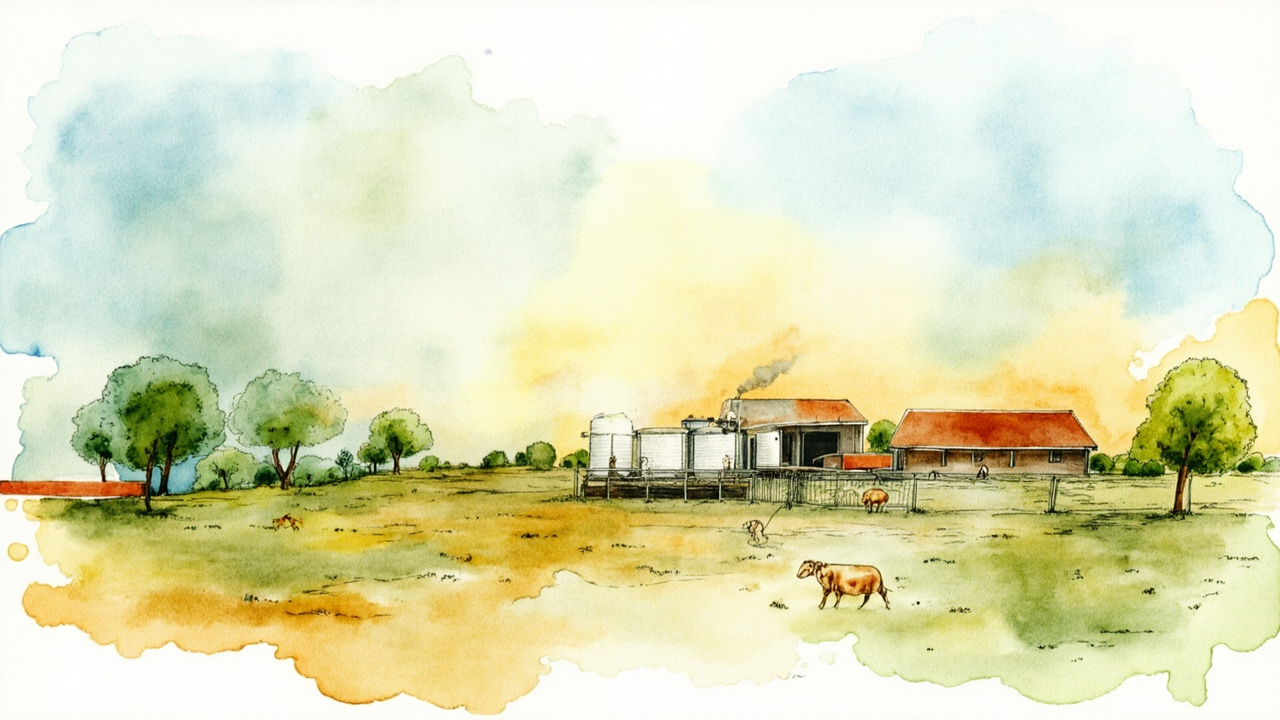
The General Directorate of Environmental Policy of the Regional Government of Castilla y León has issued a favorable environmental impact statement for the project of a biogas production plant and its purification into biomethane from agricultural and livestock waste (slurry and manure) in Cuéllar (Segovia), promoted by Bio Frontera, S.L. The resolution, dated September 18, 2026, is published in the Official Gazette of Castilla y León No. 192, dated October 2, 2026, under reference BOCYL-D-02102026-192-27. The favorable report is limited solely to environmental effects and is subject to compliance with the conditions accompanying the statement.
The statement corresponds to file EIAO/2024/SG/017 and is signed by the Director General of Environmental Policy, José Guirao Sola. The competent body is the head of the Department of Agriculture, Livestock, Rural Environment, and Environmental Policy, with decentralized competence in the General Directorate of Environmental Policy pursuant to Decree 30/2021, of November 4, and attributed to that department by Decree 2/2026, of June 13, on the restructuring of departments. The project is subject to an ordinary environmental impact assessment due to its inclusion in Annex I, Group 5, of Law 21/2013, of December 9, and to the integrated environmental authorization regime of Royal Legislative Decree 1/2016, of December 16. The proposal was formulated by the Environmental, Urbanism, and Territorial Planning Council of Castilla y León.
A facility for 145,000 annual tons of waste
The plant is located on plot 77 of polygon 28 and on plots 26 and 27 of polygon 26 in Cuéllar, with 196,737 square meters of plot area and 22,694 square meters of built area. The process is based on the anaerobic digestion of non-hazardous organic waste to obtain biogas, which is then refined into biomethane and injected into the natural gas grid; the resulting digestate is separated into solid and liquid fractions for use as sustainable soil nutrition.
The main figures of the project are as follows:
- Treatment capacity: 145,000 t/year of organic waste.
- Production: 15,040,920 Nm³/year of biogas and 9,110,400 Nm³/year of biomethane.
- Outputs: 86,366 t/year of solid fraction, 39,183 t/year of liquid fraction, and 4,657 t/year of ammonium sulfate.
- Regime: continuous operation 24 hours a day and 365 days a year, except for maintenance shutdowns.
The planned input substrates are:
- Cattle manure: 20,000 t/year.
- Pig slurry: 50,000 t/year.
- Straw: 30,000 t/year.
- Bagasse: 10,000 t/year.
- Sheep and goat manure, broiler litter, laying hen litter, poultry slaughterhouse waste, slaughterhouse WWTP sludge, vegetable sludge, and sugar industry sludge: 5,000 t/year each.
Allegations from the City Council and environmental associations
The file began on June 1, 2024, with the submission of the application for environmental authorization and environmental impact assessment. The public information announcement was published in the Official Gazette of Castilla y León no. 205, dated October 24, 2025. During this process, allegations were submitted by the Ecología y Libertad Association, the Cuéllar City Council, and numerous individuals, grouped under 6 different models.
The allegations requested the denial of the authorization due to deficiencies in the project and the environmental impact study, due to effects on water, air, soil, fauna, flora, and landscape, due to proximity to inhabited areas, due to high heavy vehicle traffic, due to the lack of justification for urban planning compliance, and due to the promoter’s lack of financial guarantee. The promoter responded to the allegations in March 2026 and the reports between March and May 2026, accepting the conditions; the file was completed on May 14, 2026.
Environmental conditions and validity
Among the imposed measures, the following stand out:
- Three groundwater control piezometers and a prior baseline state analysis.
- Olfactometric study in accordance with the UNE 13725 standard during the first year of activity.
- Perimeter vegetation screen with native species and a prohibition of invasive exotic species.
- Archaeological monitoring of earthworks and an environmental management system adapted to BAT (Best Available Techniques).
The site is located approximately 990 meters from the Natura 2000 Network SAC (ES4180070) “Riberas del río Cega”, 1,100 meters from the Cega River, 2,580 meters from Cuéllar, and 1,400 meters from Torregutiérrez, within the nitrate-vulnerable zone ZV-CS Cantimpalos–Segovia. The study classifies all impacts as compatible or moderate, with none being severe or critical, and the declaration loses its validity if the execution of the project does not begin within four years.
The environmental authorization opens the door to a renewable gas plant that processes slurry and manure from livestock farms in Tierra de Pinares and Cuéllar, with the capacity to treat 145,000 annual tons of organic waste and discharge biomethane into the gas grid. The conditions regarding odors, groundwater, and distances to inhabited centers will be decisive for the plant’s coexistence with the rural environment.
Source: Official Gazette of Castilla y León, no. 192, dated October 2, 2026, I. Community of Castilla y León – D. Other provisions, pp. 329-355 (official reference: BOCYL-D-02102026-192-27).