EUR-Lex · 09 Sep 2026 · 4 vistas
EU sets up digital infrastructure consortium for agri-food sector
Por FactBox Admin
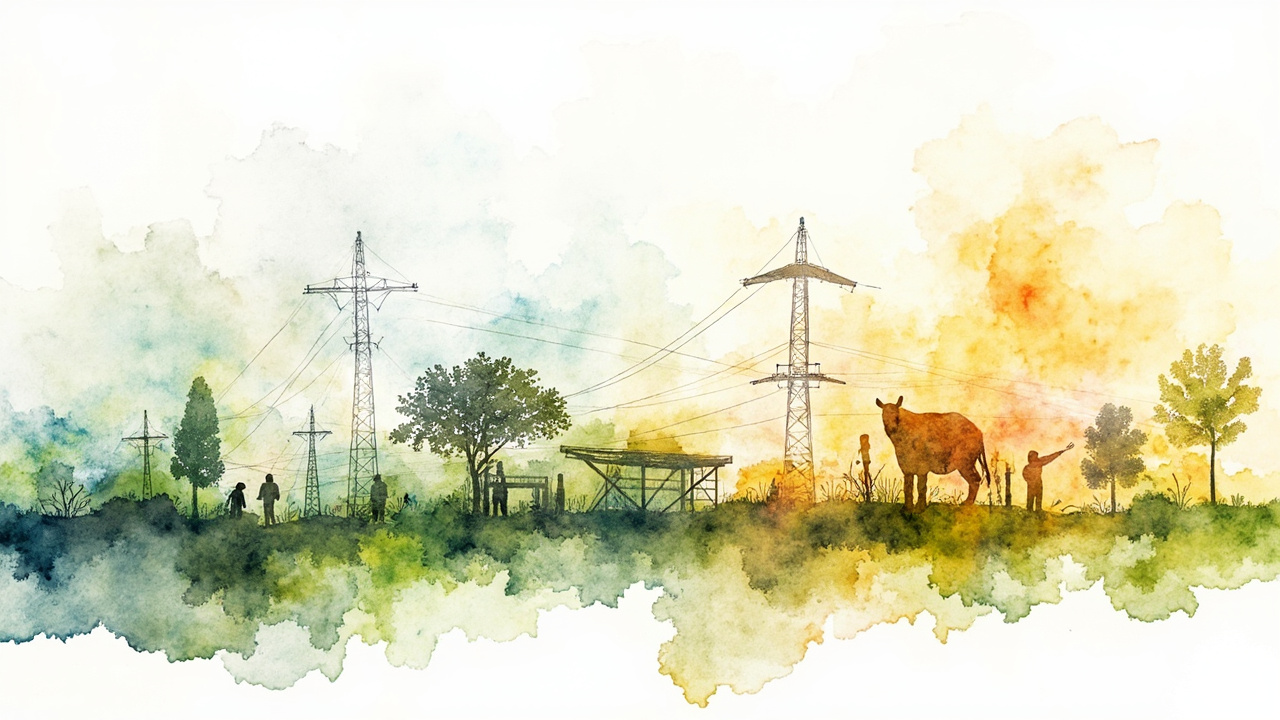
The European Commission has formally set up the European Digital Infrastructure Consortium for Agri-Food (EDIC for Agri-Food), a new legal body tasked with advancing the digitalisation of Europe’s agricultural and food sector. The decision, adopted in Brussels on 8 September 2026, was published in the Official Journal of the European Union (L series) on 9 September 2026 as Commission Implementing Decision (EU) 2026/1978.
The consortium is established under Article 14(3), point (a) of Decision (EU) 2022/2481, the Digital Decade Policy Programme 2030, which empowers the Commission to set up European Digital Infrastructure Consortia. It enters into force on the day of its publication, allowing operations to start without delay.
Nine members and a host state
The application to create the consortium was submitted to the Commission on 13 February 2026 by nine founding members, with Poland joining the application on 8 June 2026. Four further countries participate as observers.
- Austria, Croatia, Finland, France, Italy, the Netherlands, Romania, Slovenia and the region of Flanders submitted the founding application.
- Poland joined the application on 8 June 2026.
- Germany, Ireland, Latvia and Spain joined as observers.
- France acts as host Member State, and the consortium’s statutory seat is in Paris.
Mission and legal status
According to its statutes, the mission of the EDIC for Agri-Food is to enhance the European agri-food digital ecosystem through the development and implementation of EU-wide interoperable, use-case-based deployment actions, leveraging digital integration to progress the European agricultural and food sector.
The consortium is granted legal personality and enjoys, in each Member State, the most extensive legal capacity accorded to legal entities under national law. It may acquire and dispose of movable, immovable and intellectual property, conclude contracts and be a party to legal proceedings. It is established for an indefinite period.
Liability, tax treatment and winding up
The EDIC for Agri-Food is liable for its own debts, while the financial liability of its members is limited to their respective contributions. The Union is not liable for the consortium’s debts, and the body is required to take out appropriate insurance to cover the risks specific to its activities.
- VAT exemptions under Articles 143(1)(g) and 151(1)(b) of Council Directive 2006/112/EC apply to purchases for the official and exclusive use of the consortium, limited to non-economic activities.
- Excise duty exemptions under Article 11(1), point (b) of Council Directive (EU) 2020/262 apply on the same basis.
- Both exemptions are limited to purchases exceeding EUR 300.
- Winding up is decided by the Assembly of Members, with the Commission notified within 10 days; remaining assets are apportioned among members in proportion to their accumulated annual contributions.
The decision was signed by Commission President Ursula von der Leyen in Brussels on 8 September 2026.
What it means
The creation of the EDIC for Agri-Food marks a concrete step in the Digital Decade Policy Programme’s ambition to build a comprehensive and sustainable ecosystem of interoperable digital infrastructures across the Union. By pooling the resources of nine Member States and a region, the consortium gives the European agri-food sector a dedicated institutional vehicle to deploy interoperable digital services at scale, with a clear legal framework for funding, liability and tax treatment.
Source: Official Journal of the European Union, L series, 9 September 2026, L 2026/1978 (official reference: Commission Implementing Decision (EU) 2026/1978, CELEX 32026D1978).