EUR-Lex · 04 Aug 2026 · 5 vistas
EU Council extends temporary protection for Ukrainians until March 2028
Por FactBox Admin
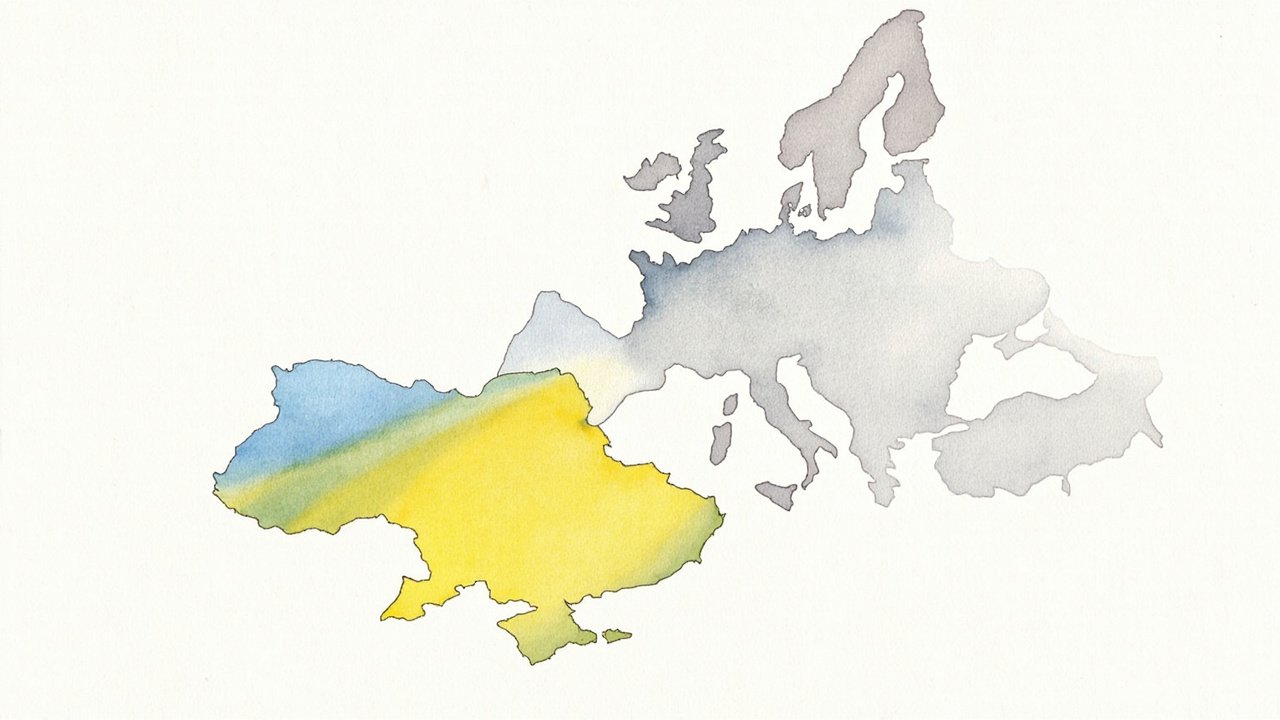
The Council of the European Union adopted on 30 July 2026 Implementing Decision (EU) 2026/1912, which extends until 4 March 2028 the temporary protection granted to people displaced from Ukraine since 2022. The decision, based on Articles 4(2) and 5(3), point (a), of Directive 2001/55/EC, was published in the Official Journal of the European Union (L series) on 4 August 2026. From 31 July 2026, new grants of protection require applicants to prove that they comply with their military obligations.
Nearly 4.4 million displaced Ukrainians currently benefit from temporary protection in the Union, with registrations stable at approximately 4.3 million and few beneficiaries returning permanently to Ukraine. The mechanism was activated on 4 March 2022, when the Council found a mass influx of displaced persons under Directive 2001/55/EC following Russia’s war of aggression.
A fifth successive one-year extension
Temporary protection first applied until 4 March 2023 and was automatically extended to 4 March 2024. It has since been renewed by Implementing Decision (EU) 2023/2409 (until 4 March 2025), Implementing Decision (EU) 2024/1836 (until 4 March 2026) and Implementing Decision (EU) 2025/1460 (until 4 March 2027).
The new decision adds a further year, until 4 March 2028, and applies from 5 March 2027, the day after the previous period expires. The Council argues the extension is necessary because the situation in Ukraine does not yet allow most displaced people to return in safe and durable conditions, while a sudden end to protection could overwhelm national asylum systems.
Military obligations become a condition for new grants
Article 2 of the decision provides that temporary protection shall only be granted to individuals who prove, where applicable, that they satisfy their military obligations in Ukraine. The requirement applies from 31 July 2026 and does not affect people who already enjoyed protection before that date and retain their status continuously in the same Member State.
Acceptable proof includes legal border crossing when leaving Ukraine, an exit stamp in the passport, or an easily verifiable official document, in paper or electronic form — such as the Reserv+ application — confirming exemption from or compliance with military obligations. The burden of proof lies with the applicant.
- Desertion and draft evasion are not, by themselves, grounds for international protection.
- Ukrainian nationals not subject to conscription may still have military obligations because of enlistment or other responsibilities related to military activities.
One Member State at a time and tighter registration controls
To prevent multiple registrations, Member States should reject residence permit requests when the applicant has already obtained one in another Member State, in line with the judgment of the Court of Justice in case C-753/23 of 27 February 2025. Authorities should also upload accurate data, including inactive registrations, to the Temporary Protection Registration Platform.
What the figures show
- Almost 4.4 million displaced Ukrainians benefit from temporary protection in the EU.
- The International Organization for Migration estimates 3,712,000 internally displaced people in Ukraine as of December 2025, 71% of them displaced for over two years.
- The United Nations Office for the Coordination of Humanitarian Affairs estimates that some 10.8 million people in Ukraine need urgent humanitarian assistance in 2026.
- Further large-scale arrivals cannot be excluded due to repeated air attacks and the risk of escalation.
The decision was signed in Brussels by the President of the Council, T. Byrne. Ireland participates, while Denmark is not bound by it under Protocol No 22. The extension runs in parallel with the Council Recommendation of 16 September 2025 on a coordinated transition out of temporary protection, which remains a priority: Member States should accelerate the transition of beneficiaries to other legal statuses, as well as voluntary returns, where the situation allows.
Source: Official Journal of the European Union, L series, 4 August 2026, Council Implementing Decision (EU) 2026/1912 (official reference: CELEX L_202601912).