Sbírka zákonů · 02 Sep 2026 · 14 vistas
Czech Republic declares Zlatý potok a national natural monument
Por FactBox Admin
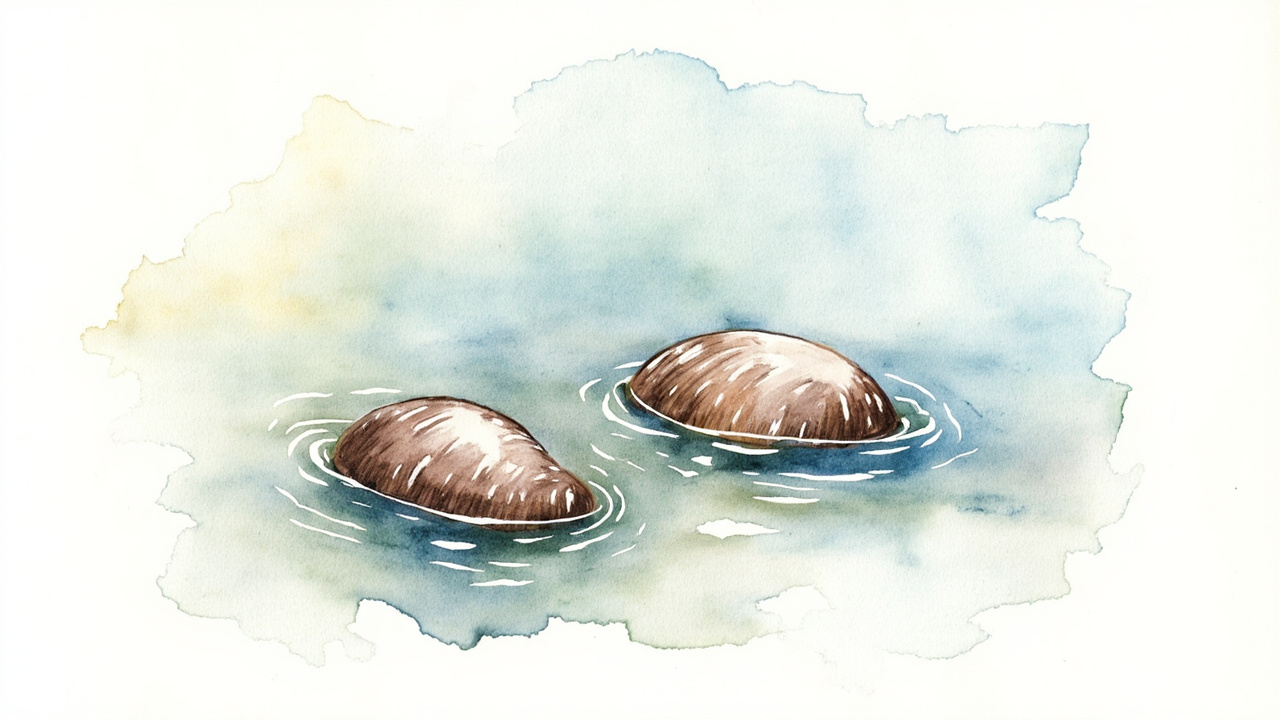
The Ministry of the Environment has declared the Zlatý potok stream a national natural monument, publishing the decree in the Sbírka zákonů (Collection of Laws) on 2 September 2026. The measure, signed by Minister Mgr. Červený on 25 August 2026, enters into force on 1 January 2027.
The decree is issued under § 79(5)(h) of Act No. 114/1992 Sb. on the protection of nature and landscape, as amended by Act No. 149/2023 Sb. It establishes the monument and its detailed protective conditions, together with a surrounding protection zone.
The protected territory
The national natural monument lies in the South Bohemian Region, spanning the cadastral areas of Křišťanov, Křížovice u Ktiše, Chroboly, Ovesné, Skříněřov, Koryto and Záhoří u Chrobol. Its boundaries are fixed by closed geometric figures whose vertices are defined by coordinates of the unified trigonometrical cadastral network (S-JTSK), listed in Annex 1.
The protection zone covers the cadastral areas of Křišťanov, Křížovice u Ktiše, Chroboly, Ovesné, Skříněřov and Koryto, with its boundaries set out in Annex 2. An indicative graphic representation of both areas is provided in Annex 3.
Species and habitats under protection
The monument is declared to safeguard a natural formation hosting several ecosystems and species:
- water and wetland ecosystems of oligotrophic running waters, comprising the Zlatý potok watercourse and its tributaries, including their springs, channels and riparian land;
- grassland ecosystems of meadows and pastures;
- populations of the freshwater pearl mussel (Margaritifera margaritifera L.), the brook lamprey (Lampetra planeri Bloch.) and the European bullhead (Cottus gobio L.), together with their habitats;
- forest ecosystems of floodplain forests and wetland willow stands.
Activities requiring consent
Across the whole territory of the monument, a range of activities may only be carried out with the consent of the nature protection authority. These include changing land-use types, carrying out construction or terrain works, altering the water regime of land, installing information or advertising devices, marking cycling or hiking trails, lighting fires, introducing plants or releasing animals, using chemical agents and fertilisers, storing materials, disturbing the soil with machinery, and driving or staying with motor vehicles and caravans.
In the protection zone, consent is likewise required for fertilising land, lighting fires, and storing objects or materials. The authority must refuse consent where the activities would worsen the state of surface waters needed to sustain the freshwater pearl mussel population; the relevant water-quality indicators and values are set out in Annex 4.
Impact
The decree tightens the regulatory framework around one of the Czech Republic’s most sensitive freshwater habitats, where the pearl mussel depends on clean, oligotrophic running water. For landowners, farmers and developers in the South Bohemian cadastral areas concerned, the new rules mean that from the start of 2027 most land, water and construction interventions will require prior authorisation, balancing economic use against the long-term survival of three protected species.
Source: Sbírka zákonů, part 158/2026, 2 September 2026, p. 1 (official reference: vyhláška č. 158/2026 Sb.).