Boletín Oficial de Cantabria · 03 Nov 2026 · 7 vistas
Cantabria takes over waste collection in San Felices de Buelna
Por FactBox Admin
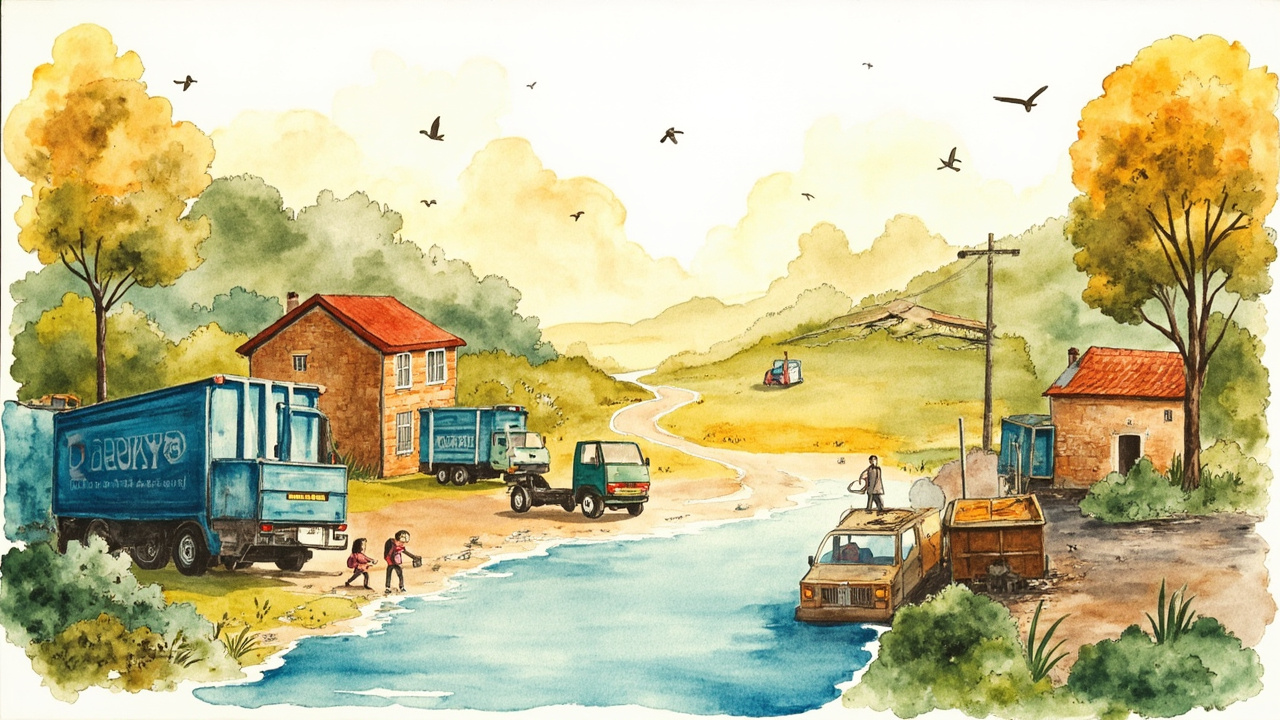
The Government of Cantabria will assume the collection and transport of municipal waste from San Felices de Buelna through the public company MARE (Medio Ambiente, Agua, Residuos y Energía de Cantabria, S.A., M.P.), according to the agreement published this Tuesday by the Official Gazette of Cantabria (BOC no. 211, of November 3, 2026). The agreement is signed by the Councilor for Development, Housing, Territorial Planning and Environment, Roberto Media Sainz, and the mayor-president of the municipality, José Antonio Cobo González, and has an initial duration of four years, extendable for another four. The total cost of the adhered services amounts to 108,089.41 euros including VAT (95,079.99 euros excluding VAT).
The publication is arranged by a resolution of the General Secretariat of the Department of Development, Housing, Territorial Planning and Environment, signed in Santander on October 28, 2026, by the general secretary Ana Belén Ruiz San Millán, in accordance with article 163.3 of Law 5/2018, of November 22, on the Legal Regime of the Government and the Institutional Public Sector of Cantabria. The agreement was authorized by an agreement of the Governing Council on February 12, 2026, and by the municipal plenary session on December 26, 2025.
A municipality without means for a mandatory service
The agreement is based on article 26.1.a) of Law 7/1985, of April 2, regulating the Bases of the Local Regime, which obliges municipalities to provide waste collection, and on article 12.5.a) of Law 7/2022, of April 8, on waste and contaminated soils for a circular economy. The text itself acknowledges that the City Council of San Felices de Buelna “cannot take charge” of the service due to a lack of the necessary means, and that it requested regional collaboration.
The legal coverage is article 6.2 of Law 8/1993, of November 18, of the Urban Waste Management Plan of Cantabria, which obliges the Executive to support local entities that cannot assume the so-called “low-level collection”: the collection and transport to transfer stations or, directly, to final management plants. The agreement is also framed within the collaboration agreement signed on March 27, 2025, with the Federation of Municipalities of Cantabria.
The contracted services and their bill
The City Council adheres to five collection and transport services, with these annual costs:
- Residual waste collection: 16,006 emptyings at 5.1469 euros, 90,619.41 euros including VAT.
- Separate bio-waste collection: 2,460 emptyings at 3.654 euros, 12,496.80 euros including VAT.
- Separate collection of agricultural plastic waste (RPUA): 4,080.85 euros including VAT.
- Separate collection of light packaging and paper/cardboard: 1,626 emptyings, 892.35 euros in VAT.
- Separate collection of textile waste: 52 emptyings, free of charge.
Excluded from the adherence are the door-to-door collection of commercial cardboard, bulky waste, home composting, and used cooking oil. The municipality has 117 collection points for residual waste and 24 stops for light packaging and paper/cardboard.
Who pays and who monitors
The economic regime is based on the public price set by the Government of Cantabria: the City Council pays the consideration and the Community issues the settlements. Decree 86/2013, of December 26, and Order FOM/16/2025, of August 5, which sets the current amounts, are applicable.
For its part, the City Council commits to providing the spaces to install the service means, collaborating in their use, maintenance, and cleaning, reporting incidents, and paying the public prices. A joint Monitoring Commission is created, with three representatives from the regional Executive —designated from personnel of the General Directorate of Environment and Climate Change or MARE— and three from the City Council, which will resolve discrepancies and may approve non-substantial modifications to the technical annex. The agreement will become effective upon its publication in the BOC and must be registered in the Regional Electronic Registry of Agreements within fifteen days.
The agreement safeguards the continuity of an essential service in a small municipality that cannot afford it on its own, and consolidates the regional model of “low-collection” charged to public prices, with an annual expenditure exceeding one hundred thousand euros and a horizon of up to eight years.
Source: Official Gazette of Cantabria, no. 211, of November 3, 2026, section 7.5 Miscellaneous, page 56043 (official reference: CVE-2026-8543).