Diario Oficial de Castilla-La Mancha · 24 Sep 2026 · 11 vistas
Almagro: the Torremejía Palace is declared a Site of Cultural Interest
Por FactBox Admin
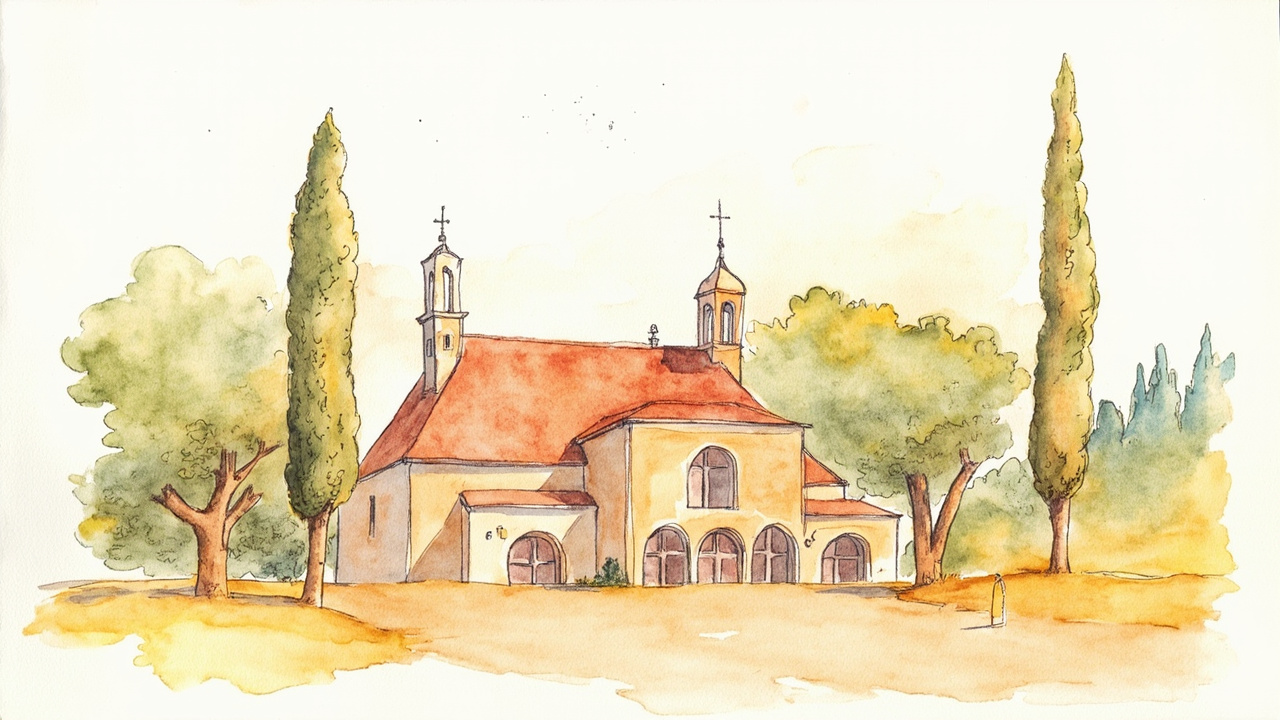
The Governing Council of Castilla-La Mancha has declared the Palace of the Marquesses of Torremejía, in Almagro (Ciudad Real), as a Property of Cultural Interest, under the category of Monument. The agreement was adopted on September 15, 2026, upon the proposal of the Minister of Education, Culture, and Sports, and is published in the Official Gazette of Castilla-La Mancha (DOCM) no. 184, dated September 24, 2026, with the official reference [2026/6793]. The resolution concludes the administrative process and is dated Toledo, September 15, 2026, signed by the Secretary of the Governing Council, José Luis Martínez Guijarro.
The proceedings began by resolution of the Vice-Ministry of Culture and Sports on 10/07/2025, published in the DOCM no. 200, dated October 16, 2025. Following the public information period provided for in Article 14.4 of Law 4/2013, of May 16, on the Cultural Heritage of Castilla-La Mancha, no objections were filed, and a favorable report was obtained from the Institute of Manchegan Studies of Ciudad Real as a consultative institution. The declaration is based on Article 15.1 of the aforementioned regional law.
A 15th-century palace in the heart of Almagro
The property is located at Plaza de Santo Domingo nº 1, in cadastral block 83472, with cadastral reference 8347201VJ3084N, a graphic area of 1,723 m², and a perimeter of 176.72 m. Its origin dates back to the second half of the 15th century, featuring a rectangular courtyard of 10 by 8 meters and 3-meter bays, remodeled in the 16th century in the Renaissance style and expanded in the 17th century with the annexation of the former Hospital de las Ánimas following a fire, through an exchange formalized in 1768.
Among the unique elements protected by the declaration are:
- The portal of the main facade, on Plaza de Santo Domingo, with a balcony atop zoomorphic heads and a heraldic motif.
- The polychrome pine wood ceiling (alfarje) of the porticoed courtyard, in the west bay.
- The flooring of the main courtyard, executed using the engorronado technique.
- The main two-flight staircase, covered by an octagonal dome on a drum.
- The mural paintings of the living-bedroom, the bathroom-former chapel room, the curtain room, the black plinth room, the landscape salon, the Chinese salon, and the Portuguese room.
The building was acquired in 2019 by Mauricio Fernández Garza, who has undertaken a comprehensive rehabilitation to recover its unique elements and partially open it to the public. Previously, the property housed the Nuestra Señora del Rosario Women’s Home School, run by Dominican nuns until its relocation in 2015, and between 2015 and 2016, it hosted the “La Comedia” Preschool and the Food Bank.
Protection environment of more than 1.5 hectares
The declaration establishes a protection environment of 15,729.63 m² —slightly more than 1.5 hectares— with a perimeter of 742.48 m, delimited by the first line of buildings surrounding the palace block. In addition to the plot of the asset itself, the perimeter fully includes thirteen cadastral plots from blocks 82473, 84475, 84771, 84487, and 82480.
The palace is located within the area declared BIC Historic Ensemble of the City of Almagro by Decree 2104/1972, of July 13 (BOE No. 183, of August 1, 1972), alongside buildings such as the Palacio de los Xedler, the Palacio de Valparaíso, the Convento de la Concepción Bernarda, or the Casa de los Calero. The Marquises of Torremejía owned another palace in Granátula de Calatrava, declared BIC in 1992.
Uses, licenses, and duty of public visitation
The initiation of the procedure already entailed the immediate application of the protection regime and the suspension of municipal licenses for subdivision, construction, or demolition in the affected areas, as well as the effects of those already granted, pursuant to Article 16 of Law 16/1985, of June 25, on Spanish Historical Heritage. As a BIC, the property is subject to the guardianship of Law 4/2013: any change of use, segregation, or aggregation must be authorized by the Department competent in Cultural Heritage matters.
The agreement prohibits the installation of advertising, cables, antennas, pipelines, and any other element that harms the conservation of the property or impairs its appreciation within the environment, and forbids its relocation except by force majeure or social interest. Uses compatible with its enhancement and heritage enjoyment will be permitted, and the asset is subject to the duty to facilitate public visits as provided for in Article 24.3 of the regional regulation.
An optional appeal for reversal may be filed against the agreement before the same body within one month, or a contentious-administrative appeal before the Contentious-Administrative Chamber of the High Court of Justice of Castilla-La Mancha, based in Albacete, within two months from the day following its publication.
The declaration shields one of the most relevant manorial ensembles of the historic center of Almagro and reinforces the protection of a dense urban environment, with direct effects on the owners of the included plots, on municipal licensing activity, and on the tourist appeal of the city, whose heritage is already one of its main economic drivers.
Source: Official Gazette of Castilla-La Mancha (DOCM), No. 184, of September 24, 2026, III.- Other Provisions and Acts, pp. 32821-32831 (official reference: 2026/6793).